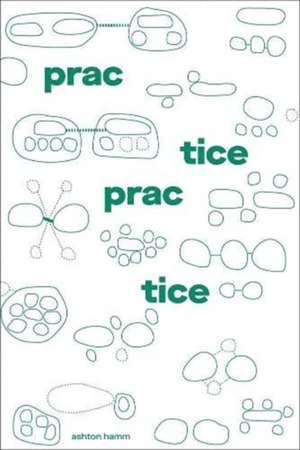
Practice Practice
Autor Ashton Hammen Limba Engleză Paperback – 12 dec 2023
În Practice Practice, observăm un dialog fertil între analiza teoretică și pragmatismul vizual al diagramelor care descriu arhitectura nu doar ca formă, ci ca muncă organizată. Ashton Hamm deconstruiește mitul practicii izolate, propunând în schimb o reinterpretare a biroului de arhitectură sub forma cooperativei de lucrători. Experiența de lectură este una tactilă și directă: paginile alternează între interviuri revelatoare și instrumente logistice concrete, precum modele de regulamente interioare, menite să transforme precaritatea actuală a micilor firme într-o reziliență democratică. Remarcăm modul în care autorul ancorează propunerile sale în realitatea vizitelor la sediile a peste douăzeci de studiouri, transformând observațiile de teren într-un manifest pentru echitate. Complementar volumului Architecture and Labor de Peggy Deamer din aceeași perioadă artistică și ideologică, Practice Practice se distinge printr-o perspectivă mult mai aplicată spre execuție și organizare internă. În timp ce Deamer analizează forțele sistemice care limitează puterea arhitectului, Hamm oferă „trusa de unelte” necesară pentru a ieși din aceste structuri extractive. Totodată, față de Small Practice de Liz King, care se concentrează pe managementul tradițional al afacerii, lucrarea de față subminează modelele corporatiste, invitând cititorul să exploreze „economia solidarității”. Tonul este unul de urgență calmă, susținut de o structură narativă care îmbină istoria mișcărilor sindicale cu beneficiile estetice ale muncii colective.
Preț: 132.13 lei
Carte disponibilă
Livrare economică 09-23 noiembrie
Specificații
ISBN-10: 1951541952
Pagini: 120
Dimensiuni: 152 x 229 x 13 mm
Greutate: 0.3 kg
Editura: Oro Editions
V-ar putea interesa
-
 Abundance Not CapitalAngelika FitzPreț: 240.85 lei
 -
 Professional PracticePaul SegalPreț: 137.52 lei
 -
 Preț: 385.00 lei
 -
 Spatial Agency: Other Ways of Doing ArchitectureNishat AwanPreț: 458.89 lei
 -
 Architectural Thinking in a Climate EmergencySofie PelsmakersPreț: 391.59 lei
 -
 Preț: 251.75 lei
 -
 Practising Wood in Architecture: Connecting Design, Construction and SustainabilityJames Benedict BrownPreț: 350.83 leiRecomandat
 -
 Preț: 386.48 lei
 -
 Preț: 352.21 lei
 -
 The Architect¿s Handbook of Professional Practice, 15th EditionAmerican Institute Of Architects-23%Preț: 1515.82 lei1968.59 lei
 -
 Architecture and Health Equity in an Imperiled WorldStephen VerderberPreț: 444.75 lei
 -
 Margin and TextBetsy West-28%Preț: 162.34 lei225.77 lei
 -
 Towards Another ArchitectureOwen HopkinsPreț: 309.95 lei
 -
 Preț: 280.82 lei
 -
 Preț: 284.83 lei
 -
 Preț: 334.43 lei
 -
 The Architect's EdgeGareth StapletonPreț: 145.50 lei
 -
 Homes For Our Time. Small Houses. 45th Ed.Philip JodidioPreț: 237.30 lei
 -
 Cooperative ConditionsAnne KockelkornPreț: 303.14 lei
 -
 Housing the Co-opSascha DelzPreț: 120.78 lei
De ce să citești această carte
Recomandăm această carte arhitecților aflați la început de drum și proprietarilor de mici studiouri care simt presiunea modelelor economice actuale. Cititorul câștigă o viziune clară asupra modului în care democrația la locul de muncă poate influența calitatea proiectării. Este un ghid esențial pentru oricine dorește să transforme practica arhitecturală dintr-un mediu extractiv într-unul echitabil, oferind exemple concrete de structuri reziliente și colaborative.
Descriere
- Describes in detail the levers of change needed for a cooperative architecture practice and is the first book detailing the formation of the architectural cooperative
- Demonstrates the historical trajectory of these conditions both within the larger labor movement of the United States and the professionalization of architects
The business of architecture - shaped by anti-trust legislation and pro-corporate governmental policies - has created an extractive, inequitable, and precarious environment for its practitioners. These pressures have led many small firms, which make up roughly three quarters of architecture offices in the United States, to adopt diverse, ad-hoc organisational and survival strategies. In their very precarity, these small firms offer fertile grounds to test more resilient structures. One such model, the worker cooperative, offers a critical mode of practice that is equitable, democratic, and addresses the systemic inequalities that plague the profession.
Practice Practice addresses the parallel trajectories of cooperatives in the United States and the professionalisation of architecture. This contextual background highlights the coincident struggles of the labour movement and the emergence of the architectural corporation. Within this context, the cooperative model is presented as a challenge to the prevailing conditions of the profession. Logistical frameworks for creating an architectural cooperative - including diagrams, sample operating agreements, and bylaws - are offered for any firm looking to transition or incorporate anew. The book projects the social, economic, and aesthetic benefits of the architectural cooperative by taking stock of cooperatives in other industries. Finally, Practice Practice presents a vision for a cooperative network of small architecture firms as imagined in collaboration with the Architecture Lobby.
This book situates, celebrates, and envisions a future for small firms. Throughout the book, interviews, office visits, site visits, and field notes document encounters with over twenty such firms. These offices demonstrate the subversive agency harnessed by small firms. If the cooperative model were to infiltrate such sites, the nature of practice and industry would transform. Built work would reflect ever more diverse sensibilities, minority workers' voices would be uplifted, and workers would earn equity through ownership. Architects would enter the solidarity economy, transforming their communities.