Cantitate/Preț
Produs

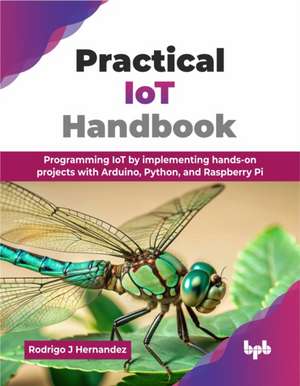
Practical IoT Handbook

Autor Rodrigo J. Hernandez
en Limba Engleză Paperback – 23 dec 2024

Notăm cu interes faptul că Practical IoT Handbook pune la dispoziția cititorului resursele software necesare pentru a începe imediat dezvoltarea, axându-se pe instrumente gratuite și open-source precum Arduino IDE, Python și Visual Studio Code. Volumul semnat de Rodrigo J. Hernandez nu rămâne la nivelul teoretic, ci oferă un ghid aplicat pentru lucrul cu hardware accesibil, de la microcontrollerele ESP32 și ESP8266 până la versatilul Raspberry Pi 4. Subliniem structura logică a cărții, care pornește de la interfațarea senzorilor și actuatorilor, trecând prin protocoale esențiale precum MQTT, CoAP și HTTP, pentru a ajunge la stocarea și vizualizarea datelor prin InfluxDB și Grafana. Reținem că această abordare diferă de cea din Springer Handbook of Internet of Things prin caracterul său pronunțat practic: în timp ce volumul de la Springer Handbooks este o referință academică și abstractă, lucrarea de față este un manual de atelier, mai puțin teoretic și mult mai aplicabil în proiecte de tip „maker”. Ritmul este unul tehnic, susținut de exemple concrete de implementare pentru stații meteo și sisteme de automatizare a locuinței. Comparativ cu Internet of Things and Data Analytics Handbook, care analizează IoT din perspectivă de business și marketing, Practical IoT Handbook rămâne ferm ancorat în ingineria soluțiilor conectate, oferind pașii exacți pentru configurarea GPIO și gestionarea fluxurilor de date prin Node-RED.

Citește tot Restrânge

Preț: 25496 lei

Preț vechi: 31869 lei
-20%

Puncte Express: 382

Carte disponibilă

Livrare economică 01-15 mai
Livrare express 17-23 aprilie pentru 3645 lei


Specificații

ISBN-13: 9789365892659
ISBN-10: 9365892651
Pagini: 366
Dimensiuni: 240 x 197 x 18 mm
Greutate: 0.62 kg
Editura: BPB Publications

De ce să citești această carte

Recomandăm această carte entuziaștilor și studenților care doresc să treacă de la teorie la prototipuri funcționale. Cititorul câștigă abilități practice în programarea microcontrollere-lor și configurarea rețelelor IoT folosind hardware accesibil. Este un ghid esențial pentru oricine vrea să construiască sisteme de monitorizare sau automatizare casnică de la zero, utilizând exclusiv unelte software gratuite.


Descriere

Description The field of the IoT is fundamentally reshaping how physical objects interact with digital systems through enhanced connectivity and embedded intelligence. This book serves as an indispensable resource, guiding readers through the essential principles and techniques required to unlock the full potential of IoT. From foundational concepts to the development of innovative, real-world applications, this handbook offers a structured, step-by-step approach for anyone seeking either a comprehensive introduction or an opportunity to expand their expertise in this transformative domain.The book begins with hands-on projects that guide readers through the essentials of IoT development, combining foundational knowledge with practical application. Readers will work with popular development boards like the ESP8266, ESP32, Raspberry Pi Pico, and Raspberry Pi 4, while learning key hardware concepts and setting up a development environment using free, open-source tools such as Arduino IDE, Python, and Visual Studio Code. Core IoT topics include programming microcontrollers, interfacing with sensors and actuators, and using communication protocols like MQTT, CoAP, and HTTP. The book also covers storing and visualizing data with InfluxDB and Grafana.By the end of this book, readers will have developed a solid foundation in IoT programming, along with the practical skills and theoretical understanding necessary to design, build, and deploy effective IoT solutions. The book prepares readers to undertake a wide range of IoT projects and contribute meaningfully to this rapidly advancing field. What you will learn ? ESP32, ESP8266, Raspberry Pi interfacing, and programming tools (Arduino, Python, VSC). ? Connect and use sensors and actuators with the microcontrollers and the Raspberry Pi 4 computer. ? Learn about open-source systems (Node-RED, InfluxDB, Grafana, Home Assistant, and OpenHAB). ? Interface diverse sensors/actuators; master GPIO, MQTT, CoAP, HTTP protocols. ? Design and implement connected systems for environmental and home automation. Who this book is for This book is for students pursuing tech careers, tech enthusiasts, hobbyists, makers, and software developers interested in learning IoT programming. Basic programming knowledge and familiarity with electronics concepts will be beneficial but not strictly required, as the book guides you from the fundamentals. Table of Contents 1. Meet the Boards 2. Installing the Software Environment 3. Microcontrollers, Sensors, and Actuators 4. Interfacing with Raspberry Pi 5. Connecting IoT Devices using MQTT 6. CoAP for IoT Connectivity 7. Using HTTP and WebSockets in IoT 8. Storing Internet of Things Data 9. Visualizing Internet of Things Data 10. Building a Weather Station 11. Home Automation