Postcards
Autor Lydia Pyneen Limba Engleză Hardback – 18 oct 2021
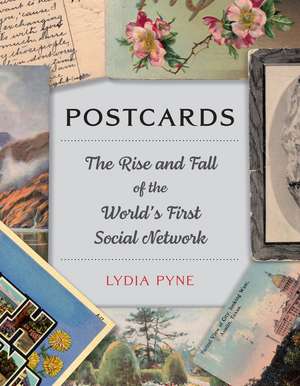
Nivel de studiu: referință profesională și licență în istorie culturală sau studii vizuale. Observăm în această lucrare o trecere de la percepția banală a cărții poștale ca simplu suvenir de vacanță către o analiză riguroasă a unui artefact tehnologic complex. Lydia Pyne demonstrează cum acest obiect a fost susținut de industrii sofisticate de tipărire și servicii poștale, devenind prima rețea socială globală care a permis schimbul de mesaje la scară largă. Ne-a atras atenția modul în care autoarea integrează istoria tehnologiei cu cea a sentimentelor umane, oferind o perspectivă globală asupra modului în care am învățat să comunicăm în modernitate. În contextul operei sale, Postcards continuă explorarea „vieții ascunse a obiectelor obișnuite” începută în Bookshelf. Dacă în lucrarea anterioară Pyne analiza semnificațiile culturale ale raftului de cărți, aici extinde cadrul de cercetare către un mediu de comunicare dinamic. Volumul extinde cadrul propus de Picturing the Postcard de Monica Cure, care se concentra pe anxietățile literare provocate de acest mediu, oferind în plus o dimensiune globală și o analiză a infrastructurii tehnice care a făcut posibil fenomenul. Spre deosebire de abordările strict genealogice din Posted in the Past, Pyne păstrează un ton academic echilibrat, susținut de 110 ilustrații care transformă lectura într-o experiență vizuală documentată. Structura narativă este una investigativă, demonstrând că, deși suntem în era digitală, cărțile poștale nu sunt încă un artefact dispărut, ci unul care a prefigurat interacțiunile noastre contemporane.
Preț: 243.50 lei
Preț vechi: 285.01 lei
-15%
Carte disponibilă
Livrare economică 12-19 august
Livrare express 28 iulie-01 august pentru 92.69 lei
Specificații
ISBN-10: 1789144841
Pagini: 232
Ilustrații: 80 color plates, 30 halftones
Dimensiuni: 182 x 222 x 22 mm
Greutate: 0.73 kg
Editura: REAKTION BOOKS
De ce să citești această carte
Recomandăm această carte studenților și cercetătorilor din domeniul științelor umaniste care doresc să înțeleagă rădăcinile tehnologice ale comunicării moderne. Cititorul câștigă o perspectivă inedită asupra modului în care un obiect efemer a modelat conexiunile umane globale. Este o resursă esențială pentru cei interesați de istoria poștei și a culturii vizuale, oferind un argument solid pentru conservarea cărților poștale ca documente istorice relevante.
Despre autor
Lydia Pyne este scriitoare independentă și istoric, deținând titlul de doctor în domeniu. În prezent, ocupă funcția de Research Fellow la Institute for Historical Studies în cadrul University of Texas din Austin, SUA. Expertiza sa este vastă, fiind editor colaborator pentru publicația The Appendix și eseist pentru New York Journal of Books. Stilul său de cercetare îmbină rigoarea istorică cu antropologia obiectelor, fiind cunoscută și pentru colaborarea la volumul The Last Lost World: Ice Ages, Human Origins, and the Invention of the Pleistocene. În lucrările sale, Pyne reușește să transforme obiecte cotidiene în subiecte de analiză culturală profundă.
Descriere scurtă
Postcards are usually associated with banal holiday pleasantries, but they are made possible by sophisticated industries and institutions, from printers to postal services. When they were invented, postcards established what is now taken for granted in modern times: the ability to send and receive messages around the world easily and inexpensively. Fundamentally they are about creating personal connections—links between people, places, and beliefs. Lydia Pyne examines postcards on a global scale, to understand them as artifacts that are at the intersection of history, science, technology, art, and culture. In doing so, she shows how postcards were the first global social network and also, here in the twenty-first century, how postcards are not yet extinct.
Notă biografică
Extras
There are a lot of different ways to dig into the history of postcards and any history will inevitably be incomplete. Although postcards were a mass medium, they were—and still are—a disposable one. This disposability means that there are holes in the historical record, making a complete archive of all the world’s postcards inherently impossible. Many histories of postcards opt to explore postcards through specific pictorial or geographic themes (“historic postcards of New York City”) or printed types (“American holiday postcards.”) These narrow, specific approaches tend to focus on postcards by a particular manufacturer, such as the iconic Curt Teich & Co. Americana postcards or the carefully lithographed portraits found on cards by London printer Raphael Tuck & Sons. Others opt to concentrate on specific postcard technologies, like Kodak’s “real picture” postcards. As many types and styles as there are of postcards, there is an equal number of ways to talk about their histories.
Throughout this project, I’ve learned at first hand that postcards are personal and always have been. I didn’t start out to write a book that drew so heavily from collections of family postcards or to highlight my own different postcard experiences. But, completely unexpectedly, the medium lent itself to this approach, as postcards require us to recognize that global social networks are built out of individual stories and connections. The more I dug into stories about postcards, the more I found myself and my family in them.
For example, my own great-grandfather, Robert Boles, saved a shoebox full of hundreds of postcards that were sent to him between 1905 and 1920—what historians call the Golden Age of Postcards. His daughter, my grandmother, kept the cards for years and gave them to my mom, who has long been interested in family history from my dad’s side of the family. My mom bequeathed the postcards to me when I started the background research for Postcards, convinced that these family mementos would offer a way to humanize the global postcard phenomenon. She was right.
To that end, reading postcards in various libraries and archives felt a bit as though I was reading messages in bottles; I didn’t know the recipient or the sender, and the message on the back would have made sense only to them. To put it another way, it was like reading a stranger’s text messages and trying to figure out the backstory for any individual text. Drawing on postcards from my family’s collection meant that I “knew” the people writing, receiving, or saving the postcards in a way that I couldn’t with postcards from other institutional collections. It continued to make postcards personal.
Postcards have left an indelible imprint on the history of human communication, unmatched by any other material medium. They owe their success to the decentralization of their manufacture as well as the physical material connection they created between sender and recipient. Postcards and their digital descendants continue to be about personal connections—specifically, short, cheap, ephemeral messages. There are inexorable echoes of postcards in contemporary digital picture networks such as Instagram, Twitter, Facebook, Snapchat, TikTok, and other photo-sharing apps. We recreate old social networks—old postcard social lines, if you will—with every post of a digital picture. Postcards are not yet completely extinct.