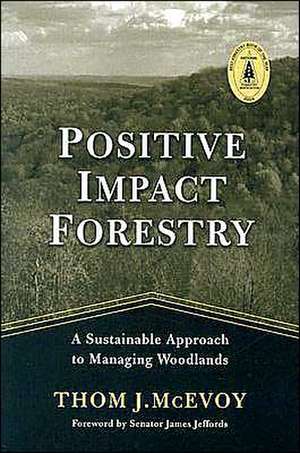
Positive Impact Forestry: A Sustainable Approach To Managing Woodlands
Autor Thomas J. McEvoy Cuvânt înainte de James Jeffordsen Limba Engleză Paperback – mai 2004
Positive Impact Forestry offers private landowners, forest managers, and conservation-minded professionals a clear, practical roadmap for managing woodlands in ways that sustain both ecological health and long-term economic value. Rather than focusing solely on low-impact practices, Thom McEvoy introduces a forward-thinking approach that actively enhances the vitality of forest ecosystems while meeting the real-world needs of families, communities, and future generations.
Grounded in the latest forestry science, this comprehensive guide explains how decisions about harvesting, soil management, and silviculture can influence everything from biodiversity to soil organisms to timber quality. McEvoy presents core concepts—like forest soils, tree physiology, and regeneration dynamics—in a highly accessible format, making the science understandable and actionable for non-specialists and seasoned professionals alike.
The book also addresses key financial and legal considerations, offering guidance on working with forestry professionals, diversifying revenue beyond timber, and ensuring that land management legacies can be passed on across generations. Case studies and examples help illustrate how values-driven forestry practices can create measurable benefits over time—without compromising the ecological integrity of the land.
Recognized by the National Woodland Owners Association as the “Best Forestry Book for 2004,” Positive Impact Forestry remains a trusted resource for anyone committed to thoughtful, sustainable forest stewardship that balances today’s goals with tomorrow’s responsibility.
Grounded in the latest forestry science, this comprehensive guide explains how decisions about harvesting, soil management, and silviculture can influence everything from biodiversity to soil organisms to timber quality. McEvoy presents core concepts—like forest soils, tree physiology, and regeneration dynamics—in a highly accessible format, making the science understandable and actionable for non-specialists and seasoned professionals alike.
The book also addresses key financial and legal considerations, offering guidance on working with forestry professionals, diversifying revenue beyond timber, and ensuring that land management legacies can be passed on across generations. Case studies and examples help illustrate how values-driven forestry practices can create measurable benefits over time—without compromising the ecological integrity of the land.
Recognized by the National Woodland Owners Association as the “Best Forestry Book for 2004,” Positive Impact Forestry remains a trusted resource for anyone committed to thoughtful, sustainable forest stewardship that balances today’s goals with tomorrow’s responsibility.
Preț: 243.30 lei
Puncte Express: 365
Preț estimativ în valută:
43.07€ • 50.24$ • 37.29£
43.07€ • 50.24$ • 37.29£
Carte indisponibilă temporar
Doresc să fiu notificat când acest titlu va fi disponibil:
Se trimite...
Preluare comenzi: 021 569.72.76
Specificații
ISBN-13: 9781559637893
ISBN-10: 1559637897
Pagini: 288
Ilustrații: 9 photos, 19 illustrations
Dimensiuni: 152 x 229 x 18 mm
Greutate: 0.43 kg
Ediția:None
Editura: Island Press
Colecția Island Press
ISBN-10: 1559637897
Pagini: 288
Ilustrații: 9 photos, 19 illustrations
Dimensiuni: 152 x 229 x 18 mm
Greutate: 0.43 kg
Ediția:None
Editura: Island Press
Colecția Island Press
Notă biografică
Thom J. McEvoy is associate professor and extension forester in the Rubenstein School of Environment and Natural Resources at the University of Vermont.
Cuprins
Foreword \ Senator James Jefford
Preface
Chapter 1. Forestry's Past Is Prologue
-Evolution of Forest Use and Management
-What Is Positive Impact Forestry?
-Evolution of Forest Conservation and Stewardship
-Defining Sustainability
-An Ecosystem Approach to Managing Forests
Chapter 2. Understanding Forest Ecosystems
-Species Succession and Tolerance
-Form and Function in Trees
-Stress and Disturbance in Forests
-The Hidden Forest of Soils
-The Importance of Avoiding Injury to Roots
-Practical Application of Forest Site Concepts
Chapter 3. Creating Disturbances in Forests through Silviculture
-The Impact of Stocking on Growth
-Forest Reproduction Methods
-Trading Timber Volume for Value
-Evaluating Timber Investments
-Focusing on Value in Crop Trees
-Common Silvicultural Misconceptions
Chapter 4. Harvesting and Selling Timber
-The Realm of Forestry Professionals
-The Nature of Stumpage
-Knowing When to Harvest
-Negotiating a Timber Sale
-Essential Elements of a Timber Sale Contract
-Trading Timber for Services
-Ecosystems and Ethics
Chapter 5. Positive Impact Harvesting Practices
-Low-Impact Logging
-Designing Access That Protects Soils and Streams
-Safe and Productive Tree-Felling Techniques
-Alternative Timber Harvesting and Extraction Systems
Chapter 6. Managing Forests for Wildlife and Nontimber Products
-Good Wildlife Management Is Good Forestry
-Nontimber Forest Products
-The Threat of Invasive Exotic Species
Chapter 7. The Future of Forests and Forest Products
-Forest Regulation
-Climate-Induced Changes in Forests
-Green Certification of Forest Practices and Products
-Forest Prologue
-Parcelization of Forests and Fragmentation of Purpose
Chapter 8. Intergenerational Planning Methods for Forests
-Estate Planning for Forests
-Keeping Forests in the Family
-Conservation Easements and Land Trusts
Epilogue
Appendix A: Online Resources
Appendix B: Forestry-Related Internet Sites of Interest
Appendix C: Public Sources of Forestry Assistance
Glossary
Literature Cited
Index
Preface
Chapter 1. Forestry's Past Is Prologue
-Evolution of Forest Use and Management
-What Is Positive Impact Forestry?
-Evolution of Forest Conservation and Stewardship
-Defining Sustainability
-An Ecosystem Approach to Managing Forests
Chapter 2. Understanding Forest Ecosystems
-Species Succession and Tolerance
-Form and Function in Trees
-Stress and Disturbance in Forests
-The Hidden Forest of Soils
-The Importance of Avoiding Injury to Roots
-Practical Application of Forest Site Concepts
Chapter 3. Creating Disturbances in Forests through Silviculture
-The Impact of Stocking on Growth
-Forest Reproduction Methods
-Trading Timber Volume for Value
-Evaluating Timber Investments
-Focusing on Value in Crop Trees
-Common Silvicultural Misconceptions
Chapter 4. Harvesting and Selling Timber
-The Realm of Forestry Professionals
-The Nature of Stumpage
-Knowing When to Harvest
-Negotiating a Timber Sale
-Essential Elements of a Timber Sale Contract
-Trading Timber for Services
-Ecosystems and Ethics
Chapter 5. Positive Impact Harvesting Practices
-Low-Impact Logging
-Designing Access That Protects Soils and Streams
-Safe and Productive Tree-Felling Techniques
-Alternative Timber Harvesting and Extraction Systems
Chapter 6. Managing Forests for Wildlife and Nontimber Products
-Good Wildlife Management Is Good Forestry
-Nontimber Forest Products
-The Threat of Invasive Exotic Species
Chapter 7. The Future of Forests and Forest Products
-Forest Regulation
-Climate-Induced Changes in Forests
-Green Certification of Forest Practices and Products
-Forest Prologue
-Parcelization of Forests and Fragmentation of Purpose
Chapter 8. Intergenerational Planning Methods for Forests
-Estate Planning for Forests
-Keeping Forests in the Family
-Conservation Easements and Land Trusts
Epilogue
Appendix A: Online Resources
Appendix B: Forestry-Related Internet Sites of Interest
Appendix C: Public Sources of Forestry Assistance
Glossary
Literature Cited
Index
Descriere
Positive Impact Forestry is a primer for private woodland owners and their managers on managing their land and forests to protect both ecological and economic vitality.