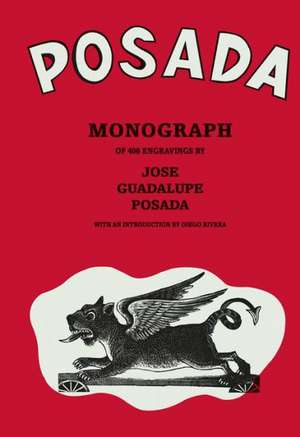
Posada
en Limba Engleză Paperback – 30 apr 2013
Explorând tehnica gravurii și a xilogravurii cu o forță vizuală neîmblânzită, acest volum reprezintă o recuperare istorică a operei lui José Guadalupe Posada. Remarcăm calitatea acestei ediții facsimil, care reproduce prima monografie dedicată artistului în 1930, oferind o perspectivă nealterată asupra geniului său grafic. Apreciem modul în care cele peste 400 de stampe sunt prezentate, păstrând densitatea liniilor și contrastul puternic dintre negru și alb, elemente esențiale pentru a înțelege impactul pe care Posada l-a avut asupra artei populare mexicane. Experiența de lectură este una densă, aproape tactilă, pe măsură ce parcurgem paginile populate de faimoasele „calaveras” — scheletele animate care servesc drept metaforă pentru o societate coruptă. Ritmul vizual este alert, alternând între ilustrații pentru cântece populare (corridos), rugăciuni religioase și pamflete politice tăioase. Tonul lucrării pendulează între umorul negru macabru și comentariul social acerb, trăsături care îl plasează pe Posada în aceeași tradiție a marilor ilustratori critici precum Honoré Daumier. Pe raftul de artă, alături de Mexican Graphic Art, acest album se distinge prin caracterul său documentar și istoric. În timp ce alte antologii oferă o privire de ansamblu asupra mișcării grafice mexicane, Posada se concentrează pe sursa de inspirație a marilor muraliști. Prezența eseului semnat de Diego Rivera adaugă o valoare contextuală imensă, acesta recunoscându-l pe Posada drept un precursor spiritual al revoluției artistice mexicane. Este o lucrare fundamentală pentru înțelegerea modului în care arta tipărită a devenit un instrument de educație și rezistență socială.
Preț: 178.77 lei
Carte disponibilă
Livrare economică 15-29 iulie
Livrare express 30 iunie-04 iulie pentru 56.52 lei
Specificații
ISBN-10: 8415118473
Pagini: 214
Ilustrații: mit zahlreiche Abbildungen
Dimensiuni: 233 x 340 x 17 mm
Greutate: 0.88 kg
Ediția:1
Editura: RM
V-ar putea interesa
-
 del Amor Y Otros Demonios / Of Love and Other DemonsGabriel García MárquezPreț: 79.02 lei
 -
 ARTIST BOX FRIDA KAHLOManjit ThappPreț: 100.41 lei
 -
 El Libro Secreto de Frida KahloF G HaghenbeckPreț: 98.59 lei
 -
 La Historia del Día de Los Muertos / The Dia de Los Muertos StoryAndrea Jáuregui de la Torre-20%Preț: 38.44 lei48.16 lei
 -
 RestauracionAve BarreraPreț: 85.41 lei
 -
 -31%Preț: 68.20 lei99.16 leiRecomandat
 -
 Preț: 120.28 lei
 -
 Manolito GafotasElvira LindoPreț: 51.39 lei
 -
 Mar de historiasCristina PachecoPreț: 36.50 lei
 -
 Diego Rivera (Spanish Edition)Francisco de la MoraPreț: 195.65 lei
 -
 Les Trois Petits Cochons / Los Tres CerditosPedro Gallardo SanchezPreț: 117.39 lei
 -
 Street Art And Graffiti AtlasDiego López GiménezPreț: 235.26 lei
 -
 Preț: 138.68 lei
 -
 Preț: 129.95 lei
 -
 El Llano en LlamasJuan RulfoPreț: 78.48 lei
 -
 Jack et le haricot magique / Jack y las habichuelas magicasPedro Gallardo SanchezPreț: 117.38 lei
 -
 El Kamasutra completo e ilustradoLance Dane-23%Preț: 138.57 lei179.94 leiRecomandat
 -
 -25%Preț: 85.57 lei114.43 leiRecomandat
 -
 Tragos Amargos / Bitter MomentsLupillo RiveraPreț: 105.94 lei
De ce să citești această carte
Această monografie este esențială pentru pasionații de grafică și istoria artei care doresc să descopere rădăcinile iconografiei mexicane moderne. Cititorul câștigă acces la o arhivă vizuală impresionantă de gravuri ce îmbină satira politică cu tradiția populară. Este un instrument de referință pentru studiul simbolismului morții în cultura mexicană, oferind contextul istoric necesar pentru a înțelege celebrul personaj Catrina și moștenirea lăsată de un artist ce a transformat gravura în manifest social.