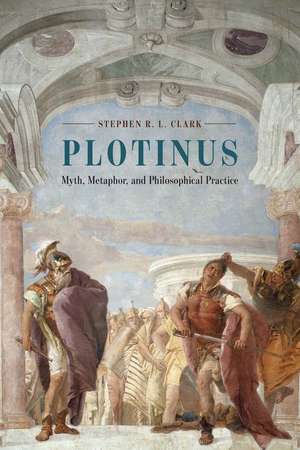
Plotinus: Myth, Metaphor, and Philosophical Practice
Autor Stephen R. L. Clarken Limba Engleză Paperback – 9 feb 2018
Structura acestei lucrări este riguros concepută pentru a ghida cititorul de la fundamentele hermeneutice către practica filozofică propriu-zisă. Considerăm că abordarea lui Stephen R. L. Clark redefinește modul în care receptăm Enneadele, mutând accentul de la o metafizică aridă către o fenomenologie a experienței interioare. Metodologia autorului, expusă în prima parte a volumului, refuză să trateze metaforele plotiniene ca pe niște accesorii literare, argumentând că acestea constituie pilonii unei discipline mentale menite să faciliteze contemplarea.
Subliniem importanța modului în care cartea este organizată: după o secțiune dedicată dialecticii și teoriilor despre metaforă, autorul explorează teme precum goliciunea, beția sobră a rațiunii și dansul cosmic, culminând cu o analiză a hipostaselor — Sufletul, Inteligența (Nous) și Unul. Această progresie nu este doar academică, ci oglindește ascensiunea sufletului descrisă de Plotin. Acoperă aceeași arie tematică precum Plotinus or the Simplicity of Vision de Pierre Hadot, dar cu o abordare mai sistematică în explorarea specifică a imaginarului și a miturilor, oferind un aparat critic ce ancorează viziunile plotiniene în contextul cultural al antichității târzii.
În contextul operei sale, Plotinus reprezintă o sinteză între preocupările anterioare din Philosophy as a Way of Life și rigoarea din Ancient Mediterranean Philosophy. Credem că volumul reușește să demonstreze că filozofia lui Plotin nu este o relicvă istorică, ci o metodă vie de transformare a sinelui. Tonul este unul precis, orientat către mediul academic, dar păstrează o claritate care face accesibilă complexitatea neoplatonismului pentru orice cercetător al istoriei ideilor.
Preț: 311.30 lei
Carte disponibilă
Livrare economică 17 noiembrie-01 decembrie
Livrare express 31 octombrie-06 noiembrie pentru 36.95 lei
Specificații
ISBN-10: 022656505X
Pagini: 368
Dimensiuni: 152 x 229 x 28 mm
Greutate: 0.49 kg
Editura: University of Chicago Press
Colecția University of Chicago Press
De ce să citești această carte
Recomandăm această lucrare celor care doresc să înțeleagă neoplatonismul dincolo de schemele logice, ca pe o practică transformatoare. Cititorul câștigă o perspectivă nouă asupra modului în care imaginile și miturile pot funcționa ca instrumente de mediere între intelect și experiența mistică. Este o resursă esențială pentru studenții și specialiștii în filozofie antică, oferind o interpretare care reconciliază rigoarea analitică cu profunzimea spirituală a tradiției platonice.
Despre autor
Stephen R. L. Clark este profesor emerit la Universitatea din Liverpool, având o carieră distinsă care include perioade de predare la Oxford și Glasgow. Este recunoscut pentru expertiza sa vastă în filozofia religiei și filozofia antică, publicând lucrări de referință precum The Mysteries of Religion și Ancient Mediterranean Philosophy. Preocuparea sa constantă pentru etică și modul în care sistemele de gândire modelează viața umană — vizibilă și în lucrările sale despre statutul moral al animalelor — îl poziționează ca pe unul dintre cei mai versatili și profunzi interpreți contemporani ai tradiției filozofice occidentale.
Descriere scurtă
Clark examines a variety of Plotinus’s myths and metaphors within the cultural and philosophical context of his time, asking probing questions about their contemplative effects. What is it, for example, to “think away the spatiality” of material things? What state of mind is Plotinus recommending when he speaks of love, or drunkenness, or nakedness? What star-like consciousness is intended when he declares that we were once stars or are stars eternally? What does it mean to say that the soul goes around God? And how are we supposed to “bring the god in us back to the god in all”? Through these rich images and structures, Clark casts Plotinus as a philosopher deeply concerned with philosophy as a way of life.
Notă biografică
Cuprins
Acknowledgments
Part I: Prolegomena
1. Why Read Plotinus?
2. How to Read Plotinus
3. Theories about Metaphor
4. Dialectic
Part II: Metaphorically Speaking
5. Naked and Alone
6. On Becoming Love
7. Shadow Plays and Mirrors
8. Reason Drunk and Sober
9. Dancing
10. Remembering and Forgetting
11. Standing Up to the Blows of Fortune
Part III: The Plotinian Imaginary
12. Platonic and Classical Myths
13. Spheres and Circles
14. Charms and Countercharms
15. Invoking Demons
16. Images Within and Without
17. Fixed Stars and Planets
18. Waking Up
Part IV: Understanding the Hypostases
19. Matter
20. Nature
21. Soul
22. Nous
23. The One
Part V: The Plotinian Way
Bibliography
Index of Passages from the Enneads
Index of Names and Subjects