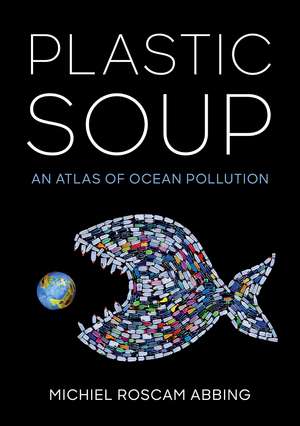
Plastic Soup: An Atlas of Ocean Pollution
Autor Michiel Roscam Abbingen Limba Engleză Hardback – 4 apr 2019
Recomandăm Plastic Soup ca o resursă vizuală esențială pentru studenții și profesioniștii din domeniul conservării mediului, fiind un instrument de referință pentru înțelegerea impactului polimerilor asupra ecosistemelor marine. Considerăm că forța acestui volum rezidă în capacitatea de a transforma datele statistice abstracte în dovezi vizuale incontestabile, facilitând integrarea acestor informații în proiecte educaționale sau campanii de conștientizare. Remarcăm o structură riguroasă, tipică unui atlas, care documentează prezența deșeurilor plastice în cele mai izolate colțuri ale planetei, oferind în același timp o perspectivă optimistă prin inventarierea soluțiilor actuale.
Spre deosebire de How to Give Up Plastic de Will McCallum, care funcționează ca un ghid practic de lifestyle pentru reducerea amprentei individuale, Plastic Soup adoptă o abordare sistemică și cartografică. Dacă volumul lui McCallum este centrat pe acțiuni domestice, lucrarea lui Michiel Roscam Abbing analizează problema la scară globală, incluzând dimensiuni legislative și artistice. De asemenea, reprezintă o alternativă vizuală la The Plasticology Project pentru cursurile de ecologie marină, cu avantajul unei prezentări grafice de excepție, unde fotografia de impact completează rigoarea științifică. Tonul este precis și informativ, evitând alarmismul gratuit în favoarea unei analize documentate a realității curente și a inițiativelor care pot inversa tendința prognozată pentru anul 2050.
Preț: 158.23 lei
Carte în stoc
Livrare din stoc 13 octombrie
Specificații
ISBN-10: 1642830089
Pagini: 136
Ilustrații: Full color throughout
Dimensiuni: 197 x 279 x 10 mm
Greutate: 0.57 kg
Editura: Island Press
Colecția Island Press
V-ar putea interesa
-
 The Nutmeg's Curse: Parables for a Planet in CrisisAmitav GhoshPreț: 134.69 lei
 -
 -18%Preț: 929.28 lei1133.27 lei
 -
 Transition Engineering: Building a Sustainable FutureSusan Krumdieck-15%Preț: 436.55 lei513.59 lei
 -
 Preț: 408.45 lei
 -
 Preț: 175.71 lei
 -
 Preț: 157.05 lei
 -
 Eco-Anxiety: Saving Our Sanity, Our Kids, and Our FutureHeather WhitePreț: 114.39 lei
 -
 -20%Preț: 190.90 lei239.97 lei
 -
 Preț: 89.37 lei
 -
 Friction, Wear and Lubrication in VacuumDonald H. BuckleyPreț: 122.70 lei
 -
 Preț: 467.71 lei
 -
 Foodloose in Washtenaw: A Foodie's Guide to Washtenaw CountyTaylor LanderyouPreț: 81.09 lei
 -
 Over the Seawall: Tsunamis, Cyclones, Drought, and the Delusion of Controlling NatureStephen Robert MillerPreț: 202.52 lei
 -
 Law and the Living Colorado RiverRobert W AdlerPreț: 40.65 lei
 -
 That Which Roots UsMarion DresnerPreț: 308.55 lei
 -
 Varieties of Environmentalism: Essays North and SouthRamachandra GuhaPreț: 422.07 lei
 -
 Preț: 92.80 lei
 -
 Preț: 95.69 lei
 -
 Thoreau, H: WaldenHenry David ThoreauPreț: 106.55 lei
De ce să citești această carte
Această carte se adresează celor care doresc să înțeleagă amploarea poluării marine dincolo de simple titluri de știri. Cititorul câștigă o perspectivă clară, susținută de infografice și imagini de impact, asupra modului în care plasticul afectează biodiversitatea. Este un motiv concret de achiziție pentru activiști, educatori sau oricine caută o sinteză între rigoarea unui atlas și inspirația oferită de proiectele globale de succes.
Despre autor
Michiel Roscam Abbing este un expert recunoscut în problematica poluării cu microplastic, activând în cadrul fundației Plastic Soup Foundation din Amsterdam. Expertiza sa se concentrează pe monitorizarea surselor de poluare și pe promovarea legislației internaționale pentru protecția mediului marin. Prin munca sa, Abbing a devenit o voce influentă în dialogul dintre organizațiile ecologiste și factorii de decizie politică, transformând cercetarea științifică în materiale educaționale accesibile publicului larg.
Descriere scurtă
In Plastic Soup, Michiel Roscam Abbing of the Plastic Soup Foundation reveals the scope of the issue: plastic trash now lurks on every corner of the planet. With striking photography and graphics, Plastic Soup brings this challenge to brilliant life for readers. Yet it also sends a message of hope; although the scale of the problem is massive, so is the dedication of activists working to check it. Plastic Soup highlights a diverse array of projects to curb plastic waste and raise awareness, from plastic-free grocery stores to innovative laws and art installations.
According to some estimates, if we continue on our current path, the oceans will contain more plastic than fish by the year 2050. Created to inform and inspire readers, Plastic Soup is a critical tool in the fight to reverse this trend.