
Planning Law and Environmental Limits: A New Legal Architecture for Emissions: Routledge Explorations in Environmental Studies
Autor Naomi Luhde-Thompsonen Limba Engleză Hardback – 23 mar 2026
Naomi Luhde-Thompson explores how planning law, which is one of the strongest forms of environmental regulation in the UK, has failed to incorporate environmental limits into decisions. Environmental limits are broadly understood as the point at which an irreversible change occurs in a system, providing a measure by which to assess development and to test whether or not these limits might be overrun. Combining theoretical perspectives with experiential practice, the book draws upon hydrocarbon extraction to analyse and interrogate the functionality of current decision-making processes elated to planning law and climate change mitigation. It goes on to propose an amended system that expands the foundational value of public interest in planning law, recommending strategies to incorporate environmental limits, in both strategic planning and decisions.
Planning Law and Environmental Limits will be of use to lawyers and policymakers, as well as to researchers, academics, and students interested in climate change, planning, and environmental law.
Din seria Routledge Explorations in Environmental Studies
- 11%
 Preț: 376.55 lei
 -
 Preț: 421.28 lei
 -
 Preț: 386.54 lei
 -
 Preț: 460.39 lei
 - 15%
 Preț: 435.68 lei
 - 15%
 Preț: 426.44 lei
 - 15%
 Preț: 437.28 lei
 -
 Preț: 476.61 lei
 -
 Preț: 475.20 lei
 -
 Preț: 444.29 lei
 -
 Preț: 462.00 lei
 - 18%
 Preț: 1113.21 lei
 - 15%
 Preț: 455.93 lei
 - 18%
 Preț: 1112.48 lei
 -
 Preț: 489.65 lei
 - 15%
 Preț: 430.16 lei
 - 15%
 Preț: 425.72 lei
 - 5%
 Preț: 441.05 lei
 - 18%
 Preț: 1307.68 lei
 - 18%
 Preț: 1116.57 lei
 - 18%
 Preț: 1112.48 lei
 - 18%
 Preț: 1254.12 lei
 - 15%
 Preț: 423.54 lei
 -
 Preț: 331.08 lei
 - 15%
 Preț: 469.06 lei
 -
 Preț: 470.47 lei
 - 18%
 Preț: 1250.55 lei
 - 15%
 Preț: 447.92 lei
 - 15%
 Preț: 470.52 lei
 - 18%
 Preț: 1254.81 lei
 - 15%
 Preț: 426.80 lei
 -
 Preț: 460.32 lei
 - 18%
 Preț: 1338.63 lei
 - 18%
 Preț: 1255.17 lei
 -
 Preț: 463.28 lei
Preț: 1345.26 lei
Preț vechi: 1640.57 lei
-18%
Puncte Express: 2018
Carte tipărită la comandă
Livrare economică 30 noiembrie-14 decembrie
Livrare prin curier în România Termenul estimat este afișat lângă disponibilitate.
Transport gratuit pentru acest produs Plată online sau ramburs, în funcție de opțiunile comenzii.
Retur gratuit în 14 zile Comandă securizată și suport în română.
Specificații
ISBN-13: 9781041047254
ISBN-10: 1041047258
Pagini: 202
Ilustrații: 4
Dimensiuni: 156 x 234 mm
Greutate: 0.53 kg
Ediția:1
Editura: Taylor & Francis
Colecția Routledge
Seria Routledge Explorations in Environmental Studies
Locul publicării:Oxford, United Kingdom
ISBN-10: 1041047258
Pagini: 202
Ilustrații: 4
Dimensiuni: 156 x 234 mm
Greutate: 0.53 kg
Ediția:1
Editura: Taylor & Francis
Colecția Routledge
Seria Routledge Explorations in Environmental Studies
Locul publicării:Oxford, United Kingdom
V-ar putea interesa
-
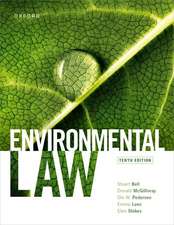 Environmental LawStuart Bell-9%Preț: 410.00 lei448.56 lei
 -
 Environmental LawLee Godden-23%Preț: 630.91 lei819.37 lei
 -
 Environmental Law: A Very Short IntroductionElizabeth Fisher-20%Preț: 56.77 lei70.88 lei
 -
 -33%Preț: 679.89 lei1007.25 lei
 -
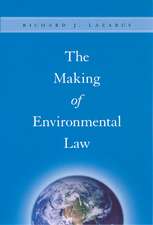 The Making of Environmental LawRichard J. LazarusPreț: 319.86 lei
 -
 Climate JusticeCass R. SunsteinPreț: 168.04 lei
 -
 The Law of Capitalism and How to Transform ItKatharina PistorPreț: 175.45 lei
 -
 A Barrister for the EarthMonica Feria-TintaPreț: 157.10 lei
 -
 Preț: 137.09 lei
 -
 Architect's Legal Handbook: The Law for ArchitectsAnthony Speaight KCPreț: 466.12 leiRecomandat
 -
 Capitalism at the LimitUlrich BrandPreț: 159.60 lei
 -
 Major Cases in Climate Law: A Critical IntroductionDr Thomas L Muinzer-20%Preț: 353.08 lei444.01 lei
 -
 Preț: 263.43 lei
 -
 Preț: 356.17 lei
 -
 The Long HeatAndreas MalmPreț: 247.27 lei
 -
 The Age of ExtractionTim WuPreț: 107.56 lei
 -
 The Law of Net Zero and Nature PositiveCamilla Ter Haar-18%Preț: 991.19 lei1208.77 lei
 -
 Preț: 262.55 lei
 -
 -18%Preț: 2588.95 lei3157.26 lei
Public țintă
Academic, Postgraduate, and Undergraduate AdvancedCuprins
Foreword
List of Abbreviations
1. Death by a thousand cuts: climate mitigation in planning law
2. The limits of authority: how competence shapes outcomes for fossil fuel extraction and climate change
3. Mitigation's paradox: how competing priorities create counterproductive climate action
4. Recognising limits through procedural and substantive environmental rights
5. Divided content: the emergence of asymmetries in environmental decision-making
6. Achieving integrity in a new legal planning architecture for environmental limits
List of Abbreviations
1. Death by a thousand cuts: climate mitigation in planning law
2. The limits of authority: how competence shapes outcomes for fossil fuel extraction and climate change
3. Mitigation's paradox: how competing priorities create counterproductive climate action
4. Recognising limits through procedural and substantive environmental rights
5. Divided content: the emergence of asymmetries in environmental decision-making
6. Achieving integrity in a new legal planning architecture for environmental limits
Notă biografică
Naomi Luhde-Thompson is a senior lecturer in sustainable futures at Oxford Brookes University’s School of the Built Environment, UK.
Descriere
This book explores the role of planning law in balancing the dilemma of resource extraction with the recognition of emission limits. The author explores how planning law, which is one of the strongest forms of environmental regulation in the UK, has failed to incorporate environmental limits into decisions.