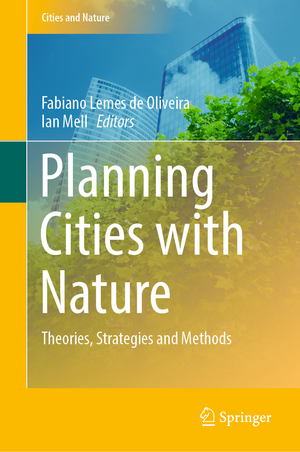
Planning Cities with Nature: Theories, Strategies and Methods: Cities and Nature
Editat de Fabiano Lemes de Oliveira, Ian Mellen Limba Engleză Hardback – 27 feb 2019
În contextul programelor de studii avansate în urbanism și ecologie urbană, Planning Cities with Nature se poziționează ca o resursă academică esențială pentru înțelegerea procesului de „re-naturare” a spațiilor antropice. Volumul, publicat în seria Cities and Nature de către Springer, propune o tranziție de la simpla prezență a vegetației către sisteme urbane integrate, capabile să răspundă provocărilor climatice actuale. Observăm o organizare riguroasă în trei părți: o retrospectivă istorică a relației oraș-natură, o secțiune dedicată modelelor și metodelor de planificare și o explorare a dimensiunii democratice a accesului la spațiul verde.
Remarcăm faptul că acest titlu extinde cadrul propus de Nature-based Solutions for Sustainable Urban Planning de Israa H. Mahmoud cu date noi din perspective geografice variate, analizând studii de caz din Brazilia până în China. În timp ce alte lucrări se concentrează pe soluții punctuale, ediția de față, coordonată de Fabiano Lemes de Oliveira și Ian Mell, insistă pe mecanismele sistemice de implementare, fie ele de sus în jos sau inițiative comunitare.
Opera editorilor se înscrie într-o linie de cercetare bine definită; Fabiano Lemes de Oliveira continuă aici explorarea peisajelor productive începută în Re-Imagining Resilient Productive Landscapes, rafinând legătura dintre reziliența urbană și sănătatea publică. Structura cărții ghidează cititorul de la fundamentele culturale și modelele istorice (precum „pana verde” sau modelele lui Andrea Branzi) către aplicații practice contemporane, cum este cazul planificării verzi din Helsinki. Este o lucrare care nu doar teoretizează, ci oferă indicatori clari pentru politici publice sustenabile.
Din seria Cities and Nature
- 18%
 Preț: 764.77 lei
 - 18%
 Preț: 853.55 lei
 - 24%
 Preț: 862.18 lei
 - 24%
 Preț: 799.14 lei
 - 24%
 Preț: 983.83 lei
 - 24%
 Preț: 771.74 lei
 - 18%
 Preț: 753.63 lei
 - 24%
 Preț: 994.47 lei
 - 18%
 Preț: 857.19 lei
 - 18%
 Preț: 697.35 lei
 - 18%
 Preț: 706.63 lei
 - 24%
 Preț: 788.68 lei
 - 18%
 Preț: 1078.01 lei
 - 24%
 Preț: 871.12 lei
 - 15%
 Preț: 620.13 lei
 - 18%
 Preț: 703.86 lei
 - 24%
 Preț: 949.55 lei
 - 25%
 Preț: 817.45 lei
 - 24%
 Preț: 702.86 lei
 - 24%
 Preț: 724.35 lei
 - nou
 Preț: 948.18 lei
Preț: 1072.09 lei
Preț vechi: 1307.42 lei
-18%
Carte disponibilă
Livrare economică 18 mai-01 iunie
Specificații
ISBN-10: 3030018652
Pagini: 357
Ilustrații: XII, 285 p. 68 illus., 53 illus. in color.
Dimensiuni: 155 x 235 mm
Greutate: 0.64 kg
Ediția:1st ed. 2019
Editura: Springer International Publishing
Colecția Springer
Seria Cities and Nature
Locul publicării:Cham, Switzerland
De ce să citești această carte
Recomandăm această carte studenților și specialiștilor în planificare urbană care doresc să depășească estetica peisagistică în favoarea unor soluții funcționale. Cititorul câștigă o înțelegere profundă a modului în care infrastructura verde poate genera economii directe prin prevenirea riscurilor de sănătate și regenerare economică. Este un instrument metodologic rar, care combină rigoarea academică cu bunele practici aplicabile în administrația publică modernă.
Despre autor
Fabiano Lemes de Oliveira este un cercetător recunoscut în domeniul urbanismului sustenabil, cu un interes marcat pentru istoria planificării și integrarea naturii în designul urban. Lucrările sale anterioare, precum Nature-Based Solutions in Cities of the Global South, reflectă angajamentul său pentru soluții adaptate contextelor socio-economice diverse. Alături de Ian Mell, specialist în infrastructură verde, acesta a consolidat o perspectivă interdisciplinară asupra modului în care orașele pot deveni reziliente. Expertiza lor combinată acoperă atât dimensiunea teoretică, cât și pe cea aplicată a politicilor de mediu la scară globală.
Descriere scurtă
There is considerable interest in ‘naturalising’ cities, since it can help address multiple global societal challenges and generate various benefits, such as the enhancement of health and well-being, sustainable urbanisation, ecosystems and their services, and resilience to climate change. This can also translate into tangible economic benefits in terms of preventing health hazards, positively affecting health-related expenditure, new job opportunities (i.e. urban farming) and the regeneration of urban areas. There is, thus, a compelling case to investigate integrative approaches to urban and natural systems that can help cities address the social, economic and environmental needs of a growing population. How can we plan with nature? What are the models and approaches that can be used to develop more sustainable cities that provide high-quality urban green spaces?
Cuprins
Recenzii
Notă biografică
Dr. Ian Mell is a Senior Lecturer at the School of Environment, Education and Development, University of Manchester, UK. He is a Landscape Planner with a specialism in Green Infrastructure policy, planning and development. He has worked in academia, the environment sector and local government, and has extensiveexperience of researching landscape issues in the UK, EU and more widely in the USA, India and China. He is the author of Global Green Infrastructure (Mell, 2016, Routledge) and Green Belt: Part, Present, Future? (Sturzaker & Mell, 2017, Routledge).