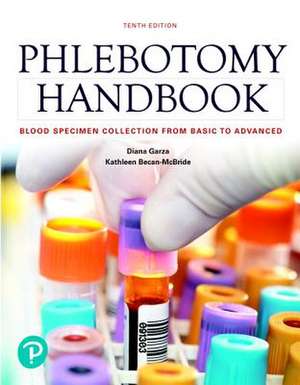
Phlebotomy Handbook: Blood Specimen Collection from Basic to Advanced
Autor Diana Garza, Kathleen Becan-Mcbrideen Limba Engleză Paperback – 5 sep 2024
Provocarea majoră în medicina de laborator nu rezidă doar în analiza propriu-zisă, ci în faza preanalitică, unde integritatea probei depinde critic de precizia recoltării. În Phlebotomy Handbook: Blood Specimen Collection from Basic to Advanced, notăm cu interes o abordare riguroasă a acestui proces, transformând o procedură aparent de rutină într-o disciplină clinică de înaltă precizie. Ajuns la a 10-a ediție, volumul semnat de Diana Garza și Kathleen Becan-Mcbride servește drept standard pentru personalul medical care urmărește conformitatea cu normele internaționale NAACLS. Descoperim aici o structură progresivă, organizată în patru părți fundamentale. Manualul debutează cu protocoalele de siguranță și etică medicală, fundamentează practica prin capitole detaliate de anatomie cardiovasculară și culminează cu execuția tehnică a venipuncției și a recoltării capilare. Reținem atenția deosebită acordată gestionării complicațiilor și transportului probelor, elemente vitale pentru evitarea erorilor de diagnostic. Acolo unde volumul Phlebotomy de Robin S. Warekois pune accent pe formatul de tip „storyboard” și instrucțiuni pas-cu-pas vizuale, Phlebotomy Handbook aprofundează fundamentul teoretic și competențele avansate, precum procedurile arteriale și testările la punctul de îngrijire (point-of-care). Spre deosebire de ghidurile de buzunar precum Phlebotomy Notes, care sunt ideale pentru o consultare rapidă în timpul rotațiilor clinice, acest tratat de la Pearson oferă contextul necesar pentru înțelegerea fiziopatologiei din spatele fiecărei proceduri. Este un instrument clinic ce acoperă atât populațiile speciale — pediatrie și geriatrie — cât și procedurile complexe de cultură bacteriană sau recoltări intravenoase, asigurând o pregătire exhaustivă pentru mediul spitalicesc modern.
Preț: 878.42 lei
Preț vechi: 924.65 lei
-5%
Carte disponibilă
Livrare economică 16-30 noiembrie
Livrare express 30 octombrie-05 noiembrie pentru 65.90 lei
Specificații
ISBN-10: 0134709322
Pagini: 672
Dimensiuni: 216 x 276 x 36 mm
Greutate: 1.22 kg
Ediția:10. Auflage
Editura: Pearson
De ce să citești această carte
Această ediție este esențială pentru asistenții medicali și tehnicienii de laborator care doresc să stăpânească nu doar tehnica recoltării, ci și protocoalele de siguranță care previn erorile de diagnostic. Cititorul câștigă o înțelegere profundă a variabilelor preanalitice și a competențelor cerute la nivel internațional, fiind un suport solid atât pentru instruirea academică, cât și pentru practica clinică avansată.
Despre autor
Diana Garza și Kathleen Becan-Mcbride sunt experți recunoscuți în domeniul științelor de laborator clinic, cu o vastă experiență în educația medicală. Diana Garza a contribuit semnificativ la standardizarea procedurilor de flebotomie, în timp ce Kathleen Becan-Mcbride este un autor prolific în domeniul tehnologiei medicale și al managementului calității în laboratoare. Colaborarea lor pentru acest manual de referință reflectă o sinteză între rigoarea academică și necesitățile practice din spitalele contemporane, adaptând constant textul la noile reglementări de siguranță și tehnologii de recoltare.
Notă biografică
Kathleen Becan-McBride received her Bachelor of Science degree in Biology from the University of Houston; completed her medical laboratory science education at St. Lukes Episcopal Hospital in Houston, Texas; and earned national board certification as a medical laboratory scientist. While working at St. Lukes Episcopal Hospital Clinical Laboratory, she received a full scholarship to the University of Houston/Baylor College of Medicine collaborative Masters in Allied Health Education and Administration Program. Dr. Becan-McBride completed her Doctorate in Higher Education and Administration while teaching in the Medical Laboratory Science program and Physician Assistant program at University of Texas Medical Branch Galveston and Medical Laboratory Technician program at Houston Community College. She then became a faculty member and Chair of the Clinical Laboratory Science Department at UTHealth. In more recent years at UTHealth, she was Director of Community and Educational Outreach, Director of Workforce and Resource Development, and professor in the Medical School Department of Family and Community Medicine.
Dr. Becan-McBride has published 24 books and more than 57 articles. She has served on numerous national and international health care advisory boards, several editorial boards for health care journals, national and international committees and commissions, and educational advisory boards for medical laboratory science educational programs and community outreach programs. She was the elected Chair of the ASCP Board of Certification Board of Governors from 2008 to 2010 and received the ASCP Mastership Award in 2012; ASCP Board of Certification Distinguished Service Award in 2012; and ASCP Mentorship Award in 2016. Dr. Becan-McBride continues her Texas Higher Education Consultant activities in writing, presenting and editing, mainly in the expanding area of blood collection.