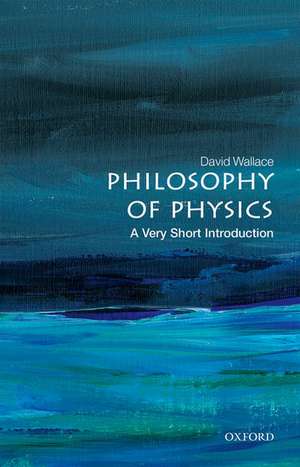
Philosophy of Physics: A Very Short Introduction: Very Short Introductions
Autor David Wallaceen Limba Engleză Paperback – 22 apr 2021
Apreciem modul în care Philosophy of Physics reușește să sintetizeze intersecția dintre fizica teoretică și rigoarea analitică a filosofiei, oferind o perspectivă interdisciplinară asupra celor mai profunde teorii moderne. Subliniem faptul că această lucrare nu se limitează la o simplă prezentare a conceptelor, ci investighează implicațiile conceptuale „bizare” ale mecanicii cuantice și ale termodinamicii asupra viziunii noastre despre lume. Considerăm că structura propusă de David Wallace este esențială pentru înțelegerea modului în care fizica și filosofia se informează reciproc: progresul în fizică deschide noi căi de reflecție filosofică, în timp ce analiza conceptuală poate indica direcții noi pentru teoriile științifice.
Textul este organizat în jurul a trei piloni fundamentali. Primul analizează evoluția conceptelor de spațiu și timp, de la viziunea absolutistă a lui Newton până la revoluțiile aduse de relativitate. Al doilea pilon abordează problema „săgeții timpului” în mecanica statistică — explicând cum procese macroscopice precum răcirea cafelei pot fi derivate din legi microscopice care nu disting între trecut și viitor. În final, autorul decantează misterele mecanicii cuantice, oferind claritate asupra dificultăților de interpretare care persistă și astăzi. Cartea acoperă aceeași arie ca Everywhere and Everywhen de Nick Huggett, dar cu o abordare mai interdisciplinară, punând un accent mai mare pe evoluția istorică a conceptelor și pe fundamentele matematice ale teoriilor.
În contextul seriei Very Short Introductions, acest volum se distinge printr-un ton precis și o capacitate remarcabilă de a condensa dezbateri vaste în doar 176 de pagini, fiind susținut de diagrame alb-negru care clarifică modelele teoretice discutate.
Din seria Very Short Introductions
-
 Preț: 50.35 lei
 -
 Preț: 50.13 lei
 -
 Preț: 44.16 lei
 -
 Preț: 49.18 lei
 - 5%
 Preț: 63.80 lei
 -
 Preț: 49.38 lei
 -
 Preț: 63.74 lei
 -
 Preț: 50.18 lei
 - 21%
 Preț: 53.51 lei
 - 22%
 Preț: 53.47 lei
 - 21%
 Preț: 53.32 lei
 - 21%
 Preț: 55.26 lei
 - 21%
 Preț: 55.56 lei
 - 21%
 Preț: 55.43 lei
 - 21%
 Preț: 55.63 lei
 - 21%
 Preț: 55.67 lei
 - 21%
 Preț: 55.17 lei
 - 21%
 Preț: 54.87 lei
 - 21%
 Preț: 55.73 lei
 - 21%
 Preț: 55.36 lei
 - 21%
 Preț: 55.17 lei
 - 22%
 Preț: 53.02 lei
 - 21%
 Preț: 53.80 lei
 - 22%
 Preț: 54.59 lei
 - 21%
 Preț: 55.07 lei
 - 33%
 Preț: 46.81 lei
 - 21%
 Preț: 55.22 lei
 -
 Preț: 66.52 lei
 - 21%
 Preț: 55.07 lei
 - 22%
 Preț: 54.82 lei
 - 22%
 Preț: 53.06 lei
 - 21%
 Preț: 55.32 lei
 - 21%
 Preț: 55.17 lei
 - 22%
 Preț: 54.69 lei
 - 21%
 Preț: 55.07 lei
 - 21%
 Preț: 55.30 lei
 - 21%
 Preț: 53.62 lei
 - 22%
 Preț: 53.26 lei
 - 22%
 Preț: 52.45 lei
 - 21%
 Preț: 55.56 lei
 - 22%
 Preț: 54.40 lei
 - 21%
 Preț: 55.59 lei
 - 21%
 Preț: 54.87 lei
 -
 Preț: 66.19 lei
 - 21%
 Preț: 55.66 lei
 - 21%
 Preț: 55.36 lei
 - 21%
 Preț: 55.17 lei
 - 21%
 Preț: 54.46 lei
 - 21%
 Preț: 54.27 lei
 - 21%
 Preț: 55.07 lei
Preț: 55.40 lei
Preț vechi: 70.20 lei
-21%
Carte disponibilă
Livrare economică 25 iunie-01 iulie
Livrare express 09-13 iunie pentru 31.79 lei
Specificații
ISBN-10: 0198814321
Pagini: 176
Ilustrații: 3 black and white diagrams
Dimensiuni: 114 x 175 x 10 mm
Greutate: 0.15 kg
Editura: OUP OXFORD
Colecția OUP Oxford
Seria Very Short Introductions
Locul publicării:Oxford, United Kingdom
V-ar putea interesa
-
 Time RebornLee Smolin-32%Preț: 62.88 lei92.07 lei
 -
 The Science of Can and Can'tChiara Marletto-21%Preț: 61.68 lei77.68 lei
 -
 Linguistics: A Very Short IntroductionP. H. Matthews-22%Preț: 54.69 lei69.77 lei
 -
 Hegel: A Very Short IntroductionPeter Singer-21%Preț: 55.07 lei70.00 lei
 -
 Presocratic Philosophy: A Very Short IntroductionCatherine Rowett-21%Preț: 55.36 lei70.17 lei
 -
 Chaos: A Very Short IntroductionLeonard Smith-21%Preț: 54.27 lei68.72 lei
 -
 Polygamy: A Very Short IntroductionSarah M. S. Pearsall-22%Preț: 53.62 lei68.32 lei
 -
 A Brief History of the Philosophy of TimeAdrian Bardon-18%Preț: 140.58 lei171.27 lei
 -
 Philosophy of Science: A Very Short IntroductionSamir Okasha-21%Preț: 55.19 lei70.07 lei
 -
 Logic: A Very Short IntroductionGraham Priest-21%Preț: 55.67 lei70.36 lei
 -
 Time: A Very Short IntroductionJenann Ismael-21%Preț: 54.90 lei69.90 lei
 -
 Philosophy: A Very Short IntroductionEdward Craig-21%Preț: 54.93 lei69.93 lei
 -
 Ethics: A Very Short IntroductionSimon Blackburn-22%Preț: 54.32 lei69.54 lei
 -
 Seven Brief Lessons on Physics. Anniversary EditionCarlo RovelliPreț: 77.30 lei
 -
 The Direction of TimeHans Reichenbach-20%Preț: 81.91 lei102.73 lei
 -
 The Philosophy of Space and TimeHans Reichenbach-21%Preț: 112.29 lei142.57 lei
 -
 Poems of SapphoSappho-61%Preț: 17.59 lei45.51 lei
 -
 Sonnets to Orpheus and Duino ElegiesRainer Maria Rilke-21%Preț: 27.93 lei35.22 lei
 -
 The World According to PhysicsJim Al–khaliliPreț: 112.53 lei
 -
 Basic Math & Pre-Algebra For Dummies Book + Workbook BundleMark ZegarelliPreț: 239.29 lei
De ce să citești această carte
Recomandăm această carte cititorilor care doresc să înțeleagă fundamentele conceptuale ale universului dincolo de ecuațiile matematice. Este o resursă excelentă pentru studenții la fizică sau filosofie, oferind o clarificare a conceptelor de spațiu-timp și mecanică cuantică. Cititorul câștigă o perspectivă riguroasă asupra modului în care știința modernă ne modifică înțelegerea realității, totul într-un format accesibil și compact.
Despre autor
David Wallace este un autor și cercetător care contribuie la seria de introduceri de la OUP OXFORD. Deși palmaresul său de publicații sub acest nume include lucrări diverse în domenii precum istoria literară sau cultura populară — de la studii despre Geoffrey Chaucer la analize ale istoriei europene în volumul Europe — expertiza sa în acest volum se concentrează pe clarificarea fundamentelor filosofice ale științei. Abordarea sa în Philosophy of Physics reflectă o capacitate de sinteză specifică autorilor care pot naviga între rigoarea academică și nevoia de popularizare a conceptelor complexe pentru un public larg.