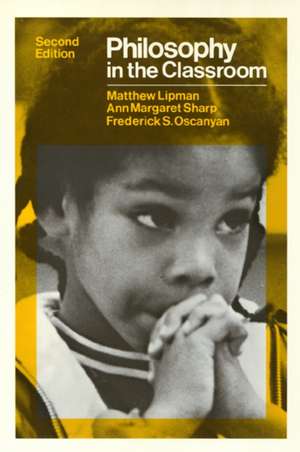
Philosophy in the Classroom
Autor Matthew Lipmanen Limba Engleză Paperback – 15 mai 1980
Relevanța lucrării Philosophy in the Classroom pentru formarea cadrelor didactice și pentru acreditările în pedagogie modernă este incontestabilă, fiind considerată un text fundamental pentru implementarea programelor de filosofie pentru copii (P4C). Suntem de părere că această a doua ediție, revizuită și extinsă, oferă instrumentele necesare pentru a trece de la o educație bazată pe transmiterea de informații la una centrată pe procesele de gândire. Subliniem faptul că autorul nu propune introducerea unei noi materii de studiu, ci o reconfigurare a modului în care copiii interacționează cu cunoașterea.
Structura volumului reflectă o progresie logică de la teorie la practică. Partea I analizează disfuncțiile educaționale actuale și nevoia de experiențe cu sens, în timp ce Partea a II-a detaliază metodologia de predare și comportamentul profesorului. Ultima parte se concentrează pe aplicarea practică a logicii și a eticii, abordând teme precum adevărul, standardele și gândirea autonomă. Acoperă aceeași arie tematică ca A Teacher's Guide to Philosophy for Children de Keith J. Topping, dar cu o abordare mult mai ancorată în fundamentul teoretic al comunității de cercetare, oferind o perspectivă sistemică asupra curriculumului.
În contextul operei sale, Philosophy in the Classroom servește drept fundament metodologic, fiind completată ulterior de Philosophy Goes To School, care explorează impactul acestor metode în școala primară. Dacă în Thinking in Education autorul pleda pentru infuzarea gândirii critice în toate disciplinele, aici Matthew Lipman oferă cadrul concret pentru transformarea clasei într-un spațiu al dialogului și al mirării filosofice, esențial pentru dezvoltarea integrală a individului.
Preț: 341.25 lei
Carte indisponibilă temporar
Specificații
ISBN-10: 0877221839
Pagini: 248
Dimensiuni: 152 x 229 x 18 mm
Greutate: 0.34 kg
Ediția:Revised
Editura: Temple University Press
Colecția Temple University Press
De ce să citești această carte
Această carte este esențială pentru educatorii care doresc să depășească modelul tradițional al memorării și să dezvolte în elevi capacitatea de a gândi critic și etic. Cititorul câștigă o metodologie clară pentru a transforma orele de curs în dialoguri constructive. Este o recomandare obligatorie pentru cei interesați de pedagogia participativă și de formarea caracterului prin analiză logică și explorare filosofică de la vârste fragede.
Despre autor
Matthew Lipman (1923–2010) a fost un filosof și teoretician al educației american, recunoscut la nivel mondial drept fondatorul mișcării „Philosophy for Children” (P4C). În calitate de director al Institute for the Advancement of Philosophy for Children, Lipman a revoluționat pedagogia contemporană prin argumentarea necesității logicii și eticii în curriculumul școlar primar. Opera sa, care include titluri de referință precum Thinking in Education și Noûs, se concentrează pe transformarea educației într-un proces de cercetare reflexivă, punând bazele pentru ceea ce astăzi numim gândire critică aplicată în mediul școlar.
Descriere scurtă
This revision is thorough-going and incorporates new chapters, as well as new material in old chapters. Part One focuses on the need of educational change and the importance of philosophical inquiry in developing new approaches. Part Two discusses curriculum and teaching methodology, including teacher behavior conducive to helping children. Part Three deals with developing logic skills and moral judgment. It concludes with a chapter on the sorts of philosophical themes pertinent to ethical inquiry for children: the right and the fair, perfect and right, free will and determinism, change and growth, truth, caring, standards and rules, thinking and thinking for oneself. Education, in this sense, is not a matter of dispensing information; it is the process of assisting in the growth of the whole individual.
Notă biografică
Ann Margaret Sharp, Assistant Director of the Institute, is also co-editor with Matthew Lipman of Growing Up with Philosophy.
Frederick S. Oscanyan is a lecturer in the Department of Philosophy at Yale University.
Cuprins
Part I: Encouraging Children to Be Thoughtful
1. The Need for Educational Redesign
Educational Dysfunction • Failure of Remedial Approaches • Meeting Expectations • Discovery • Frustration • Meaningful Experiences • Need for Adventure • Meaning versus Rationality
2. Thinking and the School Curriculum
The Child's Hunger for Meaning • Thinking Skillfully • Thinking Skills and Basic Skills • Thinking Skills and Other Academic Disciplines • The Relationship between Dialogue and Thinking • Thinking Well about Things That Matter
3. Philosophy: The Lost Dimension in Education
Philosophy Begins in Wonder • Wonder and Meaning • Scientific Explanation • Symbolic Interpretation • Philosophical Investigation
4. Some Educational Presuppositions of Philosophy for Children
Preserving the Integrity of Philosophy as a Discipline • Converting the Classroom into a Community of Inquiry • Preparing the Teacher and the Curriculum
Part II: Aims and Methods of Philosophy for Children
5. The Philosophy for Children Curriculum
Description of Curriculum • Aims and Objectives of Philosophy for Children • Improvement of Reasoning Ability • Development of Creativity • Personal and Interpersonal Growth • Development of Ethical Understanding • Development of the Ability to Find Meaning in Experience
6. Teaching Methodology: Value Considerations and Standards of Practice
Getting Children to Think for Themselves • Conditions for Teaching Philosophical Thinking • Teaching Behavior Conductive to Helping Children Engage in Philosophical Thinking
7. Guiding a Philosophical Discussion
Philosophy and the Strategies of Dialogue • Guiding a Classroom Discussion • The Role of Ideas in a Philosophical Dialogue • Fostering Philosophical Dialogue • Eliciting Views or Opinions • Helping Students Express Themselves: Clarification and Restatement • Explicating Students' Views • Interpretation • Seeking Consistency • Requesting Definitions • Searching for Assumptions • Indicating Fallacies • Requesting Reasons • Asking Students to Say How They Know • Eliciting and Examining Alternatives • Orchestrating a Discussion
Part III: Applying Thinking Skills to School Experience
8. Encouraging Children to Be Logical
Formal Logic as an Aid to Philosophical Thinking • Giving Reasons: The Good Reasons Approach • Acting Rationally • Conclusion
9. Can Moral Education Be Divorced from Philosophical Inquiry
The Presumption of Rationality • Setting the Stage for Moral Growth • Socialization and Autonomy in Moral Education • Dangerous Dichotomies in Moral Education • What to Do to Help the Children Know What to Do • Imagination and Moral Education • Where to Begin • Why Moral Education Cannot Be Divorced form Philosophical Education • The Relationship between Logic and Morality • The Improvement of Moral Judgment
10. Philosophical Themes in Ethical Inquiry for Children
The Relation of Logic to Ethics • Consistency • The Right and the Fair • Perfect and Right • Free Will and Determination • Natural • Change and Growth • Truth • Caring • Standards and Rules • Questions and Answers • Thinking and Thinking for Oneself in Ethical Inquiry
Appendix A: The Reform of Teacher Education
Appendix B: Experimental Research in Philosophy for Children
Bibliography