
Performance Modeling of Operating Systems Using Object-Oriented Simulations: Series in Computer Science
Autor José M. Garridoen Limba Engleză Paperback – 10 apr 2013







Preț: 321.50 lei
Preț vechi: 401.88 lei
-20%
Puncte Express: 482
Carte tipărită la comandă
Livrare economică 01-15 decembrie
Livrare prin curier în România Termenul estimat este afișat lângă disponibilitate.
Transport gratuit de la 400.00 lei Plată online sau ramburs, în funcție de opțiunile comenzii.
Retur gratuit în 14 zile Comandă securizată și suport în română.
Specificații
ISBN-13: 9781475773118
ISBN-10: 1475773110
Pagini: 296
Ilustrații: XIV, 279 p. 2 illus.
Dimensiuni: 152 x 229 x 17 mm
Greutate: 0.43 kg
Ediția:Softcover reprint of the original 1st edition 2000
Editura: Springer
Colecția Series in Computer Science
Seria Series in Computer Science
Locul publicării:New York, NY, United States
ISBN-10: 1475773110
Pagini: 296
Ilustrații: XIV, 279 p. 2 illus.
Dimensiuni: 152 x 229 x 17 mm
Greutate: 0.43 kg
Ediția:Softcover reprint of the original 1st edition 2000
Editura: Springer
Colecția Series in Computer Science
Seria Series in Computer Science
Locul publicării:New York, NY, United States
V-ar putea interesa
-
 The Designer's Guide to VHDLPeter J. Ashenden-34%Preț: 375.93 lei572.56 lei
 -
 Deep SimplicityJohn GribbinPreț: 92.84 lei
 -
 Evolution of Networks: From Biological Nets to the Internet and WWWS. N. Dorogovtsev-23%Preț: 432.72 lei558.75 lei
 -
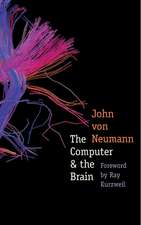 The Computer and the BrainJohn Von NeumannPreț: 113.01 lei
 -
 Introduction to Systems TheoryNiklas LuhmannPreț: 169.40 lei
 -
 Introduction ModelicaFritzson-8%Preț: 452.76 lei492.13 lei
 -
 Optimal Estimation of Dynamic SystemsJohn L. Crassidis-18%Preț: 1494.88 lei1823.02 lei
 -
 -15%Preț: 572.75 lei673.83 lei
 -
 Switching in Systems and ControlDaniel Liberzon-15%Preț: 584.73 lei687.91 lei
 -
 Introducing ChaosIwona AbramsPreț: 64.56 lei
Public țintă
ResearchCuprins
Overview of System and Performance Modeling.- Object Oriented Modeling.- Basic Probability Theory and Random Numbers.- Single-Server Models.- Queuing Networks.- CPU Scheduling.- Process Synchronization.- Deadlock.- Inter-Process Communication.- Virtual Memory.- Device Management.- Additional Models.