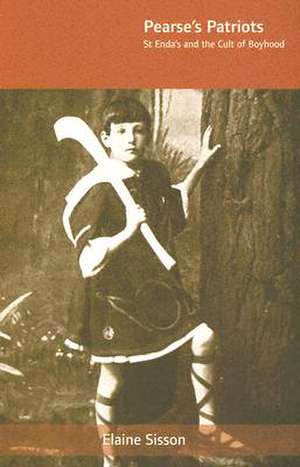
Pearse's Patriots
Autor Elaine Sissonen Limba Engleză Paperback – 28 feb 2005
Această monografie, semnată de Elaine Sisson, reprezintă prima analiză detaliată și de sine stătătoare a școlii St. Enda’s, un experiment pedagogic radical care a marcat profund istoria Irlandei la începutul secolului XX. Putem afirma că lucrarea depășește simpla cronică instituțională, oferind o perspectivă critică asupra modului în care Patrick Pearse a încercat să modeleze o nouă identitate masculină pentru viitorul stat irlandez. Volumul explorează tensiunea fascinantă dintre curriculumul liberal, centrat pe copil, și obiectivul politic explicit de a crea o „frăție a tinerilor irlandezi” gata de sacrificiu pentru țară.
Remarcăm modul în care autoarea decodifică utilizarea spectacolului, a mitologiei și a sporturilor gaelice nu doar ca activități extrașcolare, ci ca piloni ai unei ideologii de regenerare culturală. St. Enda’s este prezentată ca un nod vital al renașterii irlandeze, unde ideile lui Pearse au fost validate de vizitele unor figuri emblematice precum W.B. Yeats sau Roger Casement. Cititorii familiarizați cu Patrick Pearse de J. Augusteijn vor aprecia modul în care Elaine Sisson aprofundează aplicarea practică a ideilor pedagogice ale lui Pearse, trecând de la biografie la analiza spațiului școlar ca laborator identitar. De asemenea, lucrarea completează temele abordate în Constructions of the Irish Child in the Independence Period, 1910-1940, oferind un studiu de caz aplicat asupra modului în care cetățenia și genul au fost predate prin ritualuri și simbolism celtic.
Preț: 202.38 lei
Carte disponibilă
Livrare economică 16-30 mai
Specificații
ISBN-10: 1859183956
Pagini: 233
Dimensiuni: 158 x 234 x 20 mm
Greutate: 0.43 kg
Editura: Cork University Press
V-ar putea interesa
-
 Somerset, A: Queen AnneAnne SomersetPreț: 117.80 lei
 -
 Singled OutVirginia NicholsonPreț: 129.07 lei
 -
 -25%Preț: 163.16 lei218.73 lei
 -
 A People of One Book: The Bible and the VictoriansTimothy Larsen-5%Preț: 269.74 lei284.46 lei
 -
 How to be a TudorRuth Goodman-20%Preț: 71.41 lei89.27 lei
 -
 She-WolvesHelen CastorPreț: 90.81 lei
 -
 -27%Preț: 64.95 lei89.34 lei
 -
 The Balfour Declaration: The Origins of the Arab-Israeli ConflictJonathan Schneer-27%Preț: 85.58 lei117.23 lei
 -
 Stalin's Englishman: The Lives of Guy BurgessAndrew Lownie-26%Preț: 71.55 lei97.16 lei
 -
 -20%Preț: 72.38 lei90.03 lei
 -
 The Schaffhausen AdomnanDamian Bracken-15%Preț: 621.34 lei730.99 lei
 -
 Utopianism in Eighteenth-Century IrelandDeirdre Ní ChuanacháinPreț: 318.84 lei
 -
 Preț: 361.73 lei
De ce să citești această carte
Este o resursă esențială pentru cercetătorii istoriei educației și a naționalismului irlandez. Cititorul va înțelege cum o instituție de învățământ a fost transformată într-un instrument de construcție identitară, utilizând mitul și tradiția pentru a contesta hegemonia culturală britanică. Este o lectură revelatoare despre legătura dintre pedagogie, masculinitate și idealism politic în pragul Revoltei de Paște.