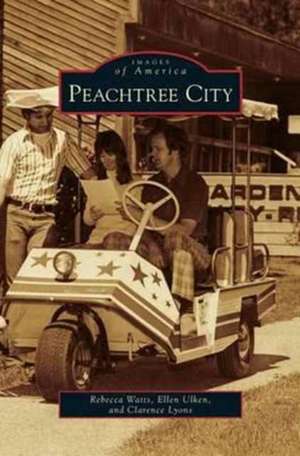
Peachtree City
Autor Rebecca Watts, Ellen Ulken, Clarence Lyonsen Limba Engleză Hardback
Preț: 174.74 lei
Puncte Express: 262
Carte tipărită la comandă
Livrare economică 17 noiembrie-01 decembrie
Livrare prin curier în România Termenul estimat este afișat lângă disponibilitate.
Transport gratuit de la 400.00 lei Plată online sau ramburs, în funcție de opțiunile comenzii.
Retur gratuit în 14 zile Comandă securizată și suport în română.
Specificații
ISBN-13: 9781531644833
ISBN-10: 153164483X
Pagini: 130
Dimensiuni: 170 x 244 x 10 mm
Greutate: 0.41 kg
ISBN-10: 153164483X
Pagini: 130
Dimensiuni: 170 x 244 x 10 mm
Greutate: 0.41 kg
V-ar putea interesa
-
 The Founding GardenersAndrea Wulf-24%Preț: 66.36 lei86.75 lei
 -
 Sugar BaronsMatthew Parker-29%Preț: 76.27 lei107.12 lei
 -
 -23%Preț: 219.42 lei285.99 lei
 -
 American PandemicNancy K Bristow-19%Preț: 563.20 lei695.32 lei
 -
 -9%Preț: 343.23 lei378.94 lei
 -
 Preț: 276.61 lei
 -
 David CrockettMichael WallisPreț: 112.64 lei
 -
 Preț: 221.97 lei
 -
 FrankfordBrian H HarrisPreț: 132.99 lei
 -
 Montana Women HomesteadersSarah CarterPreț: 108.38 lei
 -
 Preț: 270.75 lei
Descriere
Descriere de la o altă ediție sau format:
In 2009, Peachtree City is a 50-year-old thriving A[a¬Anew town.A[a¬A But when it was incorporated in 1959, it was 5,000 acres of farmland with little more than potential. The 1960 census did not record an official count until implored to three years later so that the city could apply for federal funds. Even by the next federal census, the city had less than 1,000 people. However, by the mid-1970s, the population was close to 5,000, and the next three decades saw phenomenal growth as the city kept a balance between industry, greenspace, and the needs of its residents. Moving from potential to fruition takes planning, cooperation, and determination from a cityA[a¬a[s leaders. In the late 1950s, young Georgia Tech student Joel Cowan enlisted the help of local banker and insider Floy Farr, and together they laid the foundation for Peachtree City. The 1980s and 1990s would see increased growth as word spread about GeorgiaA[a¬a[s planned community and its vast promise for a near-perfect life. Peachtree City is one of AmericaA[a¬a[s A[a¬Anew townsA[a¬A that did not go bustA[a¬amanaging to go from bud, to boom, to bloom . . . a place its residents A[a¬Alove to call home.A[a¬A
In 2009, Peachtree City is a 50-year-old thriving A[a¬Anew town.A[a¬A But when it was incorporated in 1959, it was 5,000 acres of farmland with little more than potential. The 1960 census did not record an official count until implored to three years later so that the city could apply for federal funds. Even by the next federal census, the city had less than 1,000 people. However, by the mid-1970s, the population was close to 5,000, and the next three decades saw phenomenal growth as the city kept a balance between industry, greenspace, and the needs of its residents. Moving from potential to fruition takes planning, cooperation, and determination from a cityA[a¬a[s leaders. In the late 1950s, young Georgia Tech student Joel Cowan enlisted the help of local banker and insider Floy Farr, and together they laid the foundation for Peachtree City. The 1980s and 1990s would see increased growth as word spread about GeorgiaA[a¬a[s planned community and its vast promise for a near-perfect life. Peachtree City is one of AmericaA[a¬a[s A[a¬Anew townsA[a¬A that did not go bustA[a¬amanaging to go from bud, to boom, to bloom . . . a place its residents A[a¬Alove to call home.A[a¬A
Notă biografică
Rebecca Watts, librarian and archivist with Peachtree City Library; Ellen Ulken, author of Beautiful Dreamer: The Life of Stephen Collins Foster; and Clarence Lyons, retired archivist with 35 years of experience with the National Archives, have played det