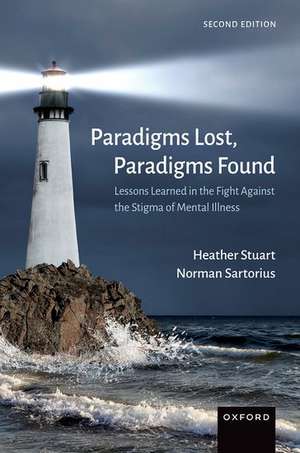
Paradigms Lost, Paradigms Found: Lessons Learned in the Fight Against the Stigma of Mental Illness
Autor Heather Stuart, Norman Sartoriusen Limba Engleză Hardback – 12 iul 2022
Remarcăm, în peisajul psihiatriei contemporane, că lupta împotriva discriminării a depășit etapa intențiilor bune, migrând spre o metodologie clinică și socială riguroasă. Paradigms Lost, Paradigms Found deschide discuția prin analiza scenariilor de eșec și succes ale programelor anti-stigmă din ultimul deceniu. Volumul nu se limitează la teorie, ci pornește de la cazuri concrete în care paradigmele tradiționale de educare a publicului s-au dovedit insuficiente, propunând în schimb intervenții țintite pe grupuri sociale și utilizarea tehnicilor digitale pentru a proteja drepturile pacienților.
Apreciem rigoarea cu care Heather Stuart și Norman Sartorius revizuiesc conceptele din ediția anterioară, integrând experiența acumulată din 2012 până astăzi. Această ediție a doua reprezintă o evoluție majoră, fiind o alternativă pragmatică la The Stigma of Mental Illness - End of the Story? de Wolfgang Gaebel pentru rezidenți și practicieni, cu avantajul unei organizări axate pe „lecții învățate” și pe aplicabilitatea imediată a recomandărilor în era digitală. În timp ce alte lucrări se concentrează pe descrierea fenomenului, volumul de față acționează ca un ghid de implementare, evaluând critic eficacitatea programelor actuale.
Deși Heather Stuart a explorat valențe narative în lucrări precum Silvaea Divided, în acest tratat de specialitate publicat de Oxford University Press, stilul devine clinic și analitic. Credem că forța acestei lucrări rezidă în capacitatea de a transforma „oportunismul luminat” — conceptul de a folosi orice interacțiune pentru a combate stigmatizarea — într-o strategie structurată, esențială pentru modernizarea serviciilor de sănătate mintală.
Preț: 338.36 lei
Preț vechi: 459.04 lei
-26%
Carte disponibilă
Livrare economică 25-30 iunie
Livrare express 05-11 iunie pentru 262.39 lei
Specificații
ISBN-10: 0197555802
Pagini: 312
Dimensiuni: 231 x 155 x 20 mm
Greutate: 0.5 kg
Ediția:2
Editura: Oxford University Press
Colecția OUP USA
Locul publicării:New York, United States
De ce să citești această carte
Această carte este esențială pentru medicii psihiatri, psihologi și activiști care doresc să treacă de la simpla conștientizare la acțiuni cu impact măsurabil. Cititorul câștigă o înțelegere profundă a modului în care tehnologia modernă poate fi utilizată pentru a reduce discriminarea. Este un instrument practic care transformă politicile de sănătate publică în intervenții eficiente la nivelul comunității, oferind soluții concrete pentru protejarea demnității pacienților.
Despre autor
Heather Stuart este o figură proeminentă în cercetarea sănătății mintale, deținând o catedră de cercetare specializată în îngrijirea pacienților și reducerea stigmatizării. Expertiza sa este completată de Norman Sartorius, fost director al Diviziei de Sănătate Mintală a Organizației Mondiale a Sănătății și fost președinte al Asociației Mondiale de Psihiatrie. Împreună, autorii combină rigoarea academică cu experiența vastă în politici publice internaționale. Deși Stuart s-a implicat și în literatură de ficțiune, activitatea sa principală rămâne ancorată în psihiatria socială, fiind recunoscută global pentru dezvoltarea programelor de combatere a discriminării asociate bolilor psihice.
Descriere
Recenzii
Despite valiant efforts to tear down the stigma of mental illness, it stubbornly remains a hurtful force. That's why a careful look at assumptions of change is needed to go forward. Paradigms Lost does this critically. Stuart, Arboleda-Florez, and Sartorius provide a masterful tour-de-force of the scholarly literature to carefully unpack what we know about stigma so we can move ahead to eliminate its egregious impact. But their book does not end with a review of the science. They then provide a practical, hands-on guide to setting up anti-stigma programs meant to reflect the wisdom of their reviewed paradigms.
This extraordinary book by international experts stands on its head the accepted wisdom about fighting the stigma of mental illness. This is the most important book yet published on what we must do to reduce the insidious and powerful force that can paralyze attempts to improve recovery from psychiatric disorder.
There are many more similarities than differences among people around the world. Paradigms Lost, a book about lessons learned by authors Stuart, Arboleda-Florez and Sartorius on fighting the stigma of mental illness, is proof of this. With a unique 2 part format that addresses stigma but also personal clinical and field experiences, this book is a historical compendium with a passionate call to action. To help readers move ahead quickly, tip sheets and assessments are included. The boldness of the statements in this book are refreshing and should help fight stigma around the world to improve the lives of people living with mental illness. Hats off to the publishers for recognizing the importance of this work.
Paradigms Lost: Fighting Stigma and the Lessons Learned is simply excellent. The chapters are clearly written and well organized and the material is relevant to the aim of the book, i.e., to inform those wishing to undertake anti stigma programmes. I am sure that it will be a vitally important contribution to the field.
We are all opposed to the stigma of mental illness, but that is not enough. We needed this book to remind us of what we previously misunderstood, and to reinforce what we now know.