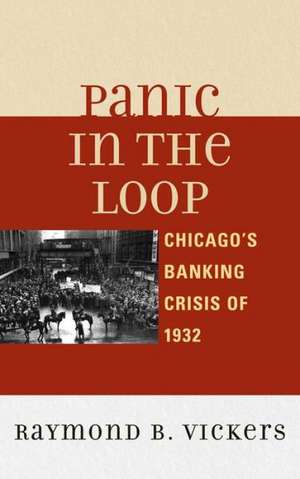
Panic in the Loop: Chicago's Banking Crisis of 1932
Autor Raymond B. Vickersen Limba Engleză Paperback – 9 oct 2013
Bazându-ne pe o gamă vastă de înregistrări oficiale coroborate în premieră, remarcăm în Panic in the Loop o radiografie necruțătoare a mecanismelor care au transformat o criză locală în Chicago într-un dezastru economic național. Autorul Raymond B. Vickers, dublat de experiența sa ca fost reglementator financiar, nu se limitează la o simplă cronologie, ci expune modul în care corupția politică și frauda sistemică au fost protejate de lipsa de transparență a sistemului de reglementare. Analiza sa debutează cu ascensiunea și căderea unor figuri centrale precum Samuel Insull și Charles Dawes, oferind o perspectivă rară asupra modului în care „insiderii” au manipulat instituțiile publice prin sistemul „ușilor rotative”.
Notăm cu interes structura riguroasă a volumului, care ghidează cititorul prin optica abuzurilor de la Reconstruction Finance Corporation și până la deznodământul capitolului despre „Câștigători și Pierzători”. Această abordare acoperă aceeași arie tematică precum A Critical History of Financial Crises de Kedar-Levy Haim, dar cu o metodologie mult mai aplicată pe documente de arhivă specifice și pe mecanismele juridice ale fraudei, spre deosebire de viziunea teoretică generală a lui Kedar-Levy.
Prin integrarea bibliografiei critice și a notelor detaliate, Raymond B. Vickers demonstrează că eșecurile din 1932 au fost repetate aproape identic în 2008. Remarcăm faptul că autorul pledează pentru eliminarea secretului bancar ca măsură de prevenție, oferind o lecție de istorie economică esențială pentru înțelegerea fragilității sistemului financiar american. Este o lucrare academică ce demitizează ideea de „criză inevitabilă”, arătând cum opacitatea reglementărilor a permis abuzurilor să înflorească timp de decenii.
Preț: 326.87 lei
Carte tipărită la comandă
Livrare economică 07-21 decembrie
Specificații
ISBN-10: 0739166417
Pagini: 347
Dimensiuni: 154 x 230 x 27 mm
Greutate: 0.57 kg
Editura: Bloomsbury Publishing
Colecția Lexington Books
Locul publicării:New York, United States
V-ar putea interesa
-
 Northwest PassageWilliam DietrichPreț: 175.17 lei
 -
 Preț: 450.34 lei
 -
 -25%Preț: 306.34 lei406.91 lei
 -
 -23%Preț: 321.63 lei416.71 lei
 -
 -15%Preț: 629.67 lei740.79 lei
 -
 -35%Preț: 588.24 lei910.58 lei
 -
 A White Minority in Post-Civil Rights MississippiThomas Adams Upchurch-28%Preț: 251.85 lei347.95 lei
 -
 Aunt Jane of KentuckyGerald A. DanzerPreț: 183.83 lei
 -
 Frontier Justice in the Wild WestR. Michael WilsonPreț: 124.91 lei
 -
 No Jim Crow ChurchLouis VentersPreț: 215.90 lei
 -
 Mile Marker ZeroWilliam MckeenPreț: 121.45 lei
 -
 Conservative BiasBryan H. ThriftPreț: 189.80 lei
 -
 Kentucky MarineDavid J BettezPreț: 228.02 lei
 -
 America: Readings in Themes and ErasMary P. Sheridan-32%Preț: 460.18 lei674.76 lei
 -
 Revolutionary Cuba and the End of the Cold WarDavid C. Jordan-34%Preț: 634.81 lei959.36 lei
 -
 The Loyal, True, and Brave: America's Civil War SoldiersSteven E. Woodworth-27%Preț: 276.37 lei380.10 lei
 -
 We're in the MoneyAndrew Bergman-16%Preț: 110.07 lei130.86 lei
 -
 -15%Preț: 329.99 lei390.30 lei
 -
 Politics and Film: The Political Culture of Television and MoviesDaniel P. Franklin-23%Preț: 278.75 lei362.43 lei
 -
 Customs Administration in CanadaGordon BlakePreț: 202.53 lei
 -
 The Canadian Federal Election of 2015Jon H PammettPreț: 224.90 lei
 -
 The Triumph of William McKinleyKarl RovePreț: 127.26 lei
 -
 New York's Remarkable WomenAntonia PetrashPreț: 102.06 lei
 -
 -33%Preț: 577.50 lei864.61 lei
De ce să citești această carte
Această carte este indispensabilă pentru economiști și istorici care doresc să înțeleagă rădăcinile corupției sistemice în bankingul american. Cititorul câștigă o perspectivă documentată asupra modului în care secretul reglementărilor facilitează frauda, oferind argumente solide pentru transparență. Este un studiu de caz esențial despre cum legăturile dintre elitele financiare și politicieni pot declanșa colapsuri economice globale, rămânând relevantă pentru contextul financiar actual.
Descriere
Cuprins
Introduction
Chapter 1: Insiders of Business and Banking: Samuel Insull and Charles Dawes
Chapter 2: The Fall of Insull
Chapter 3: Insiders at the Reconstruction Finance Corporation
Chapter 4: Insider Abuse at the Dawes Bank
Chapter 5: Dawes Plays His Hand
Chapter 6: Playing the Young Card
Chapter 7: The Winners and Losers
Conclusion
Bibliographical Essay
Abbreviations Used in the Notes
Notes
Select Bibliography
Index
Recenzii
Vickers writes out of a particular context-he traces a clear line running from 1932 to 2008, and he makes a compelling case that while details have changed, in fundamental ways the Great Depression and our own era shared key similarities. Above all, he makes clear that lack of transparency, then and now, enabled the cronyism and corruption that brought down towering financial structures, wreaked havoc on countless lives, yet never resulted in proper blame and punishment.
Vickers has produced a book that stands out in the scholarship of the banking crisis of the 1930s. It's also greatly relevant to the recent financial collapse that has rocked the American and world economies. In the more than 75 years since the 1932 Chicago banking crisis little has changed. Insider abuse at banks, weak regulation, and the protection of miscreants by powerful politicians of both major parties characterize what happened in the 1930s and recently. Deeply probing research in records often over looked by scholars allows Vickers to carefully expose the web of private and public influence and often fraudulent behavior that sank Chicago's leading banks in the 1930s. His research should inspire scholars and investigators determined to discover the roots of our recent financial collapse.
Panic in the Loop is timely in view of the current financial crisis. Vickers uncovers the corruption, betrayal, and theft of public and private funds in 1932 Chicago and establishes a model for uncovering contemporary financial chicanery. Discussion of the Enron crisis gives the analysis contemporary value and validity and raises the specter of corruption behind the sub-prime mortgage facade, corruption authorities (the regulated and the regulators) will use every device at their disposal to hide from the public. Scholars and students will find Panic in the Loop a worthy title for reading lists.
Rarely has the case for transparency in the regulation banks been made so well. It is hard to imagine that the bankers that caused the Chicago panic of 1932 would have been so brazen or the regulators so slow to stop them if their actions had been quickly made public.