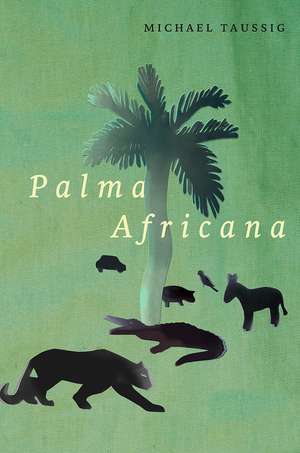
Palma Africana
Autor Michael Taussigen Limba Engleză Paperback – mai 2018
Remarcăm în Palma Africana o abordare care sfidează structura tradițională a monografiei antropologice, propunând în schimb o explorare viscerală a modului în care o singură resursă — uleiul de palmier — rescrie geografia și biologia Columbiei. Analiza pornește de la prezența acestui „elixir” în jumătate din produsele de consum curent, însă Michael Taussig refuză să se limiteze la terminologia aridă a „pierderii habitatului” sau a „schimbărilor climatice”, considerând că aceste concepte și-au pierdut forța de impact prin suprasolicitare. În schimb, autorul recurge la exerciții de scriere experimentală și la o estetică a vizualului pentru a expune ororile sociale și ecologice.
Descoperim aici o structură narativă care, deși include secțiuni riguroase de bibliografie și index, se simte mai degrabă ca un flux de conștiință etnografic. Taussig integrează perspectivele lui Roland Barthes despre alfabetul arborilor și viziunea lui William Burroughs asupra cuvintelor vii, creând un text saturat de metafore și mimetism. Această lucrare ocupă un loc central în opera autorului, continuând temele violenței și magiei explorate în Corpse Magic sau reflecțiile despre ecologie din Mastery of Non-Mastery in the Age of Meltdown.
Comparativ cu Palm Oil: The Grease of Empire de Max Haiven, care oferă o perspectivă socio-economică și istorică asupra capitalismului rasial, Palma Africana este mult mai introspectivă și stilistică, concentrându-se pe dimensiunea senzorială și simbolică a distrugerii. Dacă The Politics of Palm Oil Harm de Hanneke Mol analizează criminalitatea verde prin date de teren empirice, Taussig alege să documenteze condiția globală printr-o lentilă poetică, transformând observația antropologică într-o formă de artă critică.
Preț: 235.68 lei
Carte disponibilă
Livrare economică 07-21 noiembrie
Livrare express 24-30 octombrie pentru 25.85 lei
Specificații
ISBN-10: 022651613X
Pagini: 224
Ilustrații: 48 halftones
Dimensiuni: 152 x 229 x 20 mm
Greutate: 0.36 kg
Ediția:1
Editura: University of Chicago Press
Colecția University of Chicago Press
De ce să citești această carte
Apreciem această lucrare ca fiind esențială pentru studenții și specialiștii în antropologie, sociologie și ecologie politică. Cititorul câștigă o înțelegere profundă a modului în care consumul global transformă peisaje îndepărtate, dincolo de statisticile seci. Este o recomandare fermă pentru cei care caută un model de cercetare care îmbină rigoarea academică cu o scriere creativă, capabilă să provoace o reacție afectivă față de criza climatică actuală.
Despre autor
Michael Taussig este deținătorul catedrei „Class of 1933” în cadrul departamentului de Antropologie de la Columbia University. Recunoscut la nivel internațional pentru stilul său iconoclast și experimental, Taussig a revoluționat disciplina prin integrarea elementelor de teorie critică, misticism și estetică în studiul etnografic. Opera sa, care include titluri precum And the Garden Is You sau Postcards for Mia, reflectă o preocupare constantă pentru puterea cuvântului scris și pentru modurile în care violența și magia se întrepătrund în realitățile politice contemporane, în special în contextul Americii Latine.
Descriere scurtă
Palm oil. Saturating everything from potato chips to nail polish, palm oil has made its way into half of the packaged goods in our supermarkets. By 2020, world production will be double what it was in 2000. In Colombia, palm oil plantations are covering over one-time cornucopias of animal, bird, and plant life. Over time, they threaten indigenous livelihoods and give rise to abusive labor conditions and major human rights violations. The list of entwined horrors—climatic, biological, social—is long. But Taussig takes no comfort in our usual labels: “habitat loss,” “human rights abuses,” “climate change.” The shock of these words has passed; nowadays it is all a blur. Hence, Taussig’s keen attention to words and writing throughout this work. He takes cues from precursors’ ruminations: Roland Barthes’s suggestion that trees form an alphabet in which the palm tree is the loveliest; William Burroughs’s retort to critics that for him words are alive like animals and don’t like to be kept in pages—cut them and the words are let free.
Steeped in a lifetime of philosophical and ethnographic exploration, Palma Africana undercuts the banality of the destruction taking place all around us and offers a penetrating vision of the global condition. Richly illustrated and written with experimental verve, this book is Taussig’s Tristes Tropiques for the twenty-first century.
Notă biografică
Cuprins
Acknowledgments
Bibliography
Index