
Painting Native America: Indigenous Artists in the Twentieth Century
Autor Nicolas G. Rosenthalen Limba Engleză Hardback – 2026
Featuring seventy color illustrations, Painting Native America examines generations of American Indian and First Nations painters, including Oscar Howe, Pablita Velarde, Allan Houser, Woody Crumbo, T. C. Cannon, Fritz Scholder, Frank LaPena, Jean LaMarr and others. Rosenthal situates Indigenous artists in twentieth-century modernity, attesting to the dynamism of survivance and the cultural and visual sovereignty practiced by these artists. Rosenthal also provides one of the first social and urban histories of Indigenous artists and art scenes in the North American West and examines the origins of the regional art scenes these artists created in Oklahoma, New Mexico, California, and British Columbia.
Preț: 435.15 lei
Puncte Express: 653
Carte disponibilă
Livrare economică 24 octombrie-07 noiembrie
Livrare express 13-17 octombrie pentru 57.51 lei
Livrare prin curier în România Termenul estimat este afișat lângă disponibilitate.
Transport gratuit pentru acest produs Plată online sau ramburs, în funcție de opțiunile comenzii.
Retur gratuit în 14 zile Comandă securizată și suport în română.
Specificații
ISBN-13: 9781496244260
ISBN-10: 1496244265
Pagini: 296
Ilustrații: 70 color illustrations, index
Dimensiuni: 152 x 229 mm
Greutate: 0.59 kg
Editura: Nebraska
Colecția University of Nebraska Press
Locul publicării:United States
ISBN-10: 1496244265
Pagini: 296
Ilustrații: 70 color illustrations, index
Dimensiuni: 152 x 229 mm
Greutate: 0.59 kg
Editura: Nebraska
Colecția University of Nebraska Press
Locul publicării:United States
V-ar putea interesa
-
 Native North American ArtJanet Catherine Berlo-23%Preț: 612.85 lei795.91 lei
 -
 Reenvisioning Histories of American ArtJami C. PowellPreț: 258.86 lei
 -
 Black Artists in America: From the Bicentennial to September 11Ellen DaughertyPreț: 291.18 lei
 -
 An Introduction to Nineteenth-Century ArtMichelle Facos-8%Preț: 427.08 lei464.22 lei
 -
 Contemporary PaintingSuzanne Hudson-17%Preț: 120.08 lei145.32 lei
 -
 American Art to 1900 – A Documentary HistorySarah BurnsPreț: 377.53 lei
 -
 -25%Preț: 206.08 lei275.89 lei
 -
 Western Art of the Twenty-First Century: Native AmericansE. Ashley RooneyPreț: 216.27 lei
 -
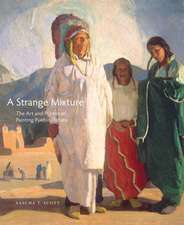 Preț: 406.10 lei
 -
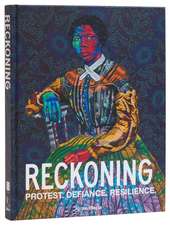 ReckoningAaron BryantPreț: 339.25 lei
 -
 -22%Preț: 400.59 lei513.18 lei
 -
 Contemporary Art in the Conflicts of GlobalizationJonathan HarrisPreț: 381.74 lei
 -
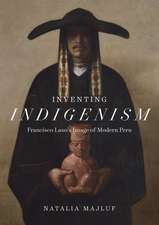 Inventing Indigenism: Francisco Laso's Image of Modern PeruNatalia MajlufPreț: 243.26 lei
 -
 Preț: 310.91 lei
 -
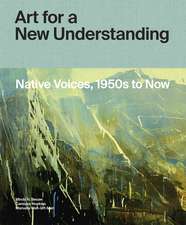 Art for a New UnderstandingMindy N BesawPreț: 336.09 lei
 -
 Women Artists in Midcentury AmericaJohn M. Jennings-20%Preț: 205.12 lei255.93 lei
 -
 Native Studio Art Since the 1920s: The Healey CollectionAlexander Brier Marr-17%Preț: 323.65 lei390.58 lei
 -
 Indigenous Identities: Here, Now and AlwaysJaune Quick-to-See Smith-17%Preț: 294.48 lei354.97 lei
Notă biografică
Nicolas G. Rosenthal is a professor of history at Loyola Marymount University. He is the author of Reimagining Indian Country: Native American Migration and Identity in Twentieth-Century Los Angeles.
Cuprins
List of Illustrations
Introduction: Indigenous Artists in the Twentieth Century
1. Indigenizing the Art World: The First Generation of Modern American Indian Painters
2. Painting Native America at School and in Public: Indigenous Artists, Studio Art Programs, and the New Deal
3. Prying the Art World Open: Indigenous Artists in Postwar America
4. Blowing the Art World Apart: Indigenous Artists, 1960s–1980s
5. Rewriting Narratives: Regional Native Art Scenes
Epilogue: Indigenous Artists in the Twenty-First Century
Acknowledgments
Notes
Bibliography
Index
Introduction: Indigenous Artists in the Twentieth Century
1. Indigenizing the Art World: The First Generation of Modern American Indian Painters
2. Painting Native America at School and in Public: Indigenous Artists, Studio Art Programs, and the New Deal
3. Prying the Art World Open: Indigenous Artists in Postwar America
4. Blowing the Art World Apart: Indigenous Artists, 1960s–1980s
5. Rewriting Narratives: Regional Native Art Scenes
Epilogue: Indigenous Artists in the Twenty-First Century
Acknowledgments
Notes
Bibliography
Index
Recenzii
“Rethinking Indigenous art as modern art is more than trending; it is a major development in the Indigenous artistic and intellectual community. It’s not just that Nicolas Rosenthal spares his readers a lot of theoretical jargon, but more importantly he lets the artists’ voices shine through as primary to understanding their times and experiences as Indigenous artists.”—David Martínez, author of Life of the Indigenous Mind: Vine Deloria Jr. and the Birth of the Red Power Movement
“Nicolas Rosenthal focuses on the artists’ lives and personal experiences and how each individual artist used art to assert cultural and visual sovereignty. He highlights the thin line that artists had to walk between making art and making a living, between meeting market and museum expectations and personal expression.”—Marinella Lentis, author of Colonized through Art: American Indian Schools and Art Education, 1889–1915
Descriere
Featuring seventy color illustrations, Nicolas G. Rosenthal examines generations of American Indian and First Nations painters in the twentieth century who struggled to take control of their art, advance their political concerns, and change common perceptions about Indigenous cultures.