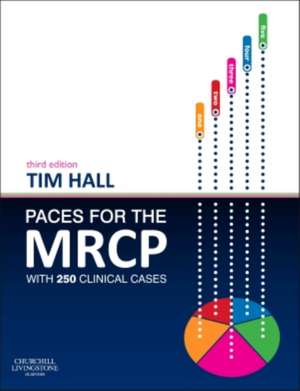
PACES for the MRCP: with 250 Clinical Cases
Autor Tim Hallen Limba Engleză Paperback – 19 iun 2013
Observăm că PACES for the MRCP reușește să se impună ca un instrument indispensabil, fiind adesea supranumit „biblia” examenului de competențe clinice. Această a treia ediție a lucrării semnate de Tim Hall vine într-un moment crucial, fiind complet actualizată pentru a reflecta noile cerințe ale Stației 5. Față de Mastering MRCP PACES, care utilizează un format de tip joc de rol, volumul de față adoptă o structură analitică profundă, transformând simpla memorare în înțelegere clinică. Remarcăm modul în care autorul completează Clinical Medicine for the MRCP PACES prin adăugarea unui număr impresionant de 250 de cazuri clinice, oferind o expunere mult mai vastă la patologii diverse.
Structura manualului oglindește riguros progresia examenului, începând cu sistemul respirator și abdominal, dar excelând în secțiunile de neurologie și comunicare, puncte unde mulți candidați întâmpină dificultăți. Fiecare caz este tratat nu doar ca un diagnostic, ci ca un exercițiu de logică medicală: de exemplu, insuficiența cardiacă nu este prezentată ca un punct final, ci este analizată prin prisma diagnosticului diferențial al dispneei, cauzelor specifice și impactului tratamentului asupra calității vieții pacientului. Cele peste 400 de ilustrații color nu sunt doar complementare, ci esențiale pentru vizualizarea semnelor clinice fine. Deși Tim Hall este cunoscut în alte spectre editoriale pentru lucrări precum The Blind Bowman: Dark Fire sau studii de geografie socială în Crime, Space and Place, rigoarea sa clinică în acest manual demonstrează o versatilitate academică remarcabilă, ancorată în medicina bazată pe dovezi și în protocoalele moderne de tratament, inclusiv utilizarea agenților biologici.
Preț: 446.69 lei
Preț vechi: 606.89 lei
-26%
Carte tipărită la comandă
Livrare economică 26 noiembrie-10 decembrie
Specificații
ISBN-10: 0702051411
Pagini: 960
Ilustrații: Approx. 411 illustrations (407 in full color)
Dimensiuni: 189 x 246 x 43 mm
Greutate: 2.09 kg
Ediția:Revised
Editura: Elsevier
Colecția MRCP Study Guides
Locul publicării:Edinburgh
V-ar putea interesa
-
 -18%Preț: 291.79 lei354.49 lei
 -
 Best of Five MCQs for the MRCP Part 1 PackIqbal Khan-15%Preț: 479.62 lei564.14 lei
 -
 -16%Preț: 487.60 lei581.16 lei
 -
 The Pocketbook for PACESRupa Bessant-17%Preț: 583.18 lei698.61 lei
 -
 -17%Preț: 282.08 lei340.87 lei
 -
 Macleod's Clinical ExaminationAnna R. Dover-28%Preț: 320.33 lei446.58 lei
 -
 The Unofficial Guide to Passing OSCEsEmily Hotton-28%Preț: 276.08 lei384.12 lei
 -
 250 Cases in Clinical MedicineEirini Kasfiki-28%Preț: 295.35 lei407.88 lei
 -
 Kumar and Clark's Clinical MedicineDavid Randall-26%Preț: 487.97 lei658.70 leiRecomandat
 -
 The Clinical Anaesthesia Viva BookJulian M Barker-5%Preț: 640.57 lei674.28 lei
 -
 -32%Preț: 256.35 lei374.70 lei
 -
 Talley and O'Connor's Examination Medicine: A Guide to Physician TrainingNicholas J. Talley-61%Preț: 426.97 lei1090.87 lei
 -
 100 Cases in Clinical MedicineEamon Shamil-5%Preț: 259.20 lei272.84 leiRecomandat
 -
 -5%Preț: 470.00 lei494.74 leiRecomandat
 -
 Cases for PACESStephen Hoole-5%Preț: 283.14 lei298.04 lei
 -
 -5%Preț: 1514.91 lei1594.64 leiRecomandat
 -
 Get Through MRCP: PACESRajeev Gulati-5%Preț: 455.24 lei479.21 lei
Public țintă
. MRCP candidates preparing for PACES examDe ce să citești această carte
Recomandăm această resursă oricărui candidat care se pregătește pentru examenul PACES, deoarece depășește nivelul unei simple liste de verificare. Cititorul câștigă un cadru logic de abordare a cazurilor complexe, esențial pentru a purta un dialog coerent cu examinatorii. Este un manual de referință care rămâne util în practica clinică și după obținerea certificării, oferind claritate în examinarea neurologică și în gestionarea dilemelor etice.
Despre autor
Tim Hall este un autor polivalent, a cărui carieră acoperă domenii diverse, de la medicină clinică la literatură fantasy și geografie socială. În portofoliul său se regăsesc titluri precum The Blind Bowman: Dark Fire, o reinterpretare epică a mitului lui Robin Hood, dar și lucrări academice care analizează geografia criminalității, cum este Crime, Space and Place. Această diversitate intelectuală îi permite să abordeze scrierea medicală cu o claritate și un stil narativ care facilitează învățarea, transformând manualele sale, precum PACES for the MRCP, în resurse de referință pentru tinerii medici.
Descriere scurtă
Features
- Fully revised for the new Station 5 and completely updated throughout.
- Promotes understanding and deeper learning of modern medicine applicable to PACES and the specialist registrar.
- Emphasis on clinical assessment - history-taking, examination and communication skills - equipping candidates with appropriate differential diagnoses from which to develop the right diagnosis.
- Encourages candidates to question why a diagnosis has arisen and consider its consequences. For example, 'Heat failure' is a not a diagnosis until a candidate has considered the differential diagnoses of breathlessness and decided why heart failure is most likely, and then considered its cause (not always ischaemic heart disease), its presentation (acute, chronic, left or right ventricular or both) and, most importantly, the effects of it and its treatments on a patient's life.
From reviews of the previous edition:
'Hall's PACES for the MRCP is excellent. It is easy to follow, carefully laid out and covers all conditions likely to appear in each station of the exam. The author not only explains examination techniques and clinical signs, but also goes that step further to ensure the reader really understands each topic, using clinical examples, question and answer/discussion sections as well as detailed illustrations. Where this text also outshines the others is with the inclusion of chapters covering the History Taking and Communication/Ethics stations of the exam. The scenarios are "spot on" and give the reader plenty of examples to work through. The Neurology section is brilliant.' Overall: An excellent and up-to-date text, this is the new MRCP "Bible" - don't sit your exam without it.
'Looking through the book is a visual delight and there is lots of excellent information there.'
'Well laid out, easy to read and utterly relevant. Also serves as a useful reference tool post-membership too. Buy it!'
Really good book. The clinical stations are well covered - in particular this book is worth buying just for the neuro section alone which is really easy to read and understand and gives you a great framework for approaching clinical cases (this is also what countless colleagues of mine have cited as the book's main selling point!)
'This is an excellent book. It is very well-written, clear, factually correct and actually means that you know enough to hold a conversation with the examiners. Apparently most people assume they will pass the Hx and comm stations but commonly fail them and this book is excellent for those with lots of information and cases to practice. I really feel that this book has transformed the paces market as it is so much better than the others.'
'Hall's refreshingly relevant and readable textbook is vital to successful PACES preparation and covers all sections faced in the exam with good detail.'
Cuprins
STATION 1 RESPIRATORY AND ABDOMINAL SYSTEM
RESPIRATORY SYSTEM
Examination of the respiratory system
Cases
1.1Chronic obstructive pulmonary disease
1.2Consolidation
1.3Dullness at the lung base
1.4Pneumonia
1.5Lung cancer
1.6Pancoast's syndrome
1.7Superior vena cava obstruction
1.8Collapse/pneumonectomy/lobectomy
1.9Bronchiectasis
1.10Cystic fibrosis
1.11Kartagener's syndrome
1.12Tuberculosis
1.13Idiopathic pulmonary fibrosis and diffuse parenchymal lung disease
1.14Rheumatoid lung
1.15Extrinsic allergic alveolitis
1.16Asbestos-related lung diseaseand pneumoconiosis
1.17Pulmonary sarcoidosis
1.18Pulmonary hypertension
1.19Cor pulmonale
1.20Pulmonary embolism
1.21Pleural effusion
1.22Pleural rub
1.23Pneumothorax
1.24Obstructive sleep apnoea-hypopnoea syndrome
1.25Lung transplant
ABDOMINAL SYSTEM
Examination of the abdominal system
Cases
1.26Chronic liver disease
1.27Jaundice
1.28Ascites
1.29Alcoholic liver disease
1.30Viral hepatitis
1.31Autoimmune hepatitis
1.32Primary biliary cirrhosis
1.33Hereditary haemochromatosis
1.34Wilson's disease
1.35Hepatomegaly
1.36Splenomegaly
1.37Hepatosplenomegaly
1.38Felty's syndrome
1.39Abdominal mass
1.40Crohn's disease
1.41Ulcerative colitis
1.42Carcinoid syndrome
1.43Enteric and urinary stomas
1.44Chronic myeloid leukaemia
1.45Polycythaemia vera, myeloproliferative disorders and myelodysplasia
1.46Chronic lymphocytic leukaemia
1.47Lymphadenopathy and lymphoma
1.48Polycystic kidney disease
1.49Nephrotic syndrome
1.50Renal transplant
STATION 2: HISTORY-TAKING SKILLS
Introduction to history-taking skills
Clinical reasoning
The traditional medical history model
Incorporating the patient's perspective - ideas, concerns and expectations
History-taking skills - the communication skills that make history-taking effective
The traditional model and communication skills - putting these two together
Cases
Respiratory problems
2.1Breathlessness
2.2Asthma
Abdominal problems
2.3Dyspepsia
2.4Dysphagia
2.5Abdominal pain
2.6Altered bowel habit
Cardiovascular problems
2.7Prevention of cardiovascular disease and weight gain
2.8Chest pain and angina
2.9Acute coronary syndrome
2.10Heart failure
2.11Palpitations
2.12Atrial fibrillation
2.13Dyslipidaemia
2.14Hypertension
Neurological problems
2.15Headache
2.16Transient ischaemic attack
2.17Weakness and wasting
2.18 TMultiple sclerosis
2.19 Tremor
Locomotor problems
2.20Back pain
2.21Joint pain
Eye problems
2.22Visual loss
Endocrine problems
2.23Type 1 diabetes mellitus
2.24Type 2 diabetes mellitus
Renal and metabolic problems
2.25Acute renal failure
2.26Chronic kidney disease and renal replacement therapy
2.27Glomerulonephritis
2.28Systemic vasculitis
2.29Hypercalcaemia
2.30Hyponatraemia
2.31 Poisoning and metabolic disturbance
Haematological problems
2.32Anaemia
2.33Sickle cell disease and thalassaemia
2.34Purpura
2.35Haemophilia
2.36Deep vein thrombosis
2.37Thrombophilic tendency
2.38Myeloma
Infectious disease
2.39Human immunodeficiency virus infection
Other general internal medicine and elderly care problems
2.40Falls and rehabilitation
2.41Syncope
2.42Seizures
2.43Acute confusion
2.44Mild cognitive impairment and dementia
2.45Incontinence
2.46Raised inflammatory markers
2.47Polymyalgia and giant cell arteritis
2.48Pyrexia and sepsis
2.49Weight loss
2.50Tiredness
STATION 3: CARDIOVASCULAR SYSTEM AND NERVOUS SYSTEM
CARDIOVASCULAR SYSTEM
Examination of the cardiovascular system
Cases
3.1Mitral stenosis
3.2Mitral regurgitation
3.3Aortic stenosis
3.4Aortic regurgitation
3.5Tricuspid regurgitation and Ebstein's anomaly
3.6Other right-sided heart murmurs
3.7Mixed valve disease
3.8Mitral valve prolapse
3.9Prosthetic valves
3.10Permanent pacemaker
3.11Infective endocarditis
3.12Congenital heart disease
3.13Cyanotic heart disease
3.14Hypertrophic (obstructive) cardiomyopathy
3.15Pericardial rub and pericardial disease
NERVOUS SYSTEM
Examination of the nervous system
- Overview of the organisation of the nervous system and how to examine it
- Cranial nerves
- Higher cortical function and specific lobes
- Speech and language
- Power and sensation
- Upper limbs
- Lower limbs
- Gait
Cases
3.16Visual field defects
3.17Ocular nerve lesions
3.18Internuclear ophthalmoplegia
3.19Nystagmus
3.20Ptosis
3.21Large pupil
3.22Small pupil
3.23Horner's syndrome
3.24Cerebellopontine angle syndrome
3.25Facial nerve palsy
3.26Bulbar palsy
3.27Anterior circulation stroke syndromes
3.28Dysphasia and dysarthria
3.29Pseudobulbar palsy
3.30Agnosias and apraxias
3.31Posterior circulation stroke syndromes
3.32Parkinson's disease
3.33Cerebellar disease
3.34Spastic paraparesis and Brown Sequard syndrome
3.35Syringomyelia
3.36Absent ankle jerks and extensor plantars
3.37Motor neurone disease
3.38Cervical myeloradiculopathy
3.39Cauda equina syndrome
3.40Carpal tunnel syndrome (median nerve lesion)
3.41Ulnar nerve lesion
3.42Radial nerve lesion
3.43Wasting of the small (intrinsic) muscles of the hand
3.44Common peroneal nerve lesion
3.45Peripheral neuropathy
3.46Charcot-Marie-Tooth disease and hereditary neuropathies
3.47Guillain-Barre syndrome
3.48Myasthenia gravis
3.49Myotonic dystrophy
STATION 4: COMMUNICATION SKILLS AND ETHICS
COMMUNICATION SKILLS AND ETHICS
Introduction to communication skills and ethics
Cases
Discussing clinical management
4.1Explaining a diagnosis
4.2Explaining an investigation
4.3Discussing a treatment
4.4Discussing management, prognosis and possible complications in a patient with multiple problems
4.5Discussing diagnostic uncertainty
4.6Discussing risk and treatment effect
4.7Negotiating a management plan for a chronic disease/long-term condition
4.8Encouraging concordance with treatment and prevention
Communication in special circumstances
4.9Cross-cultural communication
4.10Communicating with angry patients or relatives
4.11Communicating with upset and distressed relatives
4.12Discharge against medical advice
4.13Delayed discharge
Breaking bad news
4.14Cancer - potentially curable
4.15Cancer - likely incurable
4.16Cancer - patient not fit for active treatment
4.17Chronic disease
4.18Discussing an acutely terminal situation with relatives
Confidentiality, consent and capacity
4.19Legal points in confidentiality
4.20Breaching confidentiality when a third party may be at risk
4.21Breaching confidentiality in the public interest
4.22Confidentiality when talking with relatives and other third parties
4.23Consent for investigation or treatment
4.24Consent and capacity
4.25Refusal to consent
4.26Deliberate self-harm
End of life issues
4.27Resuscitation-status decision-making discussion with patient
4.28Resuscitation status decision-making discussion with relative
4.29Appropriateness of intensive therapy unit transfer
4.30Withholding and withdrawing life-prolonging treatments - Artificial hydration and nutrition
4.31Withholding and withdrawing life-prolonging treatments - antibiotics and drugs
4.32Percutaneous endoscopic gastrostromy feeding
4.33Palliative care
4.34Advance directives/decisions
4.35Persistent vegetative state
4.36Brainstem death
4.37 Discussing live organ donation
4.38Requesting an autopsy (post-mortem)
Clinical Governance
4.39Critical incident
4.40Managing a complaint and the question of negligence
4.41Fitness to practice - poor peformance in a colleague
4.42Fitness to practice - misconduct in a colleague
4.43Fitness to practice - health problems in a colleague
4.44Recruitment to a randomised controlled trial
Other communication, ethical and legal scenarios
4.45Genetic testing
4.46HIV testing
4.47Needlestick injury
4.48Medical opinion on fitness for anaesthesia
4.49Fitness to drive
4.50Industrial injury benefits
STATION 5: SKIN, LOCOMOTOR SYSTEM, EYES, ENDOCRINE SYSTEM
SKIN
Examination of the skin
Cases
5.1Psoriasis
5.2Dermatitis
5.3Lichen planus
5.4Blistering skin condititions
5.5Facial rash
5.6Scleroderma, vitiligo and autoimmune skin disease
5.7Oral lesions
5.8Nail lesions
5.9Shin lesions
5.10Neurofibromatosis
5.11Tuberose sclerosis
5.12Neoplastic skin lesions
5.13Skin vasculitis
5.14Xanthomata and xanthelasmata
5.15Skin and soft tissue infection
LOCOMOTOR SYSTEM
Examination of the joints
Examination of the hands and arms
Examination of the legs
Examination of the spine
Cases
5.16Rheumatoid hands and rheumatoid arthritis
5.17Ankylosing spondylitis and spondyloarthropathies
5.18Systemic lupus erythematosus
5.19Scleroderma
5.20Crystal arthropathy
5.21Osteoarthritis
5.22Paget's disease
5.23Marfan's syndrome
5.24Ehlers-Danlos syndrome
5.25Osteogenesis imperfecta
EYES
Examination of the eyes
Cases
5.26Diabetic retinopathy
5.27Hypertensive retinopathy
5.28Swollen optic disc and papilloedema
5.29Optic atrophy
5.30Chorioretinitis
5.31Retinitis pigmentosa
5.32Central retinal vein occlusion
5.33Central retinal artery occlusion
5.34Retinal detachment and vitreous haemorrhage
5.35Drusen and age-related macula degeneration (asteroids)
5.36Angioid streaks
5.37Myelinated nerve fibres
5.38Glaucoma
5.39Cataracts
5.40Uveitis and red eye
ENDOCRINE SYSTEM
Examination of the thyroid
Cases
5.41Hyperthyroidism and Grave's disease
5.42Hypothyroidism
5.43Goitre and neck lumps
5.44Acromegaly
5.45Hypopituitarism
5.46Cushing's syndrome
5.47Hypoadrenalism and Addison's disease
5.48Hirsutism and polycystic ovarian syndrome
5.49Hypogonadism and gynaecomastia
5.50Pseudohypoparathyroidism
APPENDIX 100 tips for passing PACES
INDEX