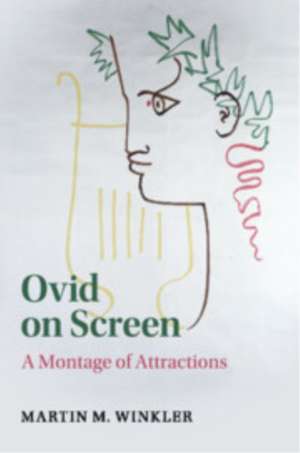
Ovid on Screen
Autor Martin M. Winkleren Limba Engleză Paperback – 5 iun 2025
Preț: 261.26 lei
Puncte Express: 392
Carte disponibilă
Livrare economică 22 iulie-05 august
Livrare express 08-14 iulie pentru 40.35 lei
Livrare prin curier în România Termenul estimat este afișat lângă disponibilitate.
Transport gratuit de la 400.00 lei Plată online sau ramburs, în funcție de opțiunile comenzii.
Retur gratuit în 14 zile Comandă securizată și suport în română.
Specificații
ISBN-13: 9781108706957
ISBN-10: 1108706959
Pagini: 492
Dimensiuni: 152 x 229 x 27 mm
Greutate: 0.71 kg
Editura: Cambridge University Press
ISBN-10: 1108706959
Pagini: 492
Dimensiuni: 152 x 229 x 27 mm
Greutate: 0.71 kg
Editura: Cambridge University Press
Cuprins
List of illustrations; Acknowledgments; Fade-in: Prooemium; Adages; Part I. Theory and Practice: 1. Cinemetamorphosis; 2. Ovid's film sense and beyond; Part II. Key Moments in Ovidian Film History: 3. D'Annunzio's Ovid and the cinematic impulse; 4. The Labyrinth: narrative complexity, deadly mazes, and Ovid's modernity; Part III. Into New Bodies: 5. Effects and essences; 6. The Beast in Man: not Ovid's, but how Ovidian!; Part IV. Love, Seduction, Death: 7. Varieties of modernism: Orpheus and Eurydice; 8. Love and death; 9. Lessons in seduction; Part V. Eternal Returns: 10. Immortality: philosophy, cinema, Ovid; 11. Ovidian returns; Sphragis: end credits; Bibliography; Index.
Recenzii
'The book displays the author's impressive erudition in ancient Greek and Latin literature, and also his intimate familiarity with film theory and the necessary literature.' H. M. Roisman, Choice
'… Ovid on Screen: A Montage of Attractions, emerges as [Martin Winkler's] most ambitious and wide-ranging contribution … This is an engaging and also enjoyable book from which I have learned much.' James J. Clauss, Bryn Mawr Classical Review