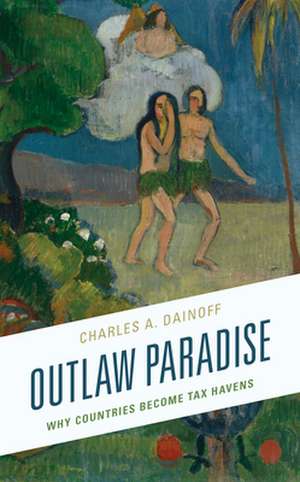
Outlaw Paradise: Why Countries Become Tax Havens
Autor Charles A. Dainoffen Limba Engleză Hardback – 18 aug 2021
Preț: 524.54 lei
Preț vechi: 815.53 lei
-36%
Puncte Express: 787
Carte tipărită la comandă
Livrare economică 19 noiembrie-03 decembrie
Livrare prin curier în România Termenul estimat este afișat lângă disponibilitate.
Transport gratuit pentru acest produs Plată online sau ramburs, în funcție de opțiunile comenzii.
Retur gratuit în 14 zile Comandă securizată și suport în română.
Specificații
ISBN-13: 9781793619914
ISBN-10: 1793619913
Pagini: 241
Ilustrații: 4 tables;
Dimensiuni: 161 x 228 x 18 mm
Greutate: 0.43 kg
Editura: Bloomsbury Publishing
Colecția Lexington Books
Locul publicării:New York, United States
ISBN-10: 1793619913
Pagini: 241
Ilustrații: 4 tables;
Dimensiuni: 161 x 228 x 18 mm
Greutate: 0.43 kg
Editura: Bloomsbury Publishing
Colecția Lexington Books
Locul publicării:New York, United States
Cuprins
Preface: Cuba, The Bahamas, Jamaica, the Cayman Islands, and the Paths They Took
Introduction: Why Do Countries Become Tax Havens?
Chapter 1: Benefits vs. Costs of Being a Tax Haven
Chapter 2: The Scope of Tax Haven Impact and the Ways in which That Impact is Felt
Chapter 3: International Anti-Tax Haven Campaigns
Chapter 4: General Summary of Findings
Introduction: Why Do Countries Become Tax Havens?
Chapter 1: Benefits vs. Costs of Being a Tax Haven
Chapter 2: The Scope of Tax Haven Impact and the Ways in which That Impact is Felt
Chapter 3: International Anti-Tax Haven Campaigns
Chapter 4: General Summary of Findings
Recenzii
The role of tax havens in the global economy has attracted growing academic and public attention. This new book provides a fascinating history of how several important jurisdictions became tax havens. It then addresses an important puzzle that is central to understanding the role of havens - how have havens been able to survive and continue to thrive even in the face of multilateral anti-haven initiatives by major countries and international organizations in the 21st century? The book generates important new insights into this question, and makes a significant contribution to understanding the history and role of tax havens.