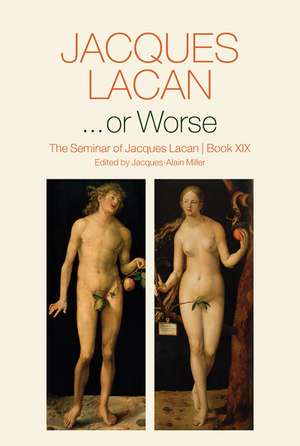
...or Worse
Autor Jacques Lacan Editat de Jacques-Alain Milleren Limba Engleză Paperback – 27 ian 2023
Notăm cu interes apariția traducerii în limba engleză a Seminarului XIX, o lucrare ce vine să completeze o lacună critică în înțelegerea tranziției către „ultima învățătură” a lui Jacques Lacan. Dacă în etapele anterioare atenția era concentrată pe dialectica subiectului și pe primatul Marelui Altul, acest volum propune o ruptură radicală: trecerea de la ontologie la henologie. Reținem că pilonul central al acestor prelegeri este axioma „Nu există relație sexuală”, o formulă care demontează iluzia armoniei predeterminate între sexe, înlocuind-o cu un „tir în orb” guvernat de contingență. Merită menționat modul în care Jacques Lacan își revizuiește propriul aparat conceptual, abandonând graficele și suprafețele topologice în favoarea teoriei nodurilor — inele de sfoară unde fiecare reprezintă un „Unu” nelegat. Această structură reflectă o schimbare de paradigmă: discursul nu mai este privit ca un simulacru, ci caută un punct de plecare direct în Real. Volumul extinde cadrul propus de The Not-Two de Lorenzo Chiesa, care analizează logica divinității și a incompletitudinii, aducând date noi despre modul în care „Unul-singur” domină experiența bucuriei (jouissance) autoerotice. În contextul operei sale, Seminarul XIX reprezintă o răsturnare a temelor din The Object Relation sau Transference. Dacă în acele lucrări timpurii accentul cădea pe relația cu obiectul sau pe dorința mediată de Altul, aici Jacques Lacan promovează bucuria (jouissance) în detrimentul dorinței și respinge Ființa ca fiind o simplă aparență. Este un text dens, care reconfigurează ordinea simbolică drept o simplă reiterație a Unului în Real, oferind o perspectivă indispensabilă asupra „unidividualismului” modern.
Preț: 137.95 lei
Carte disponibilă
Livrare economică 02-16 noiembrie
Livrare express 16-22 octombrie pentru 32.41 lei
Specificații
ISBN-10: 0745682456
Pagini: 274
Dimensiuni: 152 x 224 x 25 mm
Greutate: 0.42 kg
Editura: John Wiley and Sons Ltd
Locul publicării:Chichester, United Kingdom
De ce să citești această carte
Această ediție este esențială pentru studenții și practicienii psihanalizei care doresc să înțeleagă fundamentul logic al celebrei afirmații despre inexistența relației sexuale. Cititorul câștigă acces la momentul istoric în care Lacan trece de la structuralism la teoria nodurilor, oferind instrumente teoretice noi pentru a naviga între discurs, real și formele contemporane de singurătate ale subiectului în secolul XXI.
Despre autor
Jacques Lacan (1901-1981) a fost un psihiatru și psihanalist francez a cărui operă a reconfigurat radical peisajul intelectual al secolului XX. Recunoscut pentru „întoarcerea la Freud”, el a integrat elemente de lingvistică, matematică și filozofie în teoria psihanalitică. Lucrările sale fundamentale, precum Ecrits și seria de The Seminar of Jacques Lacan, au influențat nu doar clinica psihanalitică, ci și teoria critică, studiile de gen și filozofia continentală. Prin Seminarul XIX, editat de discipolul său, Jacques-Alain Miller, Lacan își consolidează reputația de gânditor care nu se teme să își deconstruiască propriile sisteme pentru a atinge nucleul Realului.