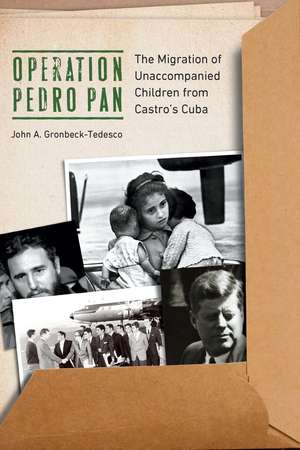
Operation Pedro Pan: The Migration of Unaccompanied Children from Castro's Cuba
Autor Dr. John A. Gronbeck-Tedescoen Limba Engleză Hardback – oct 2022
Evoluția istoriografiei migrației internaționale a trecut în ultimele decenii de la analiza fluxurilor macroeconomice la o înțelegere profundă a traumelor individuale și a mecanismelor politice care dislocă populații vulnerabile. Operation Pedro Pan de Dr. John A. Gronbeck-Tedesco reprezintă o piesă esențială în această schimbare de paradigmă, oferind o examinare riguroasă a celui mai mare exod de minori neînsoțiți din emisfera vestică. Notăm cu interes modul în care autorul transformă o propunere inițial modestă — salvarea a 200 de copii cubanezi de regimul Castro — într-o analiză complexă a unui program care a ajuns să cuprindă peste 14.000 de tineri.
Descoperim aici o structură narativă și analitică ce urmează cronologia fracturată a acestor copii: de la „Decolare” și „Aterizare”, la viața în tabere de tranzit și procesul de asimilare forțată („Americanize a la Cubana”). Cititorii familiarizați cu Operation Pedro Pan and the Exodus of Cuba's Children de Deborah Shnookal vor aprecia modul în care Dr. John A. Gronbeck-Tedesco adâncește cercetarea prin integrarea unor interviuri personale și a unor date recent scoase la lumină, care adresează subiecte sensibile precum abuzurile din sistemul de plasament și „seifurile uitării”.
Lucrarea nu se limitează la cronica politică, ci explorează impactul psihologic pe termen lung asupra identității cubano-americane. Prin cele 16 capitole, volumul documentează cum viața cotidiană — școala, biserica, familia — a fost suspendată și aruncată în vâltoarea geopoliticii Războiului Rece. Cele 18 fotografii incluse servesc drept mărturie vizuală a unei reziliențe remarcabile în fața unei separări care, deși planificată pentru câteva luni, s-a transformat pentru mulți într-o viață de exil.
Preț: 198.01 lei
Carte disponibilă
Livrare economică 17 noiembrie-01 decembrie
Specificații
ISBN-10: 1640125213
Pagini: 280
Ilustrații: 18 photographs, index
Dimensiuni: 152 x 229 x 15 mm
Greutate: 0.5 kg
Editura: Potomac Books Inc
Colecția Potomac Books
Locul publicării:United States
De ce să citești această carte
Această lucrare este esențială pentru cercetătorii istoriei moderne și ai fenomenelor migraționiste, oferind o perspectivă documentată asupra modului în care politicile externe influențează destinele individuale. Cititorul câștigă o înțelegere profundă a complexității Războiului Rece, dincolo de cifre, prin prisma mărturiilor directe și a analizei instituționale a rolului Bisericii Catolice în gestionarea crizei refugiaților cubanezi.
Despre autor
Dr. John A. Gronbeck-Tedesco este un cercetător specializat în istoria relațiilor inter-americane și a mișcărilor sociale. Expertiza sa în studiul influenței politice asupra vieții cotidiene este reflectată în modul meticulos în care a structurat Operation Pedro Pan. Prin utilizarea unor surse primare și interviuri, autorul reușește să pună în dialog istoria oficială a guvernelor american și cubanez cu istoria orală a celor care au trăit experiența exodului ca minori neînsoțiți, fiind o voce autoritară în studiile despre diaspora cubaneză.
Descriere scurtă
Operation Pedro Pan explores the undertaking sponsored by the Miami Catholic Diocese, federal and state offices, child welfare agencies, and anti-Castro Cubans to bring more than fourteen thousand unaccompanied children to the United States during the Cold War. Operation Pedro Pan was the colloquial name for the Unaccompanied Cuban Children’s Program, which began under government largesse in February 1961. Children without immediate family support in the United States—some 8,300 minors—received group and foster care through the Catholic Welfare Bureau and other religious, governmental, and nongovernmental organizations as young people were dispersed throughout the country.
Using personal interviews and newly unearthed information, Operation Pedro Pan provides a deeper understanding of how and why the program was devised. John A. Gronbeck-Tedesco demonstrates how the seemingly mundane conditions of everyday life can suddenly uproot civilians from their routines of work, church, and school and thrust them into historical prominence. The stories told by Pedro Pans are filled with horror and resilience and contribute to a refugee memory that still shapes Cuban American politics and identity today.
Notă biografică
Cuprins
Acknowledgments
A Note on Language
Introduction
1. Takeoff
2. Landing
3. From Camps to Resettlement
4. Americanize a la Cubana
5. The “Other Miami”
6. Operation Pedro Pan in Cuba
7. A Brief History of Intimate Ties
8. A National Test
9. Cold War Childhood
10. For God and Country
11. Abuse
12. Vaults of Oblivion
13. Bittersweet Reunions
14. Putting the Program to Bed
15. The Politics of Exile Identity
16. The Return
Conclusion
Notes
Index