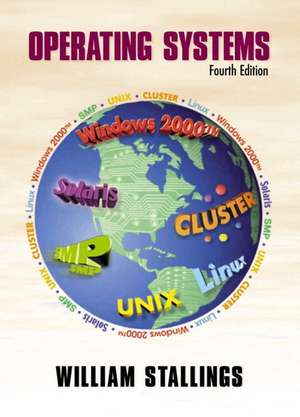
Operating Systems: Internals and Design Principles: International Edition
Autor William Stallingsen Limba Engleză Paperback – 31 oct 2000
Considerăm ediția a noua a lucrării Operating Systems: Internals and Design Principles, Global Edition un instrument esențial pentru înțelegerea arhitecturii sistemelor de calcul moderne. Abordarea practică este evidentă încă de la început: William Stallings nu se limitează la expunerea teoretică, ci ancorează fiecare principiu în decizii de proiectare concrete. Notăm cu interes modul în care autorul echilibrează conceptele fundamentale cu mecanismele specifice sistemelor contemporane, oferind o perspectivă tehnică asupra performanței și securității.
Structura volumului este riguros organizată, pornind de la o privire de ansamblu asupra sistemelor de calcul (procesare, ierarhii de memorie, I/O) și progresând către gestiunea complexă a proceselor și a memoriei. Ca și Andrew Tanenbaum în Modern Operating Systems, Global Edition, autorul distilează experiența reală în principii acționabile, însă Stallings pune un accent deosebit pe integrarea studiilor de caz detaliate. Descoperim aici analize aprofundate pe sisteme precum Linux, Windows 10 și Android, care permit cititorului să vadă cum teoriile despre scheduling sau gestiunea resurselor sunt implementate în cod real.
Un element distinctiv al acestei ediții este acoperirea tendințelor actuale, incluzând Cloud Computing și Internet of Things (IoT), domenii care redefinesc rolul sistemului de operare. Progresia materialului, susținută de întrebări de revizuire și probleme practice la finalul fiecărui capitol, transformă lectura dintr-o acumulare pasivă de informații într-un exercițiu de inginerie. Este un manual tehnic care prioritizează înțelegerea compromisurilor (trade-offs) pe care un arhitect de sistem trebuie să le facă între eficiență, complexitate și robustețe.
Preț: 399.64 lei
Cartea se retipărește
Specificații
ISBN-10: 013032986X
Pagini: 779
Dimensiuni: 178 x 235 mm
Greutate: 1.14 kg
Ediția:4Nouă
Editura: Pearson Education
Colecția Pearson Education
Locul publicării:Upper Saddle River, United States
V-ar putea interesa
-
 The Art of Multiprocessor ProgrammingMaurice Herlihy-40%Preț: 372.36 lei619.81 lei
 -
 Computer Networks: A Systems ApproachLarry L. Peterson-41%Preț: 558.53 lei941.05 lei
 -
 Modern Operating SystemsAndrew S. Tanenbaum-23%Preț: 1402.34 lei1821.22 lei
 -
 Operating Systems : Internals and Design PrinciplesWilliam Stallings-23%Preț: 1354.23 lei1758.74 lei
 -
 Preț: 394.09 lei
 -
 Design and Implementation of the FreeBSD Operating System, TheGeorge Neville-Neil-20%Preț: 443.60 lei554.50 lei
 -
 -31%Preț: 438.72 lei638.36 lei
 -
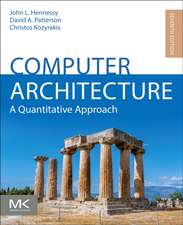 Computer Architecture: A Quantitative ApproachJohn L. Hennessy-40%Preț: 530.11 lei881.24 lei
 -
 -20%Preț: 740.41 lei925.52 lei
 -
 Silberschatz¿s Operating System Concepts, Global EditionAbraham Silberschatz-20%Preț: 480.80 lei601.00 lei
 -
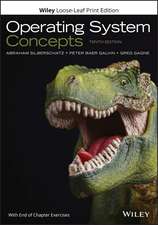 Operating System ConceptsAbraham Silberschatz-15%Preț: 707.23 lei832.03 lei
 -
 -5%Preț: 1499.40 lei1578.32 leiRecomandat
 -
 Understanding Operating SystemsAnn McIver McHoes-25%Preț: 636.06 lei849.67 lei
 -
 Computer Networks, Global EditionAndrew Tanenbaum-20%Preț: 744.22 lei930.28 lei
 -
 Modern Operating Systems, Global EditionAndrew Tanenbaum-20%Preț: 660.29 lei825.36 lei
 -
 Fundamentals of Software ArchitectureMark Richards-20%Preț: 361.37 lei451.71 lei
 -
 High Performance MySQLSilvia Botros-20%Preț: 323.20 lei404.00 lei
 -
 -20%Preț: 378.09 lei472.62 lei
 -
 System Programming in Linux: A Hands-On IntroductionStewart Weiss-35%Preț: 477.62 lei737.92 lei
 -
 MongoDB FundamentalsAmit Phaltankar-20%Preț: 267.18 lei333.97 lei
De ce să citești această carte
Recomandăm această carte studenților și profesioniștilor din ingineria calculatoarelor care au nevoie de o bază solidă în mecanismele interne ale sistemelor de operare. Cititorul câștigă capacitatea de a analiza critic arhitecturi software complexe, beneficiind de studii de caz actualizate pe Windows și Linux. Este un ghid practic ce transformă teoria abstractă în competențe de proiectare și optimizare a sistemelor.
Descriere
Blending up-to-date theory with broad coverage of fundamentals, this text offers a comprehensive treatment of operating systems, with an emphasis on internals and design issues. The book provides a thorough discussion of the fundamentals of operating systems design and relates these principles to contemporary design issues and to current trends in the development of operating systems. It helps students develop a solid understanding of the key structures and mechanisms of operating systems, the types of trade-offs and decisions involved in OS design, and the context within which the operating system functions (hardware, other system programs, application programs, interactive users).
Cuprins
Reader's Guide.
Outline of the Book. Topic Ordering. Internet and Web Resources. I. BACKGROUND.
1. Computer System Overview.
Basic Elements. Processor Registers. Instruction Execution. Interrupts. The Memory Hierarchy. Cache Memory. I/O Communication Techniques. Appendix 1A: Performance Characteristics of Two-Level Memory. Appendix 1B: Procedure Control.2. Operating System Overview.
Operating System Objectives and Functions. The Evolution of Operating Systems. Major Achievements. Characteristics of Modern Operating Systems. Windows 2000 Overview. Traditional UNIX Systems. Modern UNIX Systems. II. PROCESSES.
3. Process Description and Control.
Process States. Process Description. Process Control. UNIX SVR4 Process Management.4. Threads, SMP, and Microkernels.
Processes and Threads. Symmetric Multiprocessing. Microkernels. Windows 2000 Thread and SMP Management. Solaris Thread and SMP Management. Linux Process and Thread Management.5. Concurrency: Mutual Exclusion and Synchronization.
Principles of Concurrency. Mutual Exclusion: Software Approaches. Mutual Exclusion: Hardware Support. Semaphores. Monitors. Message Passing. Readers/Writers Problem.6. Concurrency: Deadlock and Starvation.
Principles of Deadlock. Deadlock Prevention. Deadlock Avoidance. Deadlock Detection. An Integrated Deadlock Strategy. Dining Philosophers Problem. UNIX Concurrency Mechanisms. Solaris Thread Synchronization Primitives. Windows 2000 Concurrency Mechanisms. III. MEMORY.
7. Memory Management.
Memory Management Requirements. Memory Partitioning. Paging. Segmentation. Appendix 7A: Loading and Linking.8. Virtual Memory.
Hardware and Control Structures. Operating System Software. UNIX and Solaris Memory Management. Linux Memory Management. Windows 2000 Memory Management. Appendix 8A: Hash Tables. IV. SCHEDULING.
9. Uniprocessor Scheduling.
Types of Scheduling. Scheduling Algorithms. Traditional UNIX Scheduling. Appendix 9A: Response Time. Appendix 9B: Queuing Systems.10. Multiprocessor and Real-Time Scheduling.
Multiprocessor Scheduling. Real-Time Scheduling. Linux Scheduling. UNIX SVR4 Scheduling. Windows 2000 Scheduling. V. INPUT/OUTPUT AND FILES.
11. I/O Management and Disk Scheduling.
I/O Devices. Organization of the I/O Function. Operating System Design Issues. I/O Buffering. Disk Scheduling. RAID. Disk Cache. UNIX SVR4 I/O. Windows 2000 I/O. Appendix 11A: Disk Storage Devices.12. File Management.
Overview. File Organization. File Directories. File Sharing. Record Blocking. Secondary Storage Management. UNIX File Management. Windows 2000 File System. VI. DISTRIBUTED SYSTEMS.
13. Distributed Processing, Client/Server, and Clusters.
Client/Server Computing. Distributed Message Passing. Remote Procedure Calls. Clusters. Windows 2000 Cluster Server. Sun Cluster. Beowulf and Linux Clusters.14. Distributed Process Management.
Process Migration. Distributed Global States. Distributed Mutual Exclusion. Distributed Deadlock. VII. SECURITY.
15. Computer Security.
Security Threats. Protection. Intruders. Malicious Software. Trusted Systems. Windows 2000 Security. Appendix 15A: Encryption. APPENDICES.
Appendix A: TCP/IP.
The Need for a Protocol Architecture. The TCP/IP Protocol Architecture.Appendix B: Object-Oriented Design.
Motivation. Object-Oriented Concepts. Benefits of Object-Oriented Design. CORBA.Appendix C: Programming and Operating System Projects.
Projects for Teaching Operating Systems. Nachos. Research Projects. Programming Projects. Reading/Report Assignments.Appendix D: OSP: An Environment for Operating System Projects.
Overview. Innovative Aspects of OSP. Comparison with Other Operating System Courseware. The OSP Software Distribution. OSP Mailing List. Future Plans.Appendix E: BACI: The Ben-Ari Concurrent Programming System.
Introduction. BACI. Examples of BACI Programs. BACI Projects. Enhancements to the BACI System.Glossary.
References.
Index.
Caracteristici
- NEW - Updated technical content.
- Reflects ongoing changes in the field in areas such as thread and process management, concurrency and deadlocks, virtual memory, scheduling, I/O, file systems, distributed processing, and security. Ex.___
- Reflects ongoing changes in the field in areas such as thread and process management, concurrency and deadlocks, virtual memory, scheduling, I/O, file systems, distributed processing, and security. Ex.___
- NEW - Linux now included as one of the example systems.
- Illustrates and reinforces design concepts with a modern operating system that is growing in popularity. Ex.___
- Illustrates and reinforces design concepts with a modern operating system that is growing in popularity. Ex.___
- NEW - Additional problems.
- Provide more opportunity for students to practice the concepts they learn in each chapter. Ex.___
- Provide more opportunity for students to practice the concepts they learn in each chapter. Ex.___
- Running case studies of Windows 2000 and various flavors of UNIX (UNIX SVR4, Solaris, and Linux)—The discussion of these contemporary, relevant, and representative example systems is distributed throughout the text.
- Illustrate and reinforce design concepts and ties them to real-world design choices that must be made. The new Windows 2000 operating system incorporates in a clean fashion many of the latest developments in operating system technology and it is one of the first important commercial operating systems to rely heavily on object-oriented design principles. The different flavors of UNIX presented allow students to learn the most widely used commercial version of UNIX that includes multithreading and other features not found in SVR4 (Solaris) and an open-source version of UNIX that is rapidly gaining in popularity (Linux). Ex.___
- Illustrate and reinforce design concepts and ties them to real-world design choices that must be made. The new Windows 2000 operating system incorporates in a clean fashion many of the latest developments in operating system technology and it is one of the first important commercial operating systems to rely heavily on object-oriented design principles. The different flavors of UNIX presented allow students to learn the most widely used commercial version of UNIX that includes multithreading and other features not found in SVR4 (Solaris) and an open-source version of UNIX that is rapidly gaining in popularity (Linux). Ex.___
- Unparalleled support for projects—The Appendices contain detailed information and guidance on the use of three software packages that can be used as frameworks for modeling and simulation projects: NACHOS, BACI, and OSP. The Instructor's Manual includes guidance on how to assign and structure such projects, and additional suggestions for assigning programming projects, research projects, and reading/report assignments.
- Helps instructors supplement the course with research or modeling projects that give students hands-on experience, reinforcing concepts and helping to develop a broader perspective. Ex.___
- Helps instructors supplement the course with research or modeling projects that give students hands-on experience, reinforcing concepts and helping to develop a broader perspective. Ex.___
- Detailed treatment of threads and multithreading—One of the most important new developments in operating systems.
- Helps students understand the relationship between process and thread and the way in which threads are managed and used. Ex.___
- Helps students understand the relationship between process and thread and the way in which threads are managed and used. Ex.___
- Comprenhensive treatment of scheduling—Includes recent developments in scheduling theory and design including the areas of multiprocessor scheduling and a unique discussion of real-time scheduling.
- Helps students understand these topics which are especially important in multimedia applications and networking. Ex.___
- Helps students understand these topics which are especially important in multimedia applications and networking. Ex.___
- Comprehensive, unified treatment of I/O—Unusually broad and thorough.
- Teaches students about this critical part of all operating systems. Ex.___
- Teaches students about this critical part of all operating systems. Ex.___
- Broad coverage of distributed operating systems—Covers process migration, process communication, mutual exclusion, and deadlock.
- Introduces students to the most important current research and development area in operating systems design. Ex.___
- Introduces students to the most important current research and development area in operating systems design. Ex.___
- Broad coverage of OS security—Covers trusted systems, distributed security, and viruses.
- Exposes students to this increasingly important area. Ex.___
- Exposes students to this increasingly important area. Ex.___
- Solid treatment of concurrency.
- Provides students with an extremely clear and systematic treatment of this central aspect of operating systems design. Ex.___
- Provides students with an extremely clear and systematic treatment of this central aspect of operating systems design. Ex.___
- Symmetric multiprocessing (SMP)—Features an entire section on SMP design, a detailed section on SMP scheduling, and a discussion of the relationship between SMP and multithreading.
- Exposes students to this very important topic. Virtually all servers and many workstations and PCs have an SMP architecture that requires operating system support. Ex.___
- Exposes students to this very important topic. Virtually all servers and many workstations and PCs have an SMP architecture that requires operating system support. Ex.___
- Detailed discussion of operating system support for clusters—The “hot area” of distributed processing.
- Provides students with current information in this area where there is a lot of current research and a flood of new products. Ex.___
- Provides students with current information in this area where there is a lot of current research and a flood of new products. Ex.___
- Extensive coverage of Microkernels.
- Teaches students about this increasingly important design element in OS design. Ex.___
- Teaches students about this increasingly important design element in OS design. Ex.___
- More than 150 homework problems—Ranging in levels of difficulty.
- Provide a variety of assignments for students to complete. Ex.___
- Provide a variety of assignments for students to complete. Ex.___
- Review questions.
- Assures that students have read and absorbed the material from each chapter. Ex.___
- Assures that students have read and absorbed the material from each chapter. Ex.___
- List of key words for each chapter.
- Helps students review important technical terms. Ex.___
- Helps students review important technical terms. Ex.___
- Liberal use of figures (300) and tables (85).
- Clarifies concepts. Ex.___
- Clarifies concepts. Ex.___
- Recommended reading list at the end of each chapter and up-to-date bibliography at the end of the text.
- Provide up-to-date and reputable sources for further exploration or research. Ex.___
- Provide up-to-date and reputable sources for further exploration or research. Ex.___
- Glossary at the end of the book and list of acronyms on the back endpaper.
- Help students master key terminology. Ex.___
- Help students master key terminology. Ex.___