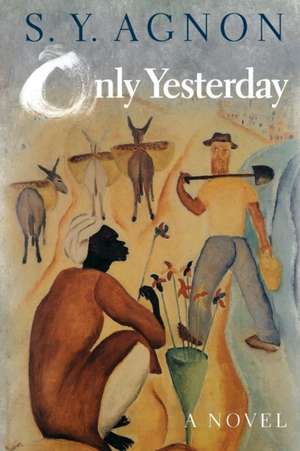
Only Yesterday
Autor Sy Agnon, Barbara Harshaven Limba Engleză Paperback – 8 apr 2002
La intersecția dintre Revival: Pioneers in Palestine (1923) și German Jews in Palestine, 1920–1948, volumul lui Sy Agnon combină cronica istorică a pionieratului cu o explorare psihologică profundă a deziluziei. Găsim în această operă monumentală nu doar o reconstrucție a societății de la începutul secolului XX, ci și o meditație metafizică despre locul omului într-o lume care pare să-i refuze constant dorințele. Premisa este, la prima vedere, una clasică: Isaac Kumer părăsește Polonia natală, sedus de sloganurile sioniste, sperând să găsească în Țara Sfântă împlinirea pe care statutul de fiu al unui biet prăvăliaș i-o interzicea acasă. Însă, odată ajuns, Isaac se lovește de o realitate fragmentată. Pendulând între spiritul liber și secular din Jaffa și rigoarea religioasă, aproape ostilă, a Ierusalimului, protagonistul devine un simbol al rătăcirii perpetue. Stilul lui Agnon capătă valențe suprarealiste, aproape kafkiene, odată cu apariția unui câine pe care Isaac, într-un gest ludic și inconștient, scrie cu vopsea „Câine Nebun”. Acest animal, care ajunge să domine narațiunea, a fost interpretat ca o întruchipare a Exilului sau a unei forțe demonice, transformând un roman despre migrație într-o explorare a morții lui Dumnezeu și a eșecului limbajului. Structura narativă este densă, alternând între idealismul febril și pragmatismul supraviețuirii, oferind o perspectivă unică asupra destinului unui popor surprins între promisiune și întuneric. Apreciem modul în care traducerea în limba engleză păstrează ritmul biblic și complexitatea paradoxurilor care l-au consacrat pe autor pe scena literară mondială.
Preț: 320.25 lei
Carte indisponibilă temporar
Specificații
ISBN-10: 0691095442
Pagini: 688
Dimensiuni: 164 x 232 x 40 mm
Greutate: 1.06 kg
Ediția:Revised
Editura: Princeton University Press
Locul publicării:Princeton, United States
V-ar putea interesa
-
 The Return of the SoldierRebecca WestPreț: 73.36 lei
 -
 The Warsaw Uprising of 1944Wlodzimierz BorodziejPreț: 268.48 lei
 -
 Gertruda's OathRam OrenPreț: 117.33 lei
 -
 DriftVictoria PattersonPreț: 91.34 lei
 -
 FlightSherman AlexiePreț: 97.95 lei
 -
 The Angel of History: Rosenzweig, Benjamin, ScholemStéphane MosèsPreț: 169.89 lei
 -
 The FlamethrowersRachel KushnerPreț: 111.62 lei
De ce să citești această carte
Recomandăm această carte cititorilor pasionați de beletristică istorică și filosofică, care doresc să înțeleagă rădăcinile identitare ale Israelului dincolo de mitologie. Este o lectură esențială pentru cei care apreciază proza lui Kafka sau a autorilor laureați cu Nobel, oferind o perspectivă profundă asupra modului în care hazardul și circumstanțele modelează existența umană. Veți câștiga o înțelegere nuanțată a tensiunii dintre tradiție și modernitate.