Cantitate/Preț
Produs

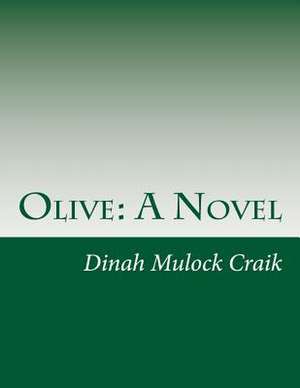
Olive

Autor Dinah Maria Mulock Craik
en Limba Engleză Paperback
"Puir wee lassie, ye hae a waesome welcome to a waesome warld " Such was the first greeting ever received by my heroine, Olive Rothesay. However, she would be then entitled neither a heroine nor even "Olive Rothesay," being a small nameless concretion of humanity, in colour and consistency strongly resembling the "red earth," whence was taken the father of all nations. No foreshadowing of the coming life brightened her purple, pinched-up, withered face, which, as in all new-born children, bore such a ridiculous likeness to extreme old age. No tone of the all-expressive human voice thrilled through the unconscious wail that was her first utterance, and in her wide-open meaningless eyes had never dawned the beautiful human soul. There she lay, as you and I, reader, with all our compeers, lay once-a helpless lump of breathing flesh, faintly stirred by animal life, and scarce at all by that inner life which we call spirit. And, if we thus look back, half in compassion, half in humiliation, at our infantile likeness-may it not be that in the world to come some who in this world bore an outward image poor, mean, and degraded, will cast a glance of equal pity on their well-remembered olden selves, now transfigured into beautiful immortality?
Citește tot Restrânge

Carte indisponibilă temporar

Doresc să fiu notificat când acest titlu va fi disponibil:

Specificații

ISBN-13: 9781500478704
ISBN-10: 1500478709
Pagini: 124
Dimensiuni: 216 x 280 x 7 mm
Greutate: 0.3 kg
Editura: CreateSpace Independent Publishing Platform

Textul de pe ultima copertă

Crippled Olive Rothesay must not only win her parents' affection but also overcome their initial disgust at her physical 'imperfection', a curvature of the spine. Published three years after Jane Eyre, Olive's swift fictional response to Bronte's novel raises questions of family, race, and nation through the story of Olive's struggle to take her place in the world as artist and woman. This edition also includes 'The Half-Caste', a story that confronts questions of miscegenation and racial prejudice in Victorian Britain.