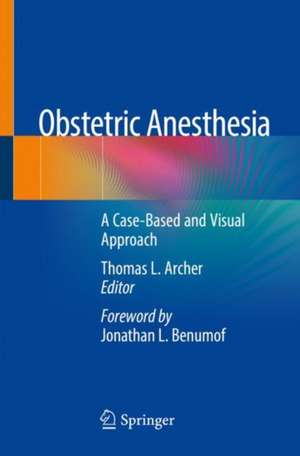
Obstetric Anesthesia
Editat de Thomas L. Archeren Limba Engleză Paperback – 21 feb 2020
În literatura de specialitate dedicată anesteziei, Obstetric Anesthesia se distinge printr-o metodologie didactică bazată pe vizualizare și studii de caz, oferind o alternativă pragmatică la tratatele teoretice dense. Clinicienii care folosesc Chestnut's Obstetric Anesthesia ca referință enciclopedică vor găsi aici instrumentele necesare pentru transpunerea rapidă a teoriei în practică, volumul funcționând ca un liant între cunoștințele fundamentale și reacția imediată în sala de nașteri. Considerăm că forța acestui manual rezidă în cele 174 de ilustrații originale care explică mecanisme fiziopatologice complexe într-o manieră intuitivă. Structura editorială este riguros compartimentată în patru secțiuni critice. Prima parte analizează amenințările la adresa oxigenării fetale, în timp ce secțiunile următoare plonjează în gestionarea hemoragiei postpartum, a șocului hipovolemic și a urgențelor majore, precum eclampsia sau prolapsul de cordon umbilical. Această progresie reflectă realitatea clinică, de la monitorizarea de rutină la intervenția în situații de criză. Reținem integrarea tehnologiilor de ultimă oră, cum este cardiometria electrică pentru monitorizarea debitului cardiac matern, esențială pentru evitarea hipoxiei fetale. Editorul Thomas L. Archer își rafinează aici viziunea asupra dinamicii materno-fetale, dezvoltând conceptele explorate în lucrarea sa Threats to Fetal, Placental and Myometrial Oxygenation. Dacă în scrierile anterioare se concentra pe teoria obstrucției venei cave inferioare, în acest volum el oferă soluții clinice directe pentru contracararea acestor riscuri. Față de A Practical Approach to Obstetric Anesthesia, care utilizează un format de tip schiță, lucrarea de față adoptă un ton narativ și dramatic prin cele 32 de cazuri clinice, transformând lectura într-o experiență de simulare mentală, vitală pentru rezidenți și specialiști deopotrivă.
Preț: 635.93 lei
Preț vechi: 669.40 lei
-5%
Carte disponibilă
Livrare economică 28 octombrie-11 noiembrie
Specificații
ISBN-10: 3030264769
Pagini: 336
Ilustrații: XXV, 309 p. 175 illus., 169 illus. in color.
Dimensiuni: 155 x 235 x 18 mm
Greutate: 0.57 kg
Ediția:1st ed. 2020
Editura: Springer
Locul publicării:Cham, Switzerland
V-ar putea interesa
-
 50 Studies Every Anesthesiologist Should KnowAnita Gupta-30%Preț: 489.98 lei701.24 lei
 -
 Anesthesiology Applied Exam Board ReviewRuchir Gupta-26%Preț: 1062.01 lei1436.67 lei
 -
 Preparing to Pass the FRCA: Strategies for Exam SuccessCaroline Whymark-19%Preț: 286.76 lei352.38 lei
 -
 SBAs for the Final FRCACaroline Whymark-17%Preț: 338.76 lei407.17 lei
 -
 -15%Preț: 459.55 lei540.65 lei
 -
 Manual of Anesthesia PracticeManuel Pardo-5%Preț: 640.43 lei674.14 lei
 -
 -5%Preț: 160.17 lei168.60 lei
 -
 Monitoring Technologies in Acute Care EnvironmentsJesse M. Ehrenfeld-5%Preț: 675.76 lei711.32 lei
 -
 Anesthesia for TraumaCorey S. Scher-5%Preț: 1020.97 lei1074.70 lei
 -
 Anesthesia and Perioperative Care for Organ TransplantationKathirvel Subramaniam-5%Preț: 1520.70 lei1600.73 lei
 -
 The Final FRCA Structured Oral Examination: A Complete GuideBobby Krishnachetty-5%Preț: 463.10 lei487.48 lei
 -
 Airway ManagementZahid Hussain Khan-5%Preț: 714.80 lei752.41 lei
 -
 -5%Preț: 802.93 lei845.19 lei
 -
 Atlas of Functional Anatomy for Regional Anesthesia and Pain MedicineMiguel Angel Reina-5%Preț: 1744.44 lei1836.25 lei
 -
 Basic Sciences in AnesthesiaEhab Farag-5%Preț: 1355.99 lei1427.35 lei
 -
 Geriatric AnesthesiologyJ. G. Reves-5%Preț: 1016.36 lei1069.85 lei
 -
 Sterbehilfe in EuropaThela Wernstedt-23%Preț: 450.04 lei584.46 lei
 -
 Neuroanesthesia and Cerebrospinal ProtectionHiroyuki Uchino-5%Preț: 1276.47 lei1343.64 lei
 -
 Muscle Relaxants: Physiologic and Pharmacologic AspectsKazuaki Fukushima-5%Preț: 1059.16 lei1114.91 lei
 -
 -5%Preț: 707.88 lei745.13 lei
 -
 Practical Issues in Anesthesia and Intensive Care 2013Biagio Allaria-5%Preț: 355.87 lei374.59 lei
 -
 Common Perioperative Problems and the AnaesthetistG.M. Woerlee-5%Preț: 707.26 lei744.49 lei
De ce să citești această carte
Această carte este esențială pentru anestezistul care dorește să stăpânească noile tehnologii de monitorizare point-of-care. Prin combinarea scenariilor clinice reale cu o grafică de excepție, Obstetric Anesthesia oferă cititorului nu doar protocoale, ci și o înțelegere profundă a fiziologiei materne. Este un ghid vizual care transformă incertitudinea din momentele critice în decizii medicale prompte și sigure, punând accent pe siguranța binomului mamă-făt.
Despre autor
Thomas L. Archer este un specialist recunoscut în domeniul anesteziei obstetricale, fiind apreciat pentru capacitatea de a sintetiza fiziologia complexă în modele vizuale accesibile. Activitatea sa academică și clinică s-a concentrat pe studiul oxigenării utero-placentare și pe impactul poziției materne asupra stabilității hemodinamice. În calitate de editor, Archer promovează o abordare multidisciplinară, integrând în practica anestezică tehnologii moderne precum ultrasonografia și monitorizarea non-invazivă a debitului cardiac. Lucrările sale sunt puncte de referință pentru înțelegerea riscurilor vasculare în timpul sarcinii și al travaliului.
Descriere scurtă
Cuprins
Recenzii
Notă biografică
Clinical Professor from 2008-2015
Department of Anesthesiology
University of California San Diego School of Medicine
San Diego, California, USA.