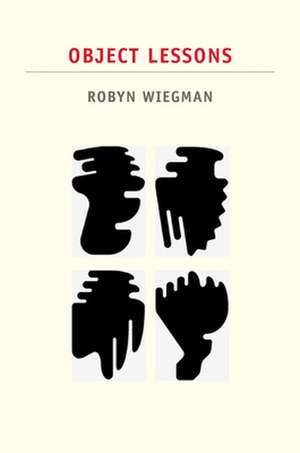
Object Lessons
Autor Robyn Wiegmanen Limba Engleză Paperback – 11 ian 2012
În volumul Object Lessons, Robyn Wiegman propune o analiză metacritică de o rigoare remarcabilă asupra disciplinelor academice articulate în jurul identității. Ne-a atras atenția modul în care autoarea nu se mulțumește să apere sau să respingă aceste domenii, ci investighează însăși dorința politică ce alimentează dezbaterile actuale. Considerăm că această lucrare reprezintă o evoluție necesară față de textele anterioare ale autoarei, precum American Anatomies sau Women's Studies on Its Own. Dacă în lucrările precedente Wiegman se concentra pe teoretizarea rasei și a genului sau pe instituționalizarea studiilor de gen, în Object Lessons ea face un pas în spate pentru a chestiona credința tacită că o teorie „mai bună” va genera automat o transformare socială progresistă. Comparabil cu Identity Politics Reconsidered de L. Alcoff în ceea ce privește rigoarea analizei, volumul de față este actualizat pentru tensiunile contemporane din mediul academic, unde activismul și cercetarea se intersectează adesea conflictual. Structura cărții este organizată temeinic, debutând cu o examinare a conceptului de „progres” în studiile de gen și continuând cu disjuncțiile dintre feminism și teoria queer. Capitolele dedicate studiilor despre albitate și pursuit-ului americanist de „non-complicitate globală” dezvăluie paradoxurile profunde ale reprezentării politice în mediul universitar. Recomandăm acest volum pentru felul în care demontează mecanismele de conformitate intelectuală pe care, paradoxal, le pot impune tocmai câmpurile critice ce își propun eliberarea subiecților lor.
Preț: 300.03 lei
Carte tipărită la comandă
Livrare economică 03-17 decembrie
Specificații
ISBN-10: 0822351609
Pagini: 416
Dimensiuni: 154 x 234 x 27 mm
Greutate: 0.57 kg
Ediția:New.
Editura: Duke University Press
V-ar putea interesa
-
 Resisting Reality: Social Construction and Social CritiqueSally Haslanger-20%Preț: 408.92 lei511.33 lei
 -
 -27%Preț: 51.44 lei70.43 lei
 -
 Feminism Beside ItselfDiane ElamPreț: 281.78 lei
 -
 Everyday UtopiasDavina CooperPreț: 245.44 lei
 -
 Preț: 281.34 lei
 -
 Eating the OceanElspeth ProbynPreț: 218.90 lei
 -
 We Should All Be FeministsChimamanda Ngozi AdichiePreț: 57.33 lei
 -
 Preț: 469.89 lei
 -
 -27%Preț: 756.65 lei1036.52 lei
 -
 Letters to my FannyCherry Healey-40%Preț: 46.43 lei77.44 lei
 -
 -26%Preț: 68.89 lei93.44 lei
 -
 Everyday SexismLaura Bates-16%Preț: 62.62 lei74.24 lei
 -
 Girl UpLaura Bates-16%Preț: 80.15 lei95.39 lei
 -
 Unfinished BusinessAnne-Marie SlaughterPreț: 89.91 lei
De ce să citești această carte
Recomandăm Object Lessons cercetătorilor și studenților din științele sociale care doresc să înțeleagă limitele instituționale ale activismului academic. Este o lectură esențială pentru cei care activează în studii de gen, etnice sau culturale, oferind un instrumentar critic pentru a evalua dacă propriile practici teoretice produc într-adevăr schimbarea vizată sau dacă alimentează doar o „vertij” a criticii fără finalitate practică.
Despre autor
Robyn Wiegman este profesor asociat de studii de gen și director al programului Margaret Taylor Smith la Duke University. Cu o carieră dedicată analizei politicilor instituționale din SUA și studiilor de identitate, Wiegman s-a impus ca o voce critică influentă. Printre lucrările sale de referință se numără American Anatomies: Theorizing Race and Gender și volumul colectiv The Futures of American Studies, ambele publicate sub egida Duke University Press. Expertiza sa îmbină teoria literară cu sociologia culturii, oferind perspective profunde asupra modului în care identitatea este construită și negociată în spațiul academic contemporan.
Descriere scurtă
Cuprins
Recenzii
This brilliant, commodious book gives us a name for that fast-moving conceptual traffic arrayed across the academic galaxy from the 1970s to the present; as a strategy for naming, Object Lessons brings about identity knowledges as a rethought object of desire and destination, its political commitments pursued to the bone, in the immediacy of its institutional arrangements. The reader will not want to miss Robyn Wiegman in this quite stunning and masterful outcome. Hortense Spillers, Vanderbilt University
This book is as incisive in its articulation of the stakes involved in postCivil Rights academic field formations as it is responsive to the affective investments shaping specific fields' modes of self-governance and self-reinvention. What do we want from identity knowledgesand what do they offer us? In the incongruent spaces opened up by these questions, and against the non-synchronized discourses marked by political obligations, institutional structures, and methodological ambitions, Robyn Wiegman narrates what she calls object lessons with inimitable intensity, agility, and imagination. If visionary thinking about identity studies is an art, she has given us a brilliant master-class performance. Rey Chow, author of Entanglements, or Transmedial Thinking about Capture
"[Wiegman's] book left me reeling in the best possible way, precisely because it focuses in on the affective life of our critical impulses. Wiegman peels back the veneer on our investments in a variety of politics - feminist, anti-racist, imperialist, queer - leaving us to confront why we show up to struggle with our work. This book gave me the gift of recognizing conflict and incommensurability as powerful sites from which to continue to passionately invest in politics." - Naomi Greyser, Feminist Studies "This brilliant, commodious book gives us a name for that fast-moving conceptual traffic arrayed across the academic galaxy from the 1970s to the present; as a strategy for naming, Object Lessons brings about 'identity knowledges' as a rethought object of desire and destination, its political commitments pursued to the bone, in the immediacy of its institutional arrangements. The reader will not want to miss Robyn Wiegman in this quite stunning and masterful outcome." Hortense Spillers, Vanderbilt University "This book is as incisive in its articulation of the stakes involved in post-Civil Rights academic field formations as it is responsive to the affective investments shaping specific fields' modes of self-governance and self-reinvention. What do we want from identity knowledges - and what do they offer us? In the incongruent spaces opened up by these questions, and against the non-synchronized discourses marked by political obligations, institutional structures, and methodological ambitions, Robyn Wiegman narrates what she calls object lessons with inimitable intensity, agility, and imagination. If visionary thinking about identity studies is an art, she has given us a brilliant master-class performance." Rey Chow, author of Entanglements, or Transmedial Thinking about Capture