Cantitate/Preț
Produs

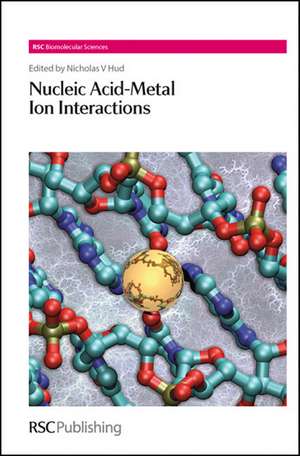
Nucleic Acid-Metal Ion Interactions

Editat de Nicholas V Hud
en Limba Engleză Hardback – 16 oct 2008

Relevanța acestei lucrări pentru cercetarea avansată în biochimie și pentru programele de masterat sau doctorat în biologia moleculară derivă din nevoia de a înțelege funcționarea acizilor nucleici la nivel fundamental. Întrucât RNA și DNA sunt polianioni, structura și funcția lor biologică depind critic de asocierea cu ionii metalici, un aspect esențial pentru validarea oricărei metodologii de cercetare în biotehnologie. Găsim în Nucleic Acid-Metal Ion Interactions o sinteză riguroasă a tehnicilor spectroscopice în stare de soluție și a structurilor de înaltă rezoluție obținute prin cristalografie cu raze X, oferind dovezi directe despre modul în care metalele dictează căile de pliere ale moleculelor mari de RNA. Apreciem în mod deosebit structura modulară a volumului, care separă analiza termodinamică de cea a cineticii plierii RNA, o distincție adesea ignorată în manualele generale. Această abordare permite o tratare în profunzime a fiecărui aspect, facilitând înțelegerea proceselor catalitice și a modulației subtile a șanțurilor de DNA. Lucrarea constituie o alternativă solidă la Interplay between Metal Ions and Nucleic Acids pentru cursurile de biofizică, având avantajul integrării unor modele de polielectroliți actualizate (precum cele prezentate de J. Michael Schurr), care explică fenomenul de sechestrare a contraionilor într-un mod accesibil cercetătorilor care nu stăpânesc avansat fizica polimerilor. Progresia conținutului este logică, pornind de la interacțiunile cu cationii din grupele I și II, trecând prin formarea legăturilor coordinative și culminând cu aplicațiile clinice. Descoperim aici capitole dedicate specific interacțiunilor metal-acid nucleic în contextul patologiilor umane, oferind o perspectivă valoroasă asupra potențialului terapeutic al coordinării directe a metalelor tranziționale.

Citește tot Restrânge

Preț: 109040 lei

Preț vechi: 126790 lei
-14%

Puncte Express: 1636

Carte disponibilă

Livrare economică 25 iunie-09 iulie

Livrare prin curier în România Termenul estimat este afișat lângă disponibilitate.
Transport gratuit pentru acest produs Plată online sau ramburs, în funcție de opțiunile comenzii.
Retur gratuit în 14 zile Comandă securizată și suport în română.

Specificații

ISBN-13: 9780854041954
ISBN-10: 0854041958
Pagini: 433
Dimensiuni: 155 x 236 x 28 mm
Greutate: 0.84 kg
Ediția:1
Editura: Royal Society Of Chemistry

De ce să citești această carte

Recomandăm această carte cercetătorilor și studenților la biochimie care doresc să depășească viziunea simplificată asupra DNA-ului ca depozit pasiv de informație. Cititorul câștigă o înțelegere cantitativă asupra modului în care ionii de magneziu și metalele de tranziție guvernează arhitectura moleculară. Este un instrument esențial pentru cei care lucrează în designul de medicamente sau biotehnologie, oferind baze teoretice și date experimentale pentru manipularea structurilor G-quadruplex și RNA.


Despre autor

Nicholas V. Hud, editorul acestui volum, este un cercetător recunoscut în domeniul chimiei bioorganice și biofizicii moleculare. Activitatea sa se concentrează pe auto-asamblarea acizilor nucleici și pe rolul moleculelor mici și al ionilor metalici în stabilizarea structurilor genetice. În calitate de profesor și director al Center for Chemical Evolution, Hud a contribuit semnificativ la înțelegerea originilor chimice ale biopolimerilor. Expertiza sa asigură coerența științifică a acestui volum publicat de RSC Publishing, reunind perspective de la experți internaționali pentru a oferi o resursă de referință în studiul interacțiunilor metal-biopolimer.


Descriere scurtă

Natural biochemical processes are routinely being discovered in living cells that involve RNA. Some of these processes, such as RNA interference, are now being exploited for biotechnology and medicinal applications. DNA has also proven in recent years to be more than a passive storehouse of information. For example, non-B-form DNA structures formed by G-rich DNA have been shown to participate in the regulation of gene expression, a discovery that presents new possibilities for drug targets in the genome. The current quest to understand how nucleic acid functions at the most fundamental level requires that we have a detailed understanding of nucleic acid-metal ion interactions. Because RNA and DNA are polyanions the structure and biological function of these biopolymers depends strongly on their association with metal ions. While this intimate connection between metal ions and nucleic function has been appreciated for decades, the noncovalent and dynamic nature of these interactions has continually presented challenges to the development of accurate and quantitative descriptions. Over the past few years the development of solution state spectroscopic techniques and the achievement of high resolution X-ray crystal structures have provided tremendous insights into the nature of nucleic acid-metal ion interactions, including direct evidence for their importance in determining nucleic acid structure, from the dictation of folding pathways followed by large RNA molecules to the subtle modulation of DNA groove widths. This new book provides a comprehensive review of the experimental studies that define our current understanding of nucleic acid-metal ion interactions with a particular emphasis being placed on experimental biophysical studies. However, the book is not merely a current review of the literature, as original material and fresh perspectives on published results are also presented. Particularly noteworthy topics include: -The chapter by Williams and fellow workers which reviews information provided by x-ray crystal structures and discusses what this information has revealed about the unique nature of Mg2+ interactions with RNA phosphate groups. The authors provide fresh insights, based upon structural comparisons, for how these interactions govern the local folding pathways of RNA. By dedicating separate chapters to the participation of metal ions in the kinetics and thermodynamics of RNA folding, this volume provides a more in depth treatise of both areas than is typically possible for reviews in which these two related, but distinct, topics are combined -Polyelectrolyte models of nucleic acids have proven to be extremely valuable for understanding the sequestering counterions in a so-called diffuse cloud around polymeric DNA. J. Michael Schurr provides a comprehensive review of polyanion models. Despite the success of polyelectrolyte models in describing some physical properties of nucleic acids, this topic is not always sufficiently understood by many researchers to make use of these models and this chapter serves as a valuable and up to date introduction to this topic. -The chapter by Pizarro and Sadler on metal ion-nucleic acid interactions in disease and medicine is complemented by a chapter by Lippert on coordinative bond formation between metal ions and nucleic acid bases. Together, these two chapters provide an overview of transition metal ion interactions with nucleic acids that illustrates the promise and peril that is associated with direct metal ion coordination to nucleic acid bases in living cells. The book is sufficiently detailed to serve as a reference source for researchers active in the field of nucleic acids biophysics and molecular biology. In addition, chapter authors have added introductory material and enough background material in each chapter so that the book can also can serve as an entry point for students and researchers that have not previously worked in the field which will make the book of lasting value and more accessible by a wider audience.

Cuprins

Nucleic acids interactions with Group I and II cations Coordinative Bond Formation Between Metal Ions and Nucleic Acid Bases Sequence-specific DNA-cation interactions Metal ion coordination in G-quadruplexes Characterization of nucleic acid metal ion binding by spectroscopic techniques Metal ions and the thermodynamics of RNA folding Metal ions and RNA folding kinetics Metal ions in RNA catalysis Polyanion models of nucleic acid-metal ion interactions Metal ion-nucleic acid interactions in disease and medicine

Notă biografică

Nicholas V Hud is at the Georgia Institute of Technology, Atlanta, USA and has over a decade of research in the area of nucleic acid-cation interactions.

Textul de pe ultima copertă

The quest to understand how nucleic acids function at the most fundamental level requires a detailed understanding of nucleic acid-metal ion interactions, as RNA and DNA are polyanions, their structures depend strongly on their association with metal ions. While scientists have appreciated the intimate connection between metal ions and nucleic acid function for decades, the noncovalent, dynamic nature of these interactions makes their accurate, quantitative description a challenge. Over the past few years, the simultaneous development of solution-state spectroscopic techniques and achievement of high resolution X-ray crystal structures has provided tremendous insight into nucleic acid-metal ion interactions. This insight includes direct evidence for the importance of such interactions in determining nucleic acid structure over orders of magnitude in scale, from the folding pathways of large RNAs to the subtle modulation of DNA groove width. Nucleic Acid-Metal Ion Interactions provides a comprehensive review of the experimental studies that define our current understanding of the subject, with a particular emphasis on biophysical studies. The book is not merely a current review of the literature, however, as the authors also present original material and fresh perspectives. The topics covered range from crystallographic studies of transition metal coordination by single nucleotides, to the application of polyelectrolyte theory in describing the delocalized counterions that surround nucleic acids in solution. Separate chapters describe how nucleic acid-metal interactions modulate both the kinetics and thermodynamics of RNA folding, play important roles in RNA catalysis, and how these interactions are even informing the design of new therapeutics. The book is sufficiently detailed to serve as a reference for researchers active in nucleic acids biophysics or molecular biology. Additionally, chapter authors have supplied sufficient introductory and background material to make this book an accessible first resource for students and researchers who are just beginning to explore this dynamic field.

Descriere

Provides a perspective on nucleic acid-metal ion interactions with an emphasis on experimental biophysical studies which will prove indispensable to biophysicists and molecular biologists.