Cărți de Noam Chomsky

Avram Noam Chomsky (born December 7, 1928) is an American linguist, philosopher, cognitive scientist, historian, social critic, and political activist. Sometimes called "the father of modern linguistics", Chomsky is also a major figure in analytic philosophy and one of the founders of the field of cognitive science. He is a Laureate Professor of Linguistics at the University of Arizona and a Institute Professor Emeritus at the Massachusetts Institute of Technology (MIT), and is the author of more than 150 books on topics such as linguistics, war, politics, and mass media. Ideologically, he aligns with anarcho-syndicalism and libertarian socialism.
Born to Jewish immigrants in Philadelphia, Chomsky developed an early interest in anarchism from alternative bookstores in New York City. He studied at the University of Pennsylvania. During his postgraduate work in the Harvard Society of Fellows, Chomsky developed the theory of transformational grammar for which he earned his doctorate in 1955. That year he began teaching at MIT, and in 1957 emerged as a significant figure in linguistics with his landmark work Syntactic Structures, which played a major role in remodeling the study of language. From 1958 to 1959 Chomsky was a National Science Foundation fellow at the Institute for Advanced Study. He created or co-created the universal grammar theory, the generative grammar theory, the Chomsky hierarchy, and the minimalist program. Chomsky also played a pivotal role in the decline of linguistic behaviorism, and was particularly critical of the work of B. F. Skinner.
An outspoken opponent of U.S. involvement in the Vietnam War, which he saw as an act of American imperialism, in 1967 Chomsky rose to national attention for his anti-war essay "The Responsibility of Intellectuals". Becoming associated with the New Left, he was arrested multiple times for his activism and placed on President Richard Nixon's Enemies List. While expanding his work in linguistics over subsequent decades, he also became involved in the linguistics wars. In collaboration with Edward S. Herman, Chomsky later articulated the propaganda model of media criticism in Manufacturing Consent and worked to expose the Indonesian occupation of East Timor. His defense of unconditional freedom of speech, including that of Holocaust denial, generated significant controversy in the Faurisson affair of the 1980s. Since retiring from active teaching at MIT, he has continued his vocal political activism, including opposing the 2003 invasion of Iraq and supporting the Occupy movement. Chomsky began teaching at the University of Arizona in 2017.
One of the most cited scholars alive, Chomsky has influenced a broad array of academic fields. He is widely recognized as having helped to spark the cognitive revolution in the human sciences, contributing to the development of a new cognitivistic framework for the study of language and the mind. In addition to his continued scholarship, he remains a leading critic of U.S. foreign policy, neoliberalism and contemporary state capitalism, the Israeli–Palestinian conflict, and mainstream news media. Chomsky and his ideas are highly influential in the anti-capitalist and anti-imperialist movements.
Syntactic Structures
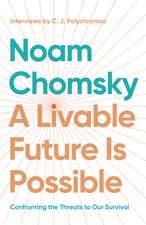
A Liveable Future is Possible
Manufacturing Consent
Occupy
Power Systems
The Myth of American Idealism
On Anarchism
Hegemony or Survival
Understanding Power
Making the Future: Occupations, Interventions, Empire and Resistance
Cum merge lumea
The Essential Chomsky
Deterring Democracy
Gaza in Crisis: Reflections on Israel's War Against the Palestinians
How the World Works
Profits Over People: Neoliberalism and the New Order
9-11: 10th Anniversary Edition
Mathematical Structure of Syntactic Merge
Profit over People - War against People
On Palestine
Who Rules the World?
Chronicles of Dissent
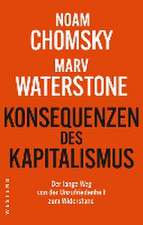
Consequences of Capitalism
Because We Say So
Masters of Mankind: Essays and Lectures, 1969-2013
Global Discontents: Conversations on the Rising Threats to Democracy
The Precipice: Neoliberalism, the Pandemic and the Urgent Need for Radical Change
Working Class History: Everyday Acts of Resistance and Rebellion
Failed States: The Abuse of Power and the Assault on Democracy
What We Say Goes: Conversations on U.S. Power in a Changing World
MEDIA CONTROL - Post-9/11 Edition: The Spectacular Achievements of Propaganda
Illegitimate Authority: Facing the Challenges of Our Time
Optimism Over Despair
Turning the Tide – U.S. Intervention in Central America and the Struggle for Peace
The Chomsky-Foucault Debate
Nuclear War and Enviromental Catastrophe
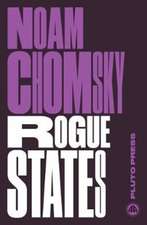
Rogue States
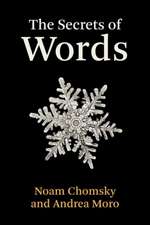
The Secrets of Words
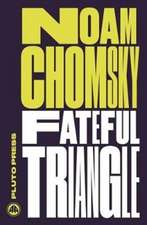
Fateful Triangle – The United States, Israel, and the Palestinians
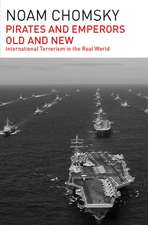
Pirates and Emperors, Old and New – International Terrorism in the Real World
Practical Utopia: Strategies for a Desirable Society
Taming the Rascal Multitude: The Chomsky Z Collection
Between Thought and Expression Lies A Lifetime: Why Ideas Matter
The Climate Crisis and the Global Green New Deal
On Cuba
Sprache und Geist
A Livable Future Is Possible
Interventions
Radical Priorities
Inside Syria
New Horizons in the Study of Language and Mind
Hopes and Prospects
L'analyse formelle des langues naturelles: (introduction to the formal analysis of natural languages)

Was für Lebewesen sind wir?
The Architecture of Language
Chomsky on Democracy and Education
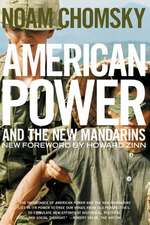
American Power And The New Mandarins: Historical and Political Essays
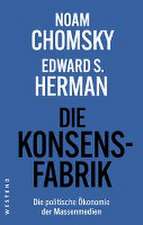
Die Konsensfabrik
Monkeywrenching The New World Order: An Audio Introduction To Global Capitalism and its Discontents: Global Capitalism & its Discontents
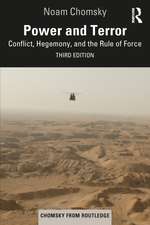
Power and Terror: Conflict, Hegemony, and the Rule of Force
Perilous Power
Knowledge of Language: Its Nature, Origins, and Use
Lectures on Government and Binding: The Pisa Lectures
Year 501
Language & Politics

El Mito del Idealismo Americano: Cómo La Política Exterior de Ee. Uu. Pone Al Mundo En Peligro / The Myth of American Idealism
Necessary Illusions: Thought Control in Democratic Societies
On Power and Ideology
The Washington Connection and Third World Fascism: Volume I
Propaganda and the Public Mind
Imperial Ambitions: Conversations on the Post-9/11 World
Middle East Illusions
A New Generation Draws the Line: Humanitarian Intervention and the “Responsibility to Protect” Today
After the Cataclysm

¿Quién Domina El Mundo? / Who Rules the World?
The Science of Language: Interviews with James McGilvray
Die Herren der Welt
On Nature and Language
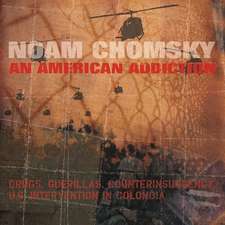
An American Addiction: Drugs, Guerillas, Counterinsurgency: US Intervention in Columbia
Rethinking Camelot
Wirtschaft und Gewalt
Why Only Us
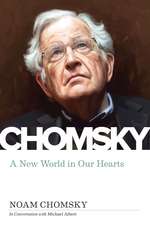
New World in Our Hearts: In Conversation with Michael Albert
Voices for Peace
Wer beherrscht die Welt?
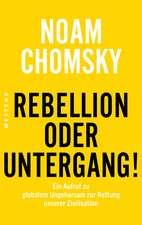
Rebellion oder Untergang!
Konsequenzen des Kapitalismus
Der Terrorismus der westlichen Welt
Die Klimakrise und der Global Green New Deal
Über Anarchismus
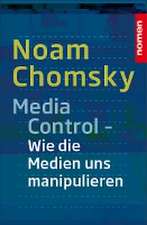
Media Control
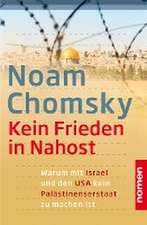
Kein Frieden in Nahost