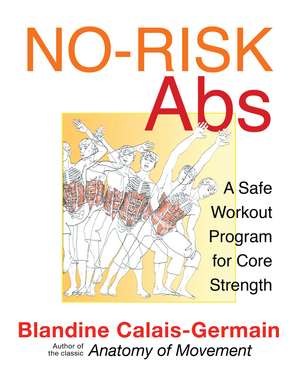
No-Risk Abs: A Safe Workout Program for Core Strength
Autor Blandine Calais-Germainen Limba Engleză Paperback – 12 mai 2011
Preț: 141.94 lei
Preț vechi: 201.48 lei
-30%
Puncte Express: 213
Carte disponibilă
Livrare economică 13-25 noiembrie
Livrare prin curier în România Termenul estimat este afișat lângă disponibilitate.
Transport gratuit de la 400.00 lei Plată online sau ramburs, în funcție de opțiunile comenzii.
Retur gratuit în 14 zile Comandă securizată și suport în română.
Specificații
ISBN-13: 9781594773891
ISBN-10: 1594773890
Pagini: 176
Ilustrații: Full-color throughout
Dimensiuni: 203 x 254 x 13 mm
Greutate: 0.45 kg
Editura: Inner Traditions/Bear & Company
Colecția Healing Arts Press
ISBN-10: 1594773890
Pagini: 176
Ilustrații: Full-color throughout
Dimensiuni: 203 x 254 x 13 mm
Greutate: 0.45 kg
Editura: Inner Traditions/Bear & Company
Colecția Healing Arts Press
Notă biografică
Blandine Calais-Germain is the author of the bestselling Anatomy of Movement, The Female Pelvis: Anatomy and Exercises, and Anatomy of Breathing. In addition to being a dancer and a dance teacher, she is a certified physical therapist and attended the French School of Orthopedics and Massage in Paris. Known for her innovative method for teaching the physical structures of anatomy in relation to movement, she teaches workshops to students from all over the world. She lives in Limoux, France.
Extras
Part Two
Abdominal Exercises and a Flat Belly
Why Work the Abs?
- Abdominal Exercises and a Flat Belly
- Flat Belly and Protruding Belly
- “User’s Guide” to a Flat Belly
- A Flat Belly and Abdominal Strength
“User’s Guide” to a Flat Belly
- Alternate Stretching and Contracting of the Abdominals
- Alternate the Contraction of the Broad Muscles
- Alternate the Contraction of the Broad Muscles and the Rectus Abdominus
- Coordinate the Contraction of the Abdominals with One Another
- Coordinate the Contraction of the Abdominals with the Breath
Alternate Stretching and Contracting of the Abdominals
When we alternate the stretch and contraction of the muscles, the contractile fibers of the muscle change in shape and volume: this movement of the tissue promotes blood circulation to the belly of the muscle.
The recommended exercises in part 4 of this book often alternate stretching and contracting of the abdominal muscles.
Alternate the Contraction of the Broad Muscles
The broad muscles are superimposed and crossed like a latticework. They form three layers that adhere a bit to each other by way of their “envelopes”: their fascia.
When one of the obliques contracts preferentially in an exercise, it draws all three layers of muscle along with it in the direction of its contraction.
This changes the form of the other two muscles whose fibers don’t run in the same direction. They are “massaged” a little like a towel being twisted.
If on the next contraction, we focus on another oblique, the same phenomenon occurs, and the whole three layers move in another direction.
The exercises recommended in part 4 of this book often alternate the contraction of the broad muscles.
Alternate the Contraction of the Broad Muscles and the Rectus Abdominus
The broad muscles pull the anterior aponeurosis (fascial extension of the broad muscles across the front of the belly) to the outside: putting it under lateral tension.
The rectus abdominus, itself, when contracted, shortens from top to bottom along the length of the belly. It pulls the anterior aponeurosis in the same direction as its fibers.
Chapter Sixteen “No-Risk Abs” Exercises
Alternately Stretch and Contract the Abdominals
1. Stretching the Rectus Abdominus
2. Contracting the Rectus Abdominus
3. Stretching the Internal Obliques
4. Contracting the Internal Obliques
5. Stretching the External Obliques
6. Contracting the External Obliques
Contract the Abdominals and the Glutes
7. Using Arm Movement to Contract the Obliques
8. Using Leg Movement to Contract the Obliques
9. Using Leg and Arm Movement to Contract the Obliques
Coordinate All of the Abdominals
10. The Little Airplane
The Drawback Lunge
11. Stretching the Rectus Abdominus with the Drawback Lunge
12. Contracting the Rectus Abdominus with the Drawback Lunge
The Turning Lunge
13. Stretching the Obliques with the Turning Lunge
14. Contracting the Obliques with the Turning Lunge
The Side Lunge
15. Stretching the Obliques with the Side Lunge
16. Contracting the Obliques with the Side Lunge
Alternately Stretch and Contract the Abdominals
Exercise 3
Stretching the Internal Obliques
Stretching the Upper Region of the Right Internal Oblique (“Cross/Lift”)
1. Lie down on your back, the arms at your sides, and legs extended on the floor.
2. Bring the right arm across the chest and reach it on a diagonal to the upper left side of the body.
3. Feel how this stretches the top portion of the right internal oblique.
4. Return to the starting position.
5. Make the same movement on an inhalation into the ribs.
6. Return to the starting position.
Fix the Lower Part of the Right Internal Oblique to Stretch the Entire Muscle (“Cross/Turn”)
1. Open the right leg on a diagonal along the floor; externally rotate the leg from the hip.
2. Feel how this slightly turns the pelvis to the same side. Just let it turn.
3. Keep your right leg in this position as you repeat the preceding exercise, bringing your right arm across the chest and reaching it on a diagonal to the upper left side of the body.
4. Feel how the rotation of the trunk now stretches the entire right internal oblique.
5. Return to the starting position.
6. Make the same movement on an inhalation into the ribs.
7. Return to the starting position.
Repeat the Same Series on the Left Side
1. Bring the left arm across the chest and reach it on a diagonal to the upper right side of the body. Then return to the starting position.
2. Make the same movement on an inhalation into the ribs and return to the starting position.
3. Open the left leg on a diagonal along the floor, externally rotate the leg from the hip.
4. Keep your left leg in this position as you repeat the preceding exercise, bringing your left arm across the chest and reaching it on a diagonal to the upper right side of the body. Then return to the starting position.
5. Make the same movement on an inhalation into the ribs and return to the starting position.
Then you can alternate, doing the “Cross/Turn” part of exercise 3 on one side and then on the other to alternate stretching and contracting the two internal obliques.
Abdominal Exercises and a Flat Belly
Why Work the Abs?
- Abdominal Exercises and a Flat Belly
- Flat Belly and Protruding Belly
- “User’s Guide” to a Flat Belly
- A Flat Belly and Abdominal Strength
“User’s Guide” to a Flat Belly
- Alternate Stretching and Contracting of the Abdominals
- Alternate the Contraction of the Broad Muscles
- Alternate the Contraction of the Broad Muscles and the Rectus Abdominus
- Coordinate the Contraction of the Abdominals with One Another
- Coordinate the Contraction of the Abdominals with the Breath
Alternate Stretching and Contracting of the Abdominals
When we alternate the stretch and contraction of the muscles, the contractile fibers of the muscle change in shape and volume: this movement of the tissue promotes blood circulation to the belly of the muscle.
The recommended exercises in part 4 of this book often alternate stretching and contracting of the abdominal muscles.
Alternate the Contraction of the Broad Muscles
The broad muscles are superimposed and crossed like a latticework. They form three layers that adhere a bit to each other by way of their “envelopes”: their fascia.
When one of the obliques contracts preferentially in an exercise, it draws all three layers of muscle along with it in the direction of its contraction.
This changes the form of the other two muscles whose fibers don’t run in the same direction. They are “massaged” a little like a towel being twisted.
If on the next contraction, we focus on another oblique, the same phenomenon occurs, and the whole three layers move in another direction.
The exercises recommended in part 4 of this book often alternate the contraction of the broad muscles.
Alternate the Contraction of the Broad Muscles and the Rectus Abdominus
The broad muscles pull the anterior aponeurosis (fascial extension of the broad muscles across the front of the belly) to the outside: putting it under lateral tension.
The rectus abdominus, itself, when contracted, shortens from top to bottom along the length of the belly. It pulls the anterior aponeurosis in the same direction as its fibers.
Chapter Sixteen “No-Risk Abs” Exercises
Alternately Stretch and Contract the Abdominals
1. Stretching the Rectus Abdominus
2. Contracting the Rectus Abdominus
3. Stretching the Internal Obliques
4. Contracting the Internal Obliques
5. Stretching the External Obliques
6. Contracting the External Obliques
Contract the Abdominals and the Glutes
7. Using Arm Movement to Contract the Obliques
8. Using Leg Movement to Contract the Obliques
9. Using Leg and Arm Movement to Contract the Obliques
Coordinate All of the Abdominals
10. The Little Airplane
The Drawback Lunge
11. Stretching the Rectus Abdominus with the Drawback Lunge
12. Contracting the Rectus Abdominus with the Drawback Lunge
The Turning Lunge
13. Stretching the Obliques with the Turning Lunge
14. Contracting the Obliques with the Turning Lunge
The Side Lunge
15. Stretching the Obliques with the Side Lunge
16. Contracting the Obliques with the Side Lunge
Alternately Stretch and Contract the Abdominals
Exercise 3
Stretching the Internal Obliques
Stretching the Upper Region of the Right Internal Oblique (“Cross/Lift”)
1. Lie down on your back, the arms at your sides, and legs extended on the floor.
2. Bring the right arm across the chest and reach it on a diagonal to the upper left side of the body.
3. Feel how this stretches the top portion of the right internal oblique.
4. Return to the starting position.
5. Make the same movement on an inhalation into the ribs.
6. Return to the starting position.
Fix the Lower Part of the Right Internal Oblique to Stretch the Entire Muscle (“Cross/Turn”)
1. Open the right leg on a diagonal along the floor; externally rotate the leg from the hip.
2. Feel how this slightly turns the pelvis to the same side. Just let it turn.
3. Keep your right leg in this position as you repeat the preceding exercise, bringing your right arm across the chest and reaching it on a diagonal to the upper left side of the body.
4. Feel how the rotation of the trunk now stretches the entire right internal oblique.
5. Return to the starting position.
6. Make the same movement on an inhalation into the ribs.
7. Return to the starting position.
Repeat the Same Series on the Left Side
1. Bring the left arm across the chest and reach it on a diagonal to the upper right side of the body. Then return to the starting position.
2. Make the same movement on an inhalation into the ribs and return to the starting position.
3. Open the left leg on a diagonal along the floor, externally rotate the leg from the hip.
4. Keep your left leg in this position as you repeat the preceding exercise, bringing your left arm across the chest and reaching it on a diagonal to the upper right side of the body. Then return to the starting position.
5. Make the same movement on an inhalation into the ribs and return to the starting position.
Then you can alternate, doing the “Cross/Turn” part of exercise 3 on one side and then on the other to alternate stretching and contracting the two internal obliques.
Cuprins
Author’s Note
Acknowledgments
Part One
What Are the Abs?
Introduction
The Rectus Abdominis
The Broad Muscles and the Abdominal Aponeuroses
The Transversus Abdominis
The Internal Obliques
The External Obliques
Understanding Some Key Words
Part Two
Abdominal Strength versus a Flat Belly
Evaluating the Flat Belly
Flat Belly and Protruding Belly
A “User’s Guide” to a Flat Belly
Customized Strengthening Programs
Part Three
The Five Most Common Abdominal Exercises
Working the Abdominals
Crunches
Leg Lifts
Push-ups
Supine Trunk Rotation
Pulling In the Belly on a Forceful Exhalation
Part Four
Safe and Effective Exercises for Great Abs
The Six “No-Risk Abs” Principles
Seven “No-Risk Abs” Preparatory Exercises
Sixteen “No-Risk Abs” Exercises
Appendix. Important Ideas to Remember
Courses in the “No-Risk Abs” Method
Further Reading
Index
Recenzii
“No-Risk Abs answers crucial questions about the safety of abdominal exercises and presents a unique system for stretching and strengthening abdominal muscles without stress to the low back, pelvic floor, and neck.”
“No-Risk Abs is indispensable reading for movement and fitness educators. Calais-Germain’s careful exposition of the anatomical logic that grounds her abdominal regimen will eliminate harm caused by the misinformation and cultural confusion surrounding this region of our bodies. Her approach beautifully contributes to holistic body organization.”
“This book is especially valuable for those who work with the elderly or who are returning to exercise after an absence. It would be very hard to go wrong with these moves.”
“The focus on how to avoid injury while exercising is specific and black and white illustrations throughout provide specific instruction assuring clarity. Any library strong in exercise programs will appreciate this very specific, clear title.”
“This book is as powerful as any exercise machine, filled with solid guidelines for a holistic approach to achieving a strong and healthy body.”
“Read this book especially if you are a teacher or client with back issues...This is a brilliant book that finally addresses the poor training of abs and the possible effects of this training.”
“No-Risk Abs is indispensable reading for movement and fitness educators. Calais-Germain’s careful exposition of the anatomical logic that grounds her abdominal regimen will eliminate harm caused by the misinformation and cultural confusion surrounding this region of our bodies. Her approach beautifully contributes to holistic body organization.”
“This book is especially valuable for those who work with the elderly or who are returning to exercise after an absence. It would be very hard to go wrong with these moves.”
“The focus on how to avoid injury while exercising is specific and black and white illustrations throughout provide specific instruction assuring clarity. Any library strong in exercise programs will appreciate this very specific, clear title.”
“This book is as powerful as any exercise machine, filled with solid guidelines for a holistic approach to achieving a strong and healthy body.”
“Read this book especially if you are a teacher or client with back issues...This is a brilliant book that finally addresses the poor training of abs and the possible effects of this training.”
Descriere
An illustrated guide to the anatomy of the abdominal muscles and how to tone them successfully without injury.