Cantitate/Preț
Produs

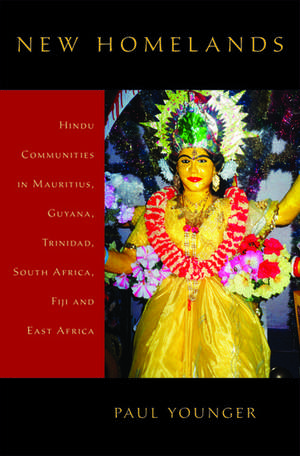
New Homelands: Hindu Communities in Mauritius, Guyana, Trinidad, South Africa, Fiji, and East Africa

Autor Paul Younger
en Limba Engleză Hardback – 10 dec 2009

Observăm în New Homelands o deschidere interdisciplinară necesară, lucrarea situându-se la intersecția dintre istoria colonială, sociologia religiilor și studiile despre diaspora. Paul Younger investighează un fenomen istoric adesea umbrit de sclavia clasică: sistemul de „muncă prin contract” (indentured labor) prin care Imperiul Britanic a relocat forța de muncă indiană în colonii după 1833. Subliniem modul în care autorul nu se limitează la o analiză de arhivă, ci propune un studiu bazat pe cercetare de teren, urmărind cum descendenții acestor muncitori au transformat un exil arbitrar într-o fundamentare a identității lor actuale.

Textul analizează procesul prin care comunitățile din Mauritius, Guyana sau Fiji au reușit să își păstreze coeziunea prin limbă și, ulterior, prin reconstrucția unei tradiții religioase distinctive. Apreciem rigoarea cu care Paul Younger documentează lupta împotriva pierderii culturale, oferind o voce celor care au reușit să creeze o „patrie nouă” din fragmentele memoriei colective. Volumul acoperă aceeași arie tematică precum Coolies of the Empire, dar cu o abordare mai centrată pe evoluția tradițiilor religioase și a sentimentului de comunitate post-indentură, spre deosebire de accentul pus de Ashutosh Kumar pe experiența migrației propriu-zise.

Această lucrare reprezintă o evoluție firească în opera autorului. Dacă în Playing Host to Deity și The Home of Dancing Sivan acesta explora profunzimea festivalurilor și a templelor din sudul Indiei, în New Homelands el extinde această expertiză asupra modului în care aceleași rădăcini religioase sunt transplantate și adaptate în contexte globale diverse. Structura este una academică, dar accesibilă, susținută de peste 50 de ilustrații care documentează viața religioasă a diasporei.

Citește tot Restrânge

Preț: 61631 lei

Preț vechi: 65165 lei
-5%

Puncte Express: 924

Carte tipărită la comandă

Livrare economică 05-10 iunie


Specificații

ISBN-13: 9780195391640
ISBN-10: 0195391640
Pagini: 304
Ilustrații: 52 black and white halftones; 6 line illustrations
Dimensiuni: 236 x 157 x 25 mm
Greutate: 0.57 kg
Editura: Oxford University Press
Colecția OUP USA
Locul publicării:New York, United States

De ce să citești această carte

Recomandăm această carte cercetătorilor și studenților interesați de istoria Imperiului Britanic și de sociologia religiei. Cititorul câștigă o înțelegere profundă a modului în care identitățile multiculturale de astăzi s-au format prin rezistență culturală. Este un titlu esențial pentru a înțelege cum hinduismul a devenit o ancoră identitară în comunități izolate geografic, oferind un studiu de caz fascinant despre supraviețuirea tradițiilor în condiții de opresiune.


Despre autor

Paul Younger este o figură proeminentă în mediul academic, fiind profesor la Universitatea din Newcastle și membru al Academiei Regale de Inginerie. Deși recunoscut la nivel mondial pentru expertiza sa în hidrogeologie și sustenabilitate, Younger a dedicat o parte semnificativă a carierei sale studiului tradițiilor religioase indiene. Experiența sa vastă de teren și capacitatea de a analiza sisteme complexe se reflectă în rigoarea cercetărilor sale asupra hinduismului, transformându-l într-un observator avizat al modului în care comunitățile umane se adaptează și își conservă patrimoniul în condiții de migrație și schimbare socială.


Descriere

When the colonial slave trade, and then slavery itself, were abolished early in the 19th century, the British empire brazenly set up a new system of trade using Indian rather than African laborers. The new system of "indentured" labor was supposed to be different from slavery because the indenture, or contract, was written for an initial period of five years and involved fixed wages and some specified conditions of work. From the workers' point of view, the one redeeming feature of the system was that most of their workmates spoke their language and came from the same area of India. Because this allowed them to develop some sense of community, by the end of the initial five years most of the Indian laborers chose to stay in the land to which they had been taken. In time that land became the place in which they joined with others to build a new homeland. In this fieldwork-based study, Paul Younger looks at the present day descendents of these workers and their post-indenture societies in Mauritius, Guyana, Trinidad, South Africa, Fiji, and East Africa. He finds that they still cling to the fact that it was an arbitrary British decision that took them there and made the society pluralistic. This plurality seems to require them to search their memory for a distinctive religious tradition that they can pass on to their children. They know that there was a loss of culture involved in their move to these locations and consider it important to recover from that loss. But they are also intensely proud of their new identity, and insist that they have established a new religious tradition in their new homeland. For generations, says Younger, these people had struggled in their situation and now they had come up with a sense of community and purpose and were prepared to make the historical claim that they had developed an appropriate religious tradition for their specific community.

Recenzii

Younger's new book provides muc-needed date and a useful analysis of some of the oldest Indian-oridin Hindu communities living outside of India.

Notă biografică

Professor Emeritus of Religious Studies, McMaster University