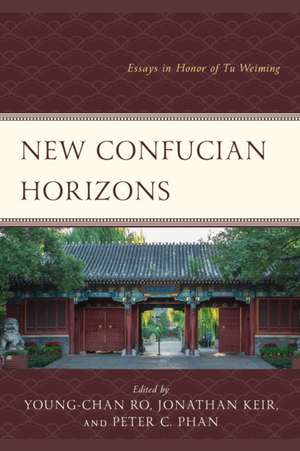
New Confucian Horizons: Essays in Honor of Tu Weiming
Editat de Young-chan Ro, Jonathan Keir, Peter C. Phan Contribuţii de Joseph A. Adler, Peter K. Bol, Fred Dallmayr, Heup Young Kim, Robert C. Neville, Peimin Ni, Anh Q. Tran, Mary Evelyn Tucker, Wang Jianbao, Samuel H. Yamashita, Michiko Yusaen Limba Engleză Hardback – 7 noi 2024
Preț: 596.60 lei
Preț vechi: 883.42 lei
-32%
Puncte Express: 895
Carte tipărită la comandă
Livrare economică 28 noiembrie-12 decembrie
Livrare prin curier în România Termenul estimat este afișat lângă disponibilitate.
Transport gratuit pentru acest produs Plată online sau ramburs, în funcție de opțiunile comenzii.
Retur gratuit în 14 zile Comandă securizată și suport în română.
Specificații
ISBN-13: 9781666972719
ISBN-10: 1666972711
Pagini: 278
Dimensiuni: 152 x 232 x 22 mm
Greutate: 0.54 kg
Editura: Bloomsbury Publishing
Colecția Lexington Books
Locul publicării:New York, United States
ISBN-10: 1666972711
Pagini: 278
Dimensiuni: 152 x 232 x 22 mm
Greutate: 0.54 kg
Editura: Bloomsbury Publishing
Colecția Lexington Books
Locul publicării:New York, United States
Cuprins
Introduction
Part I: Tu Weiming: A Confucian Life
Chapter 1: The Confucian Helicopter: An Overview of Tu Weiming's (Myriad) Affiliations and Innovations
Wang Jianbao
Chapter 2: Tu Weiming: In Lieu of an Intellectual Biography
Jonathan Keir
Chapter 3: Tu Weiming and Boston Confucianism
Robert C. Neville
Part II: Confucianism in Theory and Practice
Chapter 4: Confucianism and Democracy: Lessons from Tu Weiming
Fred Dallmayr
Chapter 5: Confucianism as a Religious Tradition: Linguistic and Methodological Problems
Joseph A. Adler
Chapter 6: As-If-Ism: A Confucian Model of Spirituality
Peimin Ni
Chapter 7: Reflections on Confucianism and Culture
Peter K. Bol
Part III: Historical Voyages
Chapter 8: Confucianism and Its Reception by Alexandre de Rhodes in Seventeenth-Century Vietnam
Peter C. Phan
Chapter 9: From Debate to Dialogue: Confucianism and Religious Pluralism in the Context of Christian-Confucian Relations
Anh Q. Tran
Chapter 10: Second Thoughts about Confucianism in Wartime Japan, 1937-1945
Samuel H. Yamashita
Chapter 11: D. T. Suzuki's Impressions of Chinese Buddhism (1934) as His Spiritual Journey
Michiko Yusa
Part IV: Future Challenges
Chapter 12: Confucian Cosmology and the Journey of the Universe
Mary Evelyn Tucker
Chapter 13: Advancing Humanity: Artificial Intelligence, Transhumanism, Confucianism, and Theo-Dao
Heup Young Kim
Chapter 14: Envisioning a New Humanity: Tu Weiming and Raimon Panikkar
Young-chan Ro
About the Contributors
Part I: Tu Weiming: A Confucian Life
Chapter 1: The Confucian Helicopter: An Overview of Tu Weiming's (Myriad) Affiliations and Innovations
Wang Jianbao
Chapter 2: Tu Weiming: In Lieu of an Intellectual Biography
Jonathan Keir
Chapter 3: Tu Weiming and Boston Confucianism
Robert C. Neville
Part II: Confucianism in Theory and Practice
Chapter 4: Confucianism and Democracy: Lessons from Tu Weiming
Fred Dallmayr
Chapter 5: Confucianism as a Religious Tradition: Linguistic and Methodological Problems
Joseph A. Adler
Chapter 6: As-If-Ism: A Confucian Model of Spirituality
Peimin Ni
Chapter 7: Reflections on Confucianism and Culture
Peter K. Bol
Part III: Historical Voyages
Chapter 8: Confucianism and Its Reception by Alexandre de Rhodes in Seventeenth-Century Vietnam
Peter C. Phan
Chapter 9: From Debate to Dialogue: Confucianism and Religious Pluralism in the Context of Christian-Confucian Relations
Anh Q. Tran
Chapter 10: Second Thoughts about Confucianism in Wartime Japan, 1937-1945
Samuel H. Yamashita
Chapter 11: D. T. Suzuki's Impressions of Chinese Buddhism (1934) as His Spiritual Journey
Michiko Yusa
Part IV: Future Challenges
Chapter 12: Confucian Cosmology and the Journey of the Universe
Mary Evelyn Tucker
Chapter 13: Advancing Humanity: Artificial Intelligence, Transhumanism, Confucianism, and Theo-Dao
Heup Young Kim
Chapter 14: Envisioning a New Humanity: Tu Weiming and Raimon Panikkar
Young-chan Ro
About the Contributors
Recenzii
This collection of essays by leading scholars of Confucianism is a celebration, and elaboration, of Tu Weiming's project of bringing Confucianism into dialogue with the world's major religions. Inspired by Tu's presentation of Confucianism as anthropocosmic spiritual humanism, these essays argue persuasively that there is much the non-Confucian world can learn from Confucianism about what it means to be moral as a human being inextricably connected with all other human beings as well as with all other entities in the universe.