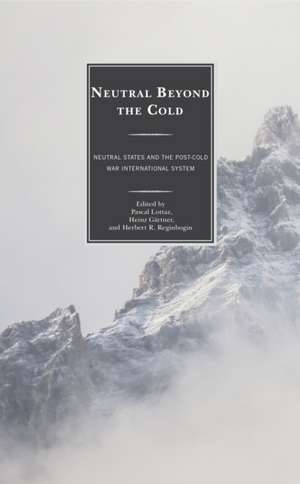
Neutral Beyond the Cold: Neutral States and the Post-Cold War International System
Editat de Dr Pascal Lottaz, Heinz Gärtner, Herbert R. Reginbogin Contribuţii de Luca Anceschi, Nasir A. Andisha, Laurent Goetschel, Hillary Briffa, Thomas Roithner, Eva Nowotny, Peter Jankowitsch, Angela Kane, Charis Si En Tay, Yauheni Preiherman, David X. Noack, Maya Janik, Keiichi Kubo, Tumurjin Ganbaataren Limba Engleză Hardback – 29 iun 2022
Preț: 579.41 lei
Preț vechi: 865.51 lei
-33%
Puncte Express: 869
Carte tipărită la comandă
Livrare economică 07-21 decembrie
Livrare prin curier în România Termenul estimat este afișat lângă disponibilitate.
Transport gratuit pentru acest produs Plată online sau ramburs, în funcție de opțiunile comenzii.
Retur gratuit în 14 zile Comandă securizată și suport în română.
Specificații
ISBN-13: 9781666901665
ISBN-10: 1666901660
Pagini: 328
Ilustrații: 2 b/w illustrations; 4 b/w photos;
Dimensiuni: 160 x 227 x 25 mm
Greutate: 0.65 kg
Editura: Bloomsbury Publishing
Colecția Lexington Books
Locul publicării:New York, United States
ISBN-10: 1666901660
Pagini: 328
Ilustrații: 2 b/w illustrations; 4 b/w photos;
Dimensiuni: 160 x 227 x 25 mm
Greutate: 0.65 kg
Editura: Bloomsbury Publishing
Colecția Lexington Books
Locul publicării:New York, United States
Cuprins
Part I: Re-imagining Neutrality in the Post-Cold War
Chapter 1: Neutrality and Geopolitics: Responding to Change by Laurent Goetschel
Chapter 2: Neutrality and Small States: A Strategic Approach by Hillary Briffa
Chapter 3: Neutrality and Neutralization: A Geopolitical Statecraft by Herbert Reginbogin
Chapter 4: Neutrality and Peacemaking: A Compass for Austrian Peace Policy by Thomas Roithner
Chapter 5: Neutrality and Diplomacy: Voices of Diplomats by Eva Nowotny and Peter Jankowitsch
Chapter 6: Neutrality in International Organizations I: The United Nations by Angela Kane
Chapter 7: Neutrality in International Organizations II: ASEAN by Charis Si En Tay
Part II: The New Neutrals in the Post-Communist Space
Chapter 8: Belarus: Between Alliance and Neutralism by Yauheni Preiherman and Pascal Lottaz
Chapter 9: Moldova: The Whims of Neutrality Politics by David X. Noack
Chapter 10: Ukraine: Overcoming Geopolitical Insecurity by Heinz Gärtner and Maya Janik
Chapter 11: Georgia: Neutrality as an Alter
Chapter 1: Neutrality and Geopolitics: Responding to Change by Laurent Goetschel
Chapter 2: Neutrality and Small States: A Strategic Approach by Hillary Briffa
Chapter 3: Neutrality and Neutralization: A Geopolitical Statecraft by Herbert Reginbogin
Chapter 4: Neutrality and Peacemaking: A Compass for Austrian Peace Policy by Thomas Roithner
Chapter 5: Neutrality and Diplomacy: Voices of Diplomats by Eva Nowotny and Peter Jankowitsch
Chapter 6: Neutrality in International Organizations I: The United Nations by Angela Kane
Chapter 7: Neutrality in International Organizations II: ASEAN by Charis Si En Tay
Part II: The New Neutrals in the Post-Communist Space
Chapter 8: Belarus: Between Alliance and Neutralism by Yauheni Preiherman and Pascal Lottaz
Chapter 9: Moldova: The Whims of Neutrality Politics by David X. Noack
Chapter 10: Ukraine: Overcoming Geopolitical Insecurity by Heinz Gärtner and Maya Janik
Chapter 11: Georgia: Neutrality as an Alter
Recenzii
The concept of neutrality in the international system dates back more than 350 years, but it gained particular salience after 1945, when Europe and the Asia-Pacific region were divided between rival Cold War blocs led by the United States and the Soviet Union. The starkness of the Cold War divide spurred some countries to seek permanent neutrality, avoiding affiliation with either bloc. Outside Europe, as decolonization led to the emergence of dozens of new states, many joined what became the Nonaligned Movement, a grouping that eventually encompassed 120 countries around the world. The end of the Cold War division of Europe in 1989-1991 prompted speculation that neutrality in the post-Cold War world had lost its raison d'être. This book shows that such claims were incorrect. Although the meaning of neutrality has changed in the post-Cold War era, the concept retains much of its cachet. The essays gathered here explain why many countries nowadays continue to pursue some variation of neutrality. Even readers who might question some of the arguments in the book will find it an exceptionally valuable and stimulating collection of ideas about the multiple forms of neutrality in the post-Cold War international system.
This volume opens a fascinating overview on how the fluid, varied and always contested policy of neutrality has traveled through the post-Cold War decades -- disappearing here, resurfacing there. Extending the scope of analysis in both analytical and geographical terms, the chapters of this volume truly reach beyond the established western and Eurocentric Cold War and post-Cold War narratives of neutrality. The end of neutrality has been proclaimed many times in history, yet, as this volume shows, as long as there will be wars and conflicts, there will be formulations of neutrality as well.
This volume opens a fascinating overview on how the fluid, varied and always contested policy of neutrality has traveled through the post-Cold War decades -- disappearing here, resurfacing there. Extending the scope of analysis in both analytical and geographical terms, the chapters of this volume truly reach beyond the established western and Eurocentric Cold War and post-Cold War narratives of neutrality. The end of neutrality has been proclaimed many times in history, yet, as this volume shows, as long as there will be wars and conflicts, there will be formulations of neutrality as well.