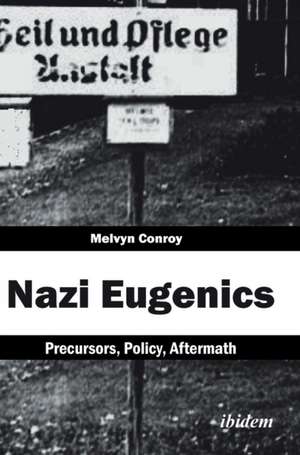
Nazi Eugenics: Precursors, Policy, Aftermath
Autor Melvyn Conroyen Limba Engleză Hardback – 30 noi 2017
În literatura academică dedicată celui de-al Doilea Război Mondial, se resimte adesea o fragmentare între studiul politicilor rasiale interne și mecanismele Holocaustului; Nazi Eugenics vine să completeze tocmai această lacună, oferind o perspectivă integrată asupra modului în care eugenia a servit drept fundament ideologic și logistic pentru genocid. Găsim în această carte o analiză riguroasă a modului în care o doctrină considerată inițial o soluție pentru problemele sociale a fost transformată, sub regimul nazist, într-un program de stat care a început cu sterilizarea forțată și a culminat cu centrele de ucidere ale Aktion T4. Remarcăm precizia cu care Melvyn Conroy urmărește evoluția acestui sistem, demonstrând că masacrarea celor mai vulnerabili cetățeni germani a fost, de fapt, precursorul tehnic al soluției finale. Cititorii familiarizați cu Origins of Nazi Genocide de Henry Friedlander vor aprecia modul în care acest volum extinde analiza asupra continuităților dintre programele de eutanasie și lagărele de exterminare, punând un accent deosebit pe biografiile celor care au gestionat această „barbarie birocratizată”. Structura textului este una densă, academică, fiind concepută pentru publicul specialist care caută să înțeleagă nu doar cronologia faptelor, ci și transformarea eugeniei într-o formă de religie seculară care a dictat supraviețuirea în funcție de criterii de productivitate și „puritate” rasială. Reținem, de asemenea, efortul autorului de a răspunde la întrebări dificile privind impactul acestor politici asupra societății contemporane, oferind un studiu de caz esențial pentru etica medicală și istoria politică.
Preț: 483.58 lei
Preț vechi: 620.10 lei
-22%
Carte disponibilă
Livrare economică 19 mai-02 iunie
Specificații
ISBN-10: 3838210557
Pagini: 492
Ilustrații: ,
Dimensiuni: 168 x 240 x 32 mm
Greutate: 0.81 kg
Editura: Ibidem
Colecția ibidem
Locul publicării:Hannover, Germany
De ce să citești această carte
Această lucrare este esențială pentru cercetătorii Holocaustului și studenții la istorie sau etică, oferind o înțelegere profundă a tranziției de la ideologia eugenistă la aparatul de ucidere în masă. Cititorul câștigă o perspectivă documentată asupra structurilor precum Aktion T4, înțelegând cum mecanismele administrative pot fi pervertite pentru a susține un sistem de exterminare sistematică.