
Nature in the Balance: The Economics of Biodiversity
Editat de Dieter Helm, Cameron Hepburnen Limba Engleză Hardback – 16 ian 2014
Preț: 393.85 lei
Preț vechi: 494.99 lei
-20%
Puncte Express: 591
Carte disponibilă
Livrare economică 22-28 octombrie
Livrare prin curier în România Termenul estimat este afișat lângă disponibilitate.
Transport gratuit de la 400.00 lei Plată online sau ramburs, în funcție de opțiunile comenzii.
Retur gratuit în 14 zile Comandă securizată și suport în română.
Specificații
ISBN-13: 9780199676880
ISBN-10: 0199676887
Pagini: 438
Ilustrații: 15 Figures, 32 Tables, 1 Box
Dimensiuni: 163 x 238 x 34 mm
Greutate: 0.82 kg
Editura: Oxford University Press
Colecția OUP Oxford
Locul publicării:Oxford, United Kingdom
ISBN-10: 0199676887
Pagini: 438
Ilustrații: 15 Figures, 32 Tables, 1 Box
Dimensiuni: 163 x 238 x 34 mm
Greutate: 0.82 kg
Editura: Oxford University Press
Colecția OUP Oxford
Locul publicării:Oxford, United Kingdom
V-ar putea interesa
-
 Nature's GhostsSophie YeoPreț: 78.08 lei
 -
 Introduction to Environmental EconomicsNick Hanley-21%Preț: 465.07 lei587.13 lei
 -
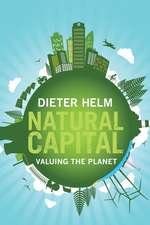 Natural Capital: Valuing the PlanetDieter HelmPreț: 113.64 lei
 -
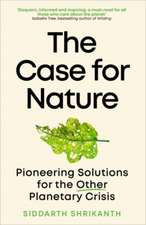 The Case for NatureSiddarth Shrikanth-20%Preț: 63.05 lei78.51 lei
 -
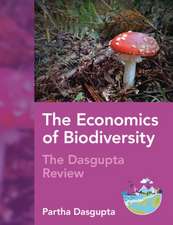 The Economics of BiodiversityPartha DasguptaPreț: 447.79 lei
 -
 The New Nature of BusinessAndre HoffmannPreț: 114.29 lei
 -
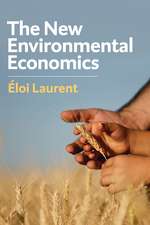 Preț: 157.38 lei
 -
 Capitalism at the LimitUlrich BrandPreț: 156.94 lei
 -
 International Treaties in Nature ConservationChris SprayPreț: 171.97 lei
 -
 On Natural CapitalPartha DasguptaPreț: 146.84 lei
 -
 The Nature of NatureVandana ShivaPreț: 103.20 lei
 -
 -11%Preț: 84.43 lei94.67 lei
 -
 The Weight of NatureClayton AldernPreț: 78.11 lei
 -
 Half-Earth SocialismTroy VettesePreț: 90.72 lei
 -
 Future WildRichard NairnPreț: 120.40 lei
 -
 The Future of AgricultureSarah BearchellPreț: 70.02 lei
 -
 -19%Preț: 62.97 lei78.14 lei
 -
 Nature, Culture, and InequalityThomas PikettyPreț: 92.03 lei
 -
 Standing up for the PlanetFrancesco PaganoPreț: 166.46 lei
Recenzii
Overall, this edited volume represents the very best compendium of current thinking on the economics of biodiversity ... Anyone interested in the economics of biodiversity should turn first to this book.
The chapters in this useful book see leading conservation and economic thinkers in this area explore how to define biodiversity for valuation, using objective, scientific principles, and how economic techniques can be applied to the results
The chapters in this useful book see leading conservation and economic thinkers in this area explore how to define biodiversity for valuation, using objective, scientific principles, and how economic techniques can be applied to the results
Notă biografică
Dieter Helm is a professor at the University of Oxford and a Fellow in Economics at New College. He is Chairman of the Independent Natural Capital Committee. Previous appointments include membership of the Prime Minister's Council of Science and Technology, and Chairman of the Academic Panel of the Department for Environment, Food and Rural Affairs. He has also been a Special Advisor to the European Commissioner for Energy. He was the founding managing editor of the Oxford Review of Economic Policy and is currently an associate editor. He is an Honorary Vice President of the Berkshire, Buckinghamshire and Oxfordshire Wildlife Trust. He has written and edited a number of books, including The Carbon Crunch (2012, Yale University Press). Cameron Hepburn is a senior research fellow at the Grantham Research Institute at the London School of Economics. He is also a research fellow at New College, Oxford and a senior visiting fellow at the Smith School of Enterprise and the Environment. He has advised governments, international institutions, and the private sector on environmental policy and strategy, and he currently serves as a member of the DECC Secretary of State's Economics Advisory Group. He is an associate editor of the Oxford Review of Economic Policy, and has degrees in law and engineering, a doctorate in economics from Oxford, and over 30 peer-reviewed publications in economics, public policy, law, engineering, philosophy, and biology.
Cuprins
- 1: Dieter Helm and Cameron Hepburn: Introduction
- 2: Dieter Helm and Cameron Hepburn: The Economic Analysis of Biodiversity
- PART I. CONCEPTS AND MEASUREMENT
- 3: Georgina M. Mace: Biodiversity: Its Meaning, Roles, and Status
- 4: Kathy J. Willis, Marc Macias-Fauria, Alexandros Gasparatos, and Peter Long: Identifying and Mapping Biodiversity: Where Can We Damage?
- 5: Ian J. Bateman and Grischa Perino: The UK National Ecosystem Assessment: Valuing Changes in Ecosystem Services
- PART II. VALUING BIODIVERSITY
- 6: Giles Atkinson, Ian J. Bateman, and Susana Mourato: Valuing Ecosystem Services and Biodiversity
- 7: Pavan Sukhdev, Heidi Wittmer, and Dustin Miller: The Economics of Ecosystems and Biodiversity (TEEB): Challenges and Responses
- PART III. NATURAL CAPITAL AND ACCOUNTING
- 8: Edward B. Barbier: Natural Capital
- 9: Kirk Hamilton: Biodiversity and National Accounting
- PART IV. INTERNATIONAL AND DEVELOPMENT
- 10: Charles Palmer and Salvatore Di Falco: Biodiversity, Poverty, and Development: A Review
- 11: Tim Swanson and Ben Groom: Regulating Global Biodiversity: What is the Problem?
- PART V. POLICY INSTRUMENTS AND INCENTIVES
- 12: Daniela A. Miteva, Subhrendu K. Pattanayak, and Paul J. Ferraro: Do Biodiversity Policies Work? The Case for Conservation Evaluation 2.0
- 13: Stephen Polasky and Kris Johnson: Are Investments to Promote Biodiversity Conservation and Ecosystem Services Aligned?
- 14: Nick Hanley, Simanti Banerjee, Gareth D. Lennox, and Paul R. Armsworth: Incentives, Private Ownership, and Biodiversity Conservation
- 15: Jo Burgess, Chris J. Kennedy, and Charles F. Mason: On the Potential for Speculation to Threaten Biodiversity Loss