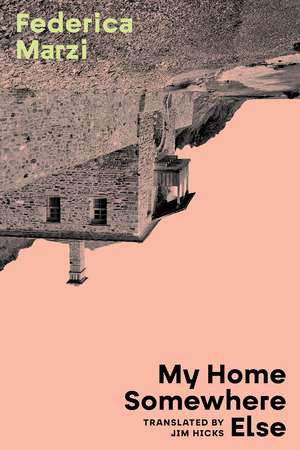
My Home Somewhere Else
Autor Federica Marzi Traducere de Jim Hicksen Limba Engleză Paperback – 12 noi 2024
Preț: 130.97 lei
Puncte Express: 196
Carte disponibilă
Livrare economică 29 octombrie-12 noiembrie
Livrare express 15-21 octombrie pentru 69.37 lei
Livrare prin curier în România Termenul estimat este afișat lângă disponibilitate.
Transport gratuit de la 400.00 lei Plată online sau ramburs, în funcție de opțiunile comenzii.
Retur gratuit în 14 zile Comandă securizată și suport în română.
Specificații
ISBN-13: 9789533514772
ISBN-10: 9533514779
Pagini: 348
Dimensiuni: 140 x 216 x 30 mm
Greutate: 0.5 kg
Editura: SANDORF PASSAGE
Colecția Sandorf Passage
Locul publicării:United States
ISBN-10: 9533514779
Pagini: 348
Dimensiuni: 140 x 216 x 30 mm
Greutate: 0.5 kg
Editura: SANDORF PASSAGE
Colecția Sandorf Passage
Locul publicării:United States
Descriere
A sweeping tale of displacement and connection set against the backdrop of Trieste, Italy.In the sun-drenched landscape of the Adriatic coast, two women's lives intertwine: Amila, a young Bosnian carrying secrets, and Norina, an elderly exile haunted by the past. As Amila navigates a blossoming romance, old wounds resurface, threatening to shatter the bond between two sisters. My Home Somewhere Else explores the shared human experience of emigration, revealing the enduring power of love, loss, and the search for belonging.
For readers who enjoy historical fiction with strong female characters and themes of identity, family, and resilience. Discover a poignant story that resonates across generations and continents.
For readers who enjoy historical fiction with strong female characters and themes of identity, family, and resilience. Discover a poignant story that resonates across generations and continents.
Recenzii
"Beautiful . . . hopscotching through the nonlinear narrative, delivering a captivating portrayal of . . . a little-known corner of central Europe, where a mix of Italian and Slavic culture gave rise to unique dialects in cobblestoned villages hugging the Adriatic coast . . . It’s a nuanced and noteworthy depiction of what immigrants leave behind."
—Publishers Weekly
“My Home Somewhere Else is a bildungsroman, or rather a romanzo di formazione, for Amila, who confronts and attempts to come to terms with her feelings for the homeland she left behind . . . Novels about migration often deal not only with the loss of homes, family, and friends but also with the loss of language, which makes them full of opportunities and challenges for translators. Hicks takes full advantage of these openings and rises to these potential pitfalls.”—LA Review of Books
—Publishers Weekly
“My Home Somewhere Else is a bildungsroman, or rather a romanzo di formazione, for Amila, who confronts and attempts to come to terms with her feelings for the homeland she left behind . . . Novels about migration often deal not only with the loss of homes, family, and friends but also with the loss of language, which makes them full of opportunities and challenges for translators. Hicks takes full advantage of these openings and rises to these potential pitfalls.”—LA Review of Books