Cantitate/Preț
Produs

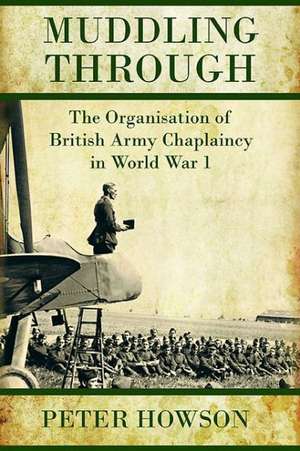
Muddling Through: Helion Studies in Military History, cartea 25

Autor Peter Howson
en Limba Engleză Hardback – 5 mar 2014

În volumul Muddling Through, Peter Howson propune o analiză riguroasă a evoluției capelanatului militar britanic, o instituție aflată la intersecția tensionată dintre armată, stat și biserică. Această ediție, integrată în seria Helion Studies in Military History, documentează procesul de transformare radicală declanșat de Marele Război, pornind de la starea de incertitudine („muddle”) din august 1914 până la consolidarea Royal Army Chaplains' Department în 1920. Ne-a atras atenția modul în care autorul utilizează surse primare inedite, precum jurnalele Episcopului Gwynne, pentru a clarifica decizia unilaterală a Bisericii Anglicane din iulie 1915 de a se separa de administrația unificată de pe frontul francez.

Subliniem faptul că Peter Howson nu se limitează la aspectele administrative, ci explorează și dimensiunea umană, menționând capelanii capturați în timpul retragerii de la Mons sau pierderile de vieți omenești în rândul clerului. Cartea este comparabilă cu The Clergy in Khaki de Edward Madigan în rigurozitate, dar este actualizată pentru a reflecta tensiunile specifice dintre tradiția bisericii de garnizoană și noile cerințe ale Forțelor Teritoriale, care au adus în prim-plan grupuri diverse, inclusiv comunitatea evreiască. În contextul operei sale, Muddling Through reprezintă o continuare firească a cercetărilor din Britain and the German Churches, 1945–1950, unde Peter Howson a investigat rolul religiei în administrarea postbelică, demonstrând o preocupare constantă pentru modul în care instituțiile ecleziastice se adaptează structurilor militare.
Citește tot Restrânge

Din seria Helion Studies in Military History

Preț: 18292 lei

Puncte Express: 274

Carte disponibilă

Livrare economică 12-26 iunie
Livrare express 29 mai-04 iunie pentru 3480 lei


Specificații

ISBN-13: 9781909982277
ISBN-10: 190998227X
Pagini: 237
Ilustrații: , black & white illustrations, black & white tables
Dimensiuni: 168 x 236 x 28 mm
Greutate: 0.52 kg
Editura: HELION & COMPANY
Seria Helion Studies in Military History


De ce să citești această carte

Această lucrare este esențială pentru cercetătorii istoriei militare și ai instituțiilor religioase, oferind o perspectivă documentată asupra modului în care capelanatul a devenit o componentă profesionistă a armatei moderne. Cititorul câștigă o înțelegere profundă a reformelor care au modelat asistența religioasă militară timp de peste opt decenii, demontând mituri despre ineficiența clerului pe front și evidențiind sacrificiile acestora în prima linie.


Descriere scurtă

Nominated for the Royal Historical Society Whitfield Book Prize 2013Nominated for the SAHR Templer Medal 2013As with many other aspects of the British army the outbreak of World War One started a process of change that was to result in a radically different provision of chaplaincy care once the war was over. Nothing was ever simple with chaplaincy as a number of churches becoming involved with the army, many for the first time. The structure was already under pressure before the war with the Catholic Church insisting on new rules for chaplaincy in the first decade of the twentieth century. The creation of the Territorial Force added a new dimension after 1907, bringing new players into the mix including the Jewish community. These chaplains challenged the traditional Garrison Church based ministry of the regulars. The book examines the muddled state of chaplaincy in August 1914 and looks at how chaplains were mobilized. It then reviews how organizational changes were often the result of pressure from the different churches. The unilateral decision of the Church of England, in July 1915, to leave the unified administration in France that had existed since August 1914 is examined in the light of the availability of the relevant volume of the diaries of Bishop Gwynne, a key participant in the change. Chapters also look at the experience of other Imperial forces and of the casualties suffered by chaplains. These all provide evidence of the expectations that various groups had of army chaplains. It is often forgotten that two chaplains were captured during the retreat from Mons in 1914. They were never far from the fighting throughout the war. The experiences of the war meant that the prewar structure needed reform. The final chapter looks at the structure that was created in 1920 and then survived virtually unchanged until 2004. Army chaplaincy has always been a mix of Church, Army and State. Such a coming together inevitably lead to confusion. Not surprisingly one of the themes was the muddle that resulted. Even so army chaplaincy ended the war with a much higher profile than the one it had in 1914. This was recognized by the addition of 'Royal' creating the RAChD. Anglicans, Catholics, Presbyterians, Methodists, and other faith groups, as well as military historians will find this book of interest as it overturns a number of myths and puts chaplaincy in its wider context.REVIEWS ..".an essential book on this interesting subject."Stand To "