
Moravcsik: Plato Platonism
en Limba Engleză Paperback – 2 iun 2000
Preț: 471.41 lei
Puncte Express: 707
Carte tipărită la comandă
Livrare economică 28 noiembrie-12 decembrie
Livrare prin curier în România Termenul estimat este afișat lângă disponibilitate.
Transport gratuit pentru acest produs Plată online sau ramburs, în funcție de opțiunile comenzii.
Retur gratuit în 14 zile Comandă securizată și suport în română.
Specificații
ISBN-13: 9780631222545
ISBN-10: 0631222545
Pagini: 356
Dimensiuni: 152 x 229 x 19 mm
Greutate: 0.51 kg
Ediția:Revised
Locul publicării:Chichester, United Kingdom
ISBN-10: 0631222545
Pagini: 356
Dimensiuni: 152 x 229 x 19 mm
Greutate: 0.51 kg
Ediția:Revised
Locul publicării:Chichester, United Kingdom
V-ar putea interesa
-
 The Hemlock CupBettany Hughes-18%Preț: 100.02 lei121.89 lei
 -
 -25%Preț: 460.24 lei610.81 lei
 -
 Moral Psychology and Human Action in AristotleMichael Pakaluk-31%Preț: 728.59 lei1055.44 lei
 -
 Oxford Studies in Ancient Philosophy volume 39Brad Inwood-22%Preț: 510.17 lei650.34 lei
 -
 -31%Preț: 742.10 lei1071.78 lei
 -
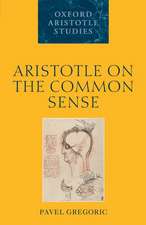 Aristotle on the Common SensePavel Gregorić-11%Preț: 381.46 lei429.10 lei
 -
 The Ethics of PhilodemusVoula Tsouna-12%Preț: 276.06 lei314.69 lei
 -
 -17%Preț: 171.45 lei205.47 lei
 -
 -31%Preț: 682.02 lei986.43 lei
 -
 Oxford Studies in Ancient Philosophy, Volume 41Brad Inwood-31%Preț: 772.96 lei1123.04 lei
 -
 Oxford Studies in Ancient Philosophy, Volume 41Brad Inwood-22%Preț: 348.80 lei449.09 lei
 -
 Plato's Cosmology and Its Ethical DimensionsGabriela Roxana CaronePreț: 317.90 lei
 -
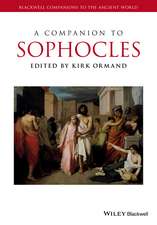 A Companion to SophoclesKirk OrmandPreț: 435.35 lei
Public țintă
advanced undergraduate and graduate students, as well as professionals interested in a well known contemporary philosopher′s treatment of Plato and Platonism.Notă biografică
Julius Moravcsik was educated at Harvard and Oxford and has been Professor of Philosophy at Stanford University since 1968. He was formerly president of the American Philosophical Association and the Society for Ancient Greek Philosophy, and he is the author of three books and numerous articles on ancient Greek philosophy, philosophy of language, and various aspects of value theory.
Cuprins
Preface. Introduction.
Part I: How does Reality Account for Appearances? Plato's Notions of the Fundamental, the Good and the Intelligible:.
1. Insight and Activity.
2. The Forms: Plato's Discovery.
3. What We Are and What We Should Be.
Part II: The Many-Splendored Nature of the Forms, and the Ontology of Order:.
4. The Parmenides: Forms and Participation Reconsidered.
5. The Eleatic-proof theory of Forms of the Sophist.
6. The Ontology of Order Reconsidered: The Divisions and the Philebus.
Part III: Platonism, Ancient and Modern:.
7. Platonism in the Philosophy of Mathematics and General Ontology.
8. Platonistic Ethics: Effecting Reorientation and Sustaining Ideals.
Bibliography.
Index.
Part I: How does Reality Account for Appearances? Plato's Notions of the Fundamental, the Good and the Intelligible:.
1. Insight and Activity.
2. The Forms: Plato's Discovery.
3. What We Are and What We Should Be.
Part II: The Many-Splendored Nature of the Forms, and the Ontology of Order:.
4. The Parmenides: Forms and Participation Reconsidered.
5. The Eleatic-proof theory of Forms of the Sophist.
6. The Ontology of Order Reconsidered: The Divisions and the Philebus.
Part III: Platonism, Ancient and Modern:.
7. Platonism in the Philosophy of Mathematics and General Ontology.
8. Platonistic Ethics: Effecting Reorientation and Sustaining Ideals.
Bibliography.
Index.
Descriere
Reviews the nature and limits of Platonic interpretation. Describing Plato's conception of a rational discipline ("techne"), Moravcsik shows how the recollection theory of understanding and Plato's ethics of the human ideal, all grow out of conditions that are essential to the genuine "technai".