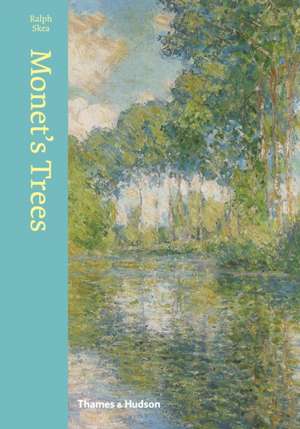
Monet's Trees
Autor Ralph Skeaen Limba Engleză Hardback – 5 oct 2015
Ne-a atras atenția acest volum publicat de Thames & Hudson deoarece se adresează în egală măsură studenților la istoria artei, artiștilor aflați în căutare de inspirație și publicului larg pasionat de impresionism. Găsim în această carte o abordare metodologică inedită: în loc să analizeze cronologic viața lui Claude Monet, autorul Ralph Skea alege să exploreze viziunea pictorului prin prisma unui motiv adesea neglijat în favoarea florilor — copacul. Structura volumului Monet's Trees este riguros organizată pe teme geografice și sezoniere. Începând cu primele desene ale artistului, parcurgem capitole dedicate sălciilor în ceața Senei, palmierilor mediteraneeni și plopilor încărcați de zăpadă. Această progresie ne permite să observăm cum Monet a folosit structura verticală a arborilor pentru a experimenta cu lumina și reflexiile. Cei care au parcurs volumul Monet de Christoph Heinrich din Basic Art Series vor aprecia în Monet's Trees profunzimea analizei pe un singur element vizual, trecând dincolo de prezentarea generală a tehnicii „en plein air”. Suntem de părere că selecția de 84 de ilustrații color oferă o experiență vizuală bogată, incluzând nu doar pânze celebre, ci și schițe spontane în ulei sau creion care dezvăluie procesul de lucru al maestrului. Tonul textului este unul informativ și analitic, fără a deveni excesiv de academic, facilitând înțelegerea modului în care natura efemeră a fost capturată pe pânză.
Preț: 92.83 lei
Preț vechi: 110.92 lei
-16%
Carte disponibilă
Livrare economică 02-16 noiembrie
Livrare express 17-23 octombrie pentru 53.04 lei
Specificații
ISBN-10: 0500239401
Pagini: 112
Ilustrații: 84 Illustrations, color
Dimensiuni: 168 x 236 x 18 mm
Greutate: 0.53 kg
Ediția:1
Editura: Thames & Hudson
V-ar putea interesa
-
 MonetJackie Wullschläger-29%Preț: 226.75 lei319.82 lei
 -
 Preț: 158.86 lei
 -
 Nature Drawing: TreesVictor PerardPreț: 74.46 lei
 -
 Vincent's TreesRalph Skea-16%Preț: 92.83 lei110.92 lei
 -
 MonetSylvie Patin-17%Preț: 60.26 lei72.98 lei
 -
 MonetJohn House-16%Preț: 99.58 lei117.95 lei
 -
 MonetSusie HodgePreț: 134.40 lei
 -
 Nature Notes of an Edwardian LadyEdith HoldenPreț: 167.78 lei
 -
 Preț: 109.29 lei
 -
 Slow LookingOlivia Meehan-16%Preț: 268.21 lei318.74 lei
 -
 The Book of the Tree: Trees in ArtAngus Hyland-25%Preț: 80.56 lei108.10 lei
 -
 National Gallery: Monet Set of 3 Midi NotebooksFlame Tree StudioPreț: 45.10 lei
 -
 -26%Preț: 30.41 lei41.34 lei
 -
 Treasured TreesChristina HarrisonPreț: 143.90 lei
 -
 MonetSimona Bartolena-7%Preț: 69.06 lei74.63 lei
 -
 Monet: The Essential PaintingsAnne Sefrioui-14%Preț: 203.41 lei237.35 lei
 -
 MonetChristoph HeinrichPreț: 132.82 lei
 -
 Monet or the Triumph of ImpressionismDaniel WildensteinPreț: 188.38 lei
De ce să citești această carte
Recomandăm această carte pasionaților de artă care doresc să descopere o latură mai puțin explorată a operei lui Monet. Veți câștiga o perspectivă nouă asupra tehnicii impresioniste prin analiza detaliată a peste 70 de lucrări. Este un instrument excelent de studiu vizual, oferind o incursiune fascinantă în felul în care lumina transformă peisajul vegetal, de la malurile Senei până în grădinile din Giverny.