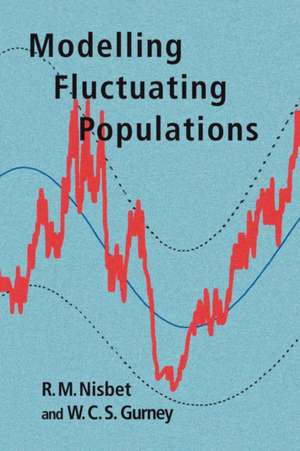
Modelling Fluctuating Populations
Autor R. M. Nisbet, W. C. Gurneyen Limba Engleză Paperback – iun 2004
Relevanța acestui volum pentru programele de masterat și doctorat în ecologie teoretică rămâne incontestabilă, fiind un instrument fundamental pentru înțelegerea dinamicii populațiilor în medii fluctuante. Modelling Fluctuating Populations reușește să pună în dialog rigoarea matematică cu întrebările presante ale ecologiei aplicate, oferind soluții pentru una dintre cele mai frecvente critici aduse modelelor teoretice simple: discrepanța dintre mecanismele abstracte și realitatea biologică. Observăm o structură didactică metodică, în care teme precum stabilitatea și echilibrul sunt analizate prin prisma probabilităților de extincție. Ceea ce distinge acest curs universitar este curajul autorilor R. M. Nisbet și W. C. Gurney de a reabilita importanța matematicii liniare într-o epocă dominată de fascinația pentru neliniaritate și haos determinist. Ne-a atras atenția modul în care analiza Fourier este utilizată pentru a descrie dinamica sistemelor complexe în vecinătatea stării de echilibru, oferind o claritate pe care puține texte contemporane o ating. Cititorii familiarizați cu Stochastic Population Dynamics in Ecology and Conservation de Russell Lande vor aprecia în acest volum rigoarea tratamentului „stocasticității demografice” și modul sistematic în care este introdus conceptul de „zgomot alb”. Această lucrare pune bazele colaborării de lungă durată dintre cei doi profesori, anticipând temele de structură fiziologică și spațială dezvoltate ulterior în Ecological Dynamics. Spre deosebire de abordarea din Ecological Dynamics, care servește ca o introducere mai accesibilă, Modelling Fluctuating Populations rămâne o referință tehnică densă, esențială pentru cercetătorii care doresc să stăpânească instrumentele analitice necesare predicției intensității fluctuațiilor în sistemele biologice reale.
Preț: 384.75 lei
Carte tipărită la comandă
Livrare economică 07-21 decembrie
Specificații
ISBN-10: 1930665903
Pagini: 396
Ilustrații: 1
Dimensiuni: 152 x 229 x 22 mm
Greutate: 0.57 kg
Editura: The Blackburn Press
Locul publicării:United States
V-ar putea interesa
-
 Ecological DynamicsW. S. C. Gurney-27%Preț: 1297.33 lei1777.18 lei
 -
 Social Networks and Natural Resource ManagementChristina Prell-8%Preț: 616.87 lei670.52 lei
 -
 Soil EcologyP. Lavelle-18%Preț: 1841.83 lei2246.14 lei
 -
 Resource Selection by AnimalsB. F. Manly-18%Preț: 1151.38 lei1404.13 lei
 -
 -18%Preț: 1654.70 lei2017.92 lei
 -
 -18%Preț: 1106.83 lei1349.78 lei
 -
 Private Fire: Robert Francis's Ecopoetry and ProseMatthew James Babcock-36%Preț: 536.92 lei836.87 lei
 -
 -18%Preț: 1127.73 lei1375.28 lei
 -
 Natur, Kultur und KomplexitätBeate M. W. Ratter-15%Preț: 442.15 lei520.17 lei
 -
 Neophyten im SiedlungsbereichCornelia Bauer-8%Preț: 471.15 lei512.12 lei
 -
 Corridors biologiques et projets routiersMélanie BouffardPreț: 363.87 lei
 -
 Salinisation et biodiversité des macroinvertébrés dulçaquicolesChristophe PiscartPreț: 478.63 lei
 -
 Preț: 261.09 lei
 -
 -23%Preț: 700.19 lei909.33 lei
 -
 -19%Preț: 480.40 lei593.08 lei
 -
 -19%Preț: 560.04 lei691.41 lei
 -
 -23%Preț: 672.98 lei874.00 lei
 -
 Vulnerabilite a la Pollution de La Baie de Bejaia: Quels Outils Pour La Medecine Generale?Tacfarinas AIT HAMOUDI-19%Preț: 409.76 lei505.87 lei
 -
 Preț: 348.76 lei
 -
 Processus de la restauration écosystemique au BurundiFrédéric Bangirinama-19%Preț: 661.23 lei816.33 lei
 -
 Route et développement durableEmmanuel YoniPreț: 390.18 lei
 -
 -18%Preț: 1486.85 lei1813.23 lei
 -
 Inshore Fisheries ManagementDavid Symes-18%Preț: 909.82 lei1109.53 lei
 -
 -18%Preț: 1182.94 lei1442.61 lei
 -
 Poverty and Small-scale Fisheries in West AfricaArthur E. Neiland-15%Preț: 651.56 lei766.54 lei
 -
 Aquatic Mites from Genes to CommunitiesHeather Proctor-20%Preț: 621.76 lei777.20 lei
 -
 -18%Preț: 914.52 lei1115.26 lei
De ce să citești această carte
Este o resursă indispensabilă pentru biologii și matematicienii care studiază ecologia populațiilor. Cititorul câștigă o înțelegere profundă a modului în care hazardul influențează supraviețuirea speciilor, beneficiind de metode matematice demonstrate pentru a prezice riscul de extincție. Cartea este recomandată în special pentru pregătirea în modelare ecologică, oferind un echilibru rar între teoria matematică și aplicabilitatea biologică.