Cantitate/Preț
Produs

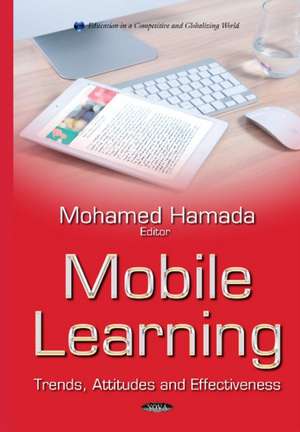
Mobile Learning: Trends, Attitudes & Effectiveness

Editat de Mohamed Hamada
en Limba Engleză Hardback – sep 2015

Apreciem în acest volum, editat de Mohamed Hamada, rigoarea cu care sunt analizate studiile de caz dedicate învățării limbilor străine, în special eficiența utilizării smartphone-urilor pentru dezvoltarea abilităților de ascultare în limba engleză (EFL). Primele capitole pun accentul pe dimensiunea practică a m-learning-ului, investigând cum platforme precum VoiceTube transformă experiența de învățare prin interacțiuni sociale și conținut multimedia livrat în timp real. Ne-a atras atenția modul în care autorii abordează provocările tehnice legate de stocare și comunicare, propunând cloud computing-ul ca soluție pentru gestionarea cererilor dinamice de resurse.

Suntem de părere că lucrarea reușește să echilibreze teoria cu practica pedagogică. Volumul este structurat progresiv: debutează cu o perspectivă motivațională și psihologică asupra utilizatorului mobil, continuă cu arhitecturi de sistem pentru recomandarea conținutului web și se finalizează cu patru capitole aplicate pe educația limbajului natural. Această abordare reflectă preocupările anterioare ale editorului din Active & Collaborative Learning, unde punea accent pe implicarea activă a studentului, însă aici contextul este extins către mobilitatea totală și învățarea ubicuă.

Cititorii familiarizați cu Mobile Learning (M-learning) Concepts, Characteristics, Methods, Components de Mohamed Sarrab vor aprecia modul în care acest volum aduce nou componenta de infrastructură scalabilă și integrarea cu tehnologiile cloud. În timp ce alte lucrări din domeniu se limitează la definirea conceptelor, textul de față analizează concret cum dispozitivele mobile pot înlocui materialele de curs tradiționale, oferind portabilitate și un proces de învățare mult mai activ.

Citește tot Restrânge

Preț: 148965 lei

Preț vechi: 173216 lei
-14%

Puncte Express: 2234

Carte disponibilă

Livrare economică 20 mai-03 iunie


Specificații

ISBN-13: 9781634834292
ISBN-10: 1634834291
Pagini: 212
Dimensiuni: 180 x 260 mm
Greutate: 0.52 kg
Editura: Nova Science Publishers Inc
Colecția Nova Science Publishers Inc
Locul publicării:United States

De ce să citești această carte

Această resursă este esențială pentru educatorii și cercetătorii interesați de tehnologia educațională. Cititorul câștigă o înțelegere profundă a modului în care cloud computing-ul susține sistemele de m-learning și primește dovezi concrete din studii de caz despre eficiența aplicațiilor mobile în învățarea limbilor străine. Este un argument solid pentru digitalizarea curriculumului prin dispozitive personale.


Descriere

Mobile learning (m-learning) can be seen as learning across multiple contexts, through social and content interactions, using personal electronic devices such as handheld computers, smart devices (e.g. Smartphone and tablets), notebooks, mobile phones, etc. It reflects how society and its institutions can accommodate and support an increasingly mobile population. M-learning is convenient in that it is accessible from virtually anywhere and at any time. Like other forms of e-learning, m-learning is also collaborative. Sharing is almost instantaneous among everyone using the same content, which leads to the reception of instant feedback and tips. This highly active process can help in improving students' performance and motivation. M-learning also brings strong portability by replacing books and notes with mobile devices, filled with tailored learning content. The challenges that face e-learning and m-learning systems come from the growth rate of students, education contents, services that can be offered and resources made available. These challenges include: optimising resource computation, storage and communication requirements, dealing with dynamic concurrency requests, etc. Such challenges highlight the necessity of the use of a platform that meets scalable demands and cost control. This environment is cloud computing. The cloud computing environment rises as a natural platform to provide support to e- and m-learning systems. The book contains a variety of relevant topics. The first chapter gives an overall view on mobile learning. The next three chapters discuss the psychological issues related to mobile learning and learners' motivation in addition to the contextualisation of mobile learners. The following two chapters introduce some theoretical framework for mobile learning and its cloud-based applications in addition to a mobile-based recommendation system. The last four chapters focus on case studies of mobile learning on natural language education.

Cuprins

Preface; Introduction to Mobile Learning; The Importance of Mobile-Assisted Learning: Developing a Motivational Perspective; Psychological Insights Offer the Way Forward for Mobile Learning; Contextualization of Mobile Learners; Interactive Multimedia Mobile Learning Based on Cloud Computing; Recommendation of Web Content using Mobile and Web Technology; Are Mobile Devices Effective Tools for English Language Study?; Taiwanese EFL Students' Perceptions of Mobile Learning: A Case of VoiceTube as an Extensive Listening Material; The Effectiveness Of Using A Smartphone To Access App For Learning Efl Listening Skills Within A Taiwanese Context; An Example of a Multimedia Mobile-based Learning Framework; Index.