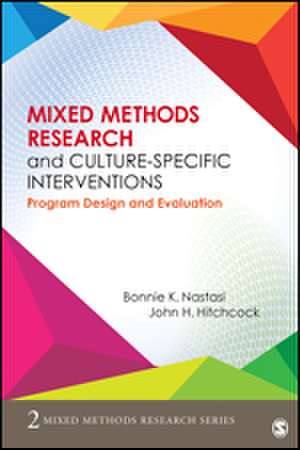
Mixed Methods Research and Culture-Specific Interventions
Autor Bonnie K. Nastasi, John H. Hitchcocken Limba Engleză Paperback – 24 iun 2015
Preț: 453.92 lei
Preț vechi: 534.02 lei
-15%
Puncte Express: 681
Carte tipărită la comandă
Livrare economică 19 noiembrie-03 decembrie
Livrare prin curier în România Termenul estimat este afișat lângă disponibilitate.
Transport gratuit pentru acest produs Plată online sau ramburs, în funcție de opțiunile comenzii.
Retur gratuit în 14 zile Comandă securizată și suport în română.
Specificații
ISBN-13: 9781483333823
ISBN-10: 1483333825
Pagini: 224
Dimensiuni: 152 x 229 x 12 mm
Greutate: 0.3 kg
Ediția:1
Editura: Sage Publications, Inc
Locul publicării:Thousand Oaks, United States
ISBN-10: 1483333825
Pagini: 224
Dimensiuni: 152 x 229 x 12 mm
Greutate: 0.3 kg
Ediția:1
Editura: Sage Publications, Inc
Locul publicării:Thousand Oaks, United States
V-ar putea interesa
-
 An Easy Guide to Factor AnalysisPaul KlinePreț: 387.91 lei
 -
 Exploring Educational Research LiteracyGary Shank-21%Preț: 423.17 lei533.98 lei
 -
 The Social Psychology of Collective ActionSara BreinlingerPreț: 410.44 lei
 -
 Fundamentals of Educational ResearchGarry Anderson-15%Preț: 456.89 lei537.52 lei
 -
 Analyzing Quantitative DataNorman Blaikie-27%Preț: 682.59 lei935.06 lei
 -
 Using Diaries for Social ResearchAndrew M Alaszewski-15%Preț: 590.29 lei694.45 lei
 -
 -15%Preț: 460.39 lei541.65 lei
 -
 -15%Preț: 484.25 lei569.71 lei
 -
 Researching the VulnerablePranee Liamputtong-8%Preț: 421.89 lei458.57 lei
 -
 Foundations of Qualitative ResearchJerry W. Willis-27%Preț: 816.65 lei1118.69 lei
 -
 Multiple Case Study AnalysisRobert E. Stake-8%Preț: 430.36 lei467.78 lei
Recenzii
“It is very clear that the authors have an extensive experience applying mixed research methodologies to a variety of interventions in multiple contexts. […T]he main strength in what I have read is that they are very successful in connecting these real-life experiences with the theories that they present in the text; this combination brings new life to the text and help readers to easily identify with the content.”
“This text is different than other books in the field because […] it covers material that is not commonly found in other program evaluation (PE) and performance measurement (PM) texts—especially to this level of detail. It may be more common for other PE and PM books to discuss culture-specific interventions or cultural competency in a part of one chapter, but not have it be the primary focus of the text.”
“I see a lot of value in the consilient approach to methodology the authors are encouraging. I think they have done a nice job selecting and defining important practical approaches.”
“This text is different than other books in the field because […] it covers material that is not commonly found in other program evaluation (PE) and performance measurement (PM) texts—especially to this level of detail. It may be more common for other PE and PM books to discuss culture-specific interventions or cultural competency in a part of one chapter, but not have it be the primary focus of the text.”
“I see a lot of value in the consilient approach to methodology the authors are encouraging. I think they have done a nice job selecting and defining important practical approaches.”
Cuprins
Editors' Introduction
Preface
Acknowledgments
About the Authors
Chapter 1--Introduction: The Role of Culture and Context in Developing Intervention and Prevention Programs
Introduction
Why Should We Attend To Culture And Context?
Implementation Science and Translational Research
Limitations of Standard Research Approaches and Potential Contributions of MMR
Overview of the Book’s Content and Structure
Conclusion
Key Terms
Reflective Questions and Exercises
References
Chapter 2--Conceptual Models for Mixed Methods and Culture-Specific Intervention Development
Introduction
Conceptual Models for Intervention Development
MMR Models for Program Development
Key Terms
Reflective Questions and Exercises
References
Chapter 3--Use of MMR to Understand Context and Guide Program Design
Introduction
Ethnography and Associated MMR Practices for Cultural Study and Program Design
An Illustration
Conclusion
Key Terms
Reflective Questions and Exercises
References
Chapter 4--Use of MMR to Guide Implementation and Adaptation
Introduction
Conceptual and Procedural Foundations
Monitoring Program Implementation
Program Adaptation
Determining Overall Program Success
Capacity for Sustainability and Institutionalization
An Illustration
Conclusion
Key Terms
Reflective Questions and Exercises
References
Chapter 5--Use of MMR to Address Validity Concerns in Program Evaluation
Introduction
Conceptual and Procedural Considerations
Sampling, External Validity, and Transferability Consideration
Pulling it All Together: An Example
Conclusion
Key Terms
Reflective Questions and Exercises
References
Chapter 6--MMR Model Application: A Full Example
Introduction
Contextual and Cultural Considerations
Program Design
Program Implementation and Adaptation
Program Evaluation
Promoting Translation and Capacity Building
Conclusions
Reflective Questions and Exercises
References
Chapter 7--Implementation and Evaluation Challenges
Introduction: Common Challenges in Program Implementation and Evaluation
Establishing and Maintaining Partnerships
Gaining and Maintaining Stakeholder Commitment
Forming Sustainable Decision-Making Teams
Addressing Staff Development Needs
Resource Acquisition and Allocation
Creating Versus Adapting Existing EBIs
Thinking Through MMR Design Quality
Cross-Cultural Social Science Research Has Received Inadequate Attention
Conclusion
Key Terms
Reflective Questions and Exercises
References
Chapter 8--Future Directions
Introduction
Implications for Model Development
Application of MMR to Intervention Development and Evaluation
Implications for Extending Mixed Methodology
Advancing the Science of Intervention Development and Evaluation: Implications for Implementation Science
Final Thoughts
Reflective Questions and Exercises
References
Index
Preface
Acknowledgments
About the Authors
Chapter 1--Introduction: The Role of Culture and Context in Developing Intervention and Prevention Programs
Introduction
Why Should We Attend To Culture And Context?
Implementation Science and Translational Research
Limitations of Standard Research Approaches and Potential Contributions of MMR
Overview of the Book’s Content and Structure
Conclusion
Key Terms
Reflective Questions and Exercises
References
Chapter 2--Conceptual Models for Mixed Methods and Culture-Specific Intervention Development
Introduction
Conceptual Models for Intervention Development
MMR Models for Program Development
Key Terms
Reflective Questions and Exercises
References
Chapter 3--Use of MMR to Understand Context and Guide Program Design
Introduction
Ethnography and Associated MMR Practices for Cultural Study and Program Design
An Illustration
Conclusion
Key Terms
Reflective Questions and Exercises
References
Chapter 4--Use of MMR to Guide Implementation and Adaptation
Introduction
Conceptual and Procedural Foundations
Monitoring Program Implementation
Program Adaptation
Determining Overall Program Success
Capacity for Sustainability and Institutionalization
An Illustration
Conclusion
Key Terms
Reflective Questions and Exercises
References
Chapter 5--Use of MMR to Address Validity Concerns in Program Evaluation
Introduction
Conceptual and Procedural Considerations
Sampling, External Validity, and Transferability Consideration
Pulling it All Together: An Example
Conclusion
Key Terms
Reflective Questions and Exercises
References
Chapter 6--MMR Model Application: A Full Example
Introduction
Contextual and Cultural Considerations
Program Design
Program Implementation and Adaptation
Program Evaluation
Promoting Translation and Capacity Building
Conclusions
Reflective Questions and Exercises
References
Chapter 7--Implementation and Evaluation Challenges
Introduction: Common Challenges in Program Implementation and Evaluation
Establishing and Maintaining Partnerships
Gaining and Maintaining Stakeholder Commitment
Forming Sustainable Decision-Making Teams
Addressing Staff Development Needs
Resource Acquisition and Allocation
Creating Versus Adapting Existing EBIs
Thinking Through MMR Design Quality
Cross-Cultural Social Science Research Has Received Inadequate Attention
Conclusion
Key Terms
Reflective Questions and Exercises
References
Chapter 8--Future Directions
Introduction
Implications for Model Development
Application of MMR to Intervention Development and Evaluation
Implications for Extending Mixed Methodology
Advancing the Science of Intervention Development and Evaluation: Implications for Implementation Science
Final Thoughts
Reflective Questions and Exercises
References
Index
Notă biografică
Bonnie K. Nastasi, PhD (Kent State University, 1986, School Psychology & Early Childhood Education), is Professor of Psychology and Co-director of the Trauma Specialization in School Psychology at Tulane University. She uses mixed-methods research designs to develop and evaluate culturally appropriate assessment and intervention approaches for promoting mental health and reducing health risks, within the United States and internationally. She directed a multi-country study of psychological well-being of children and adolescents with research partners in 12 countries from 2008 to 2013. With colleagues, she developed the Participatory Culture-Specific Intervention Model (PCSIM) to guide the design and evaluation of sustainable culturally and contextually relevant programming through partnerships with stakeholders. She is active in the promotion of child rights and social justice within the profession of school psychology. She is president of the International School Psychology Association.
Descriere
This comprehensive book provides guidelines for applying mixed-methods research in the development of culturally specific intervention programs and the subsequent evaluation.