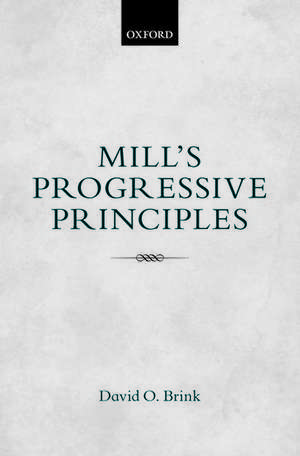
Mill's Progressive Principles
Autor David O. Brinken Limba Engleză Hardback – 18 apr 2013
Prin volumul Mill's Progressive Principles, David O. Brink oferă o reconstrucție sistematică și o evaluare critică a contribuțiilor lui John Stuart Mill la tradițiile utilitariste și liberale. Reținem că elementul distinctiv al acestei ediții publicate de Oxford University Press este argumentația solidă pentru o lectură perfecționistă a fericirii în viziunea lui Mill. Autorul susține că fericirea implică, în esență, exercitarea capacităților de deliberare practică și decizie, trăsături care ne definesc ca ființe progresive. Această perspectivă recontextualizează nu doar etica sa, ci și pozițiile sale politice fundamentale.
Subliniem modul în care Brink analizează aplicarea acestor principii asupra unor teme precum votul ponderat sau libertatea de exprimare. Acoperă aceeași arie tematică ca John Stuart Mill de Dale E Miller, dar cu o abordare mult mai axată pe unificarea teoretică prin prisma perfecționismului, spre deosebire de lectura „utopică” propusă de Miller. În contextul operei autorului, această lucrare continuă explorarea relației dintre binele comun și dezvoltarea individuală începută în Perfectionism and the Common Good, rafinând conceptele de responsabilitate și moralitate prezente în Fair Opportunity and Responsibility.
Credem că rigoarea cu care sunt tratate subiecte precum anti-paternalismul și egalitatea sexuală transformă acest titlu într-un punct de referință pentru studiile critice moderne. În timp ce lucrări precum Mill: A Guide for the Perplexed servesc drept introduceri accesibile, volumul de față este o monografie densă care provoacă interpretările convenționale ale liberalismului de secol XIX.
Preț: 528.54 lei
Preț vechi: 791.30 lei
-33%
Carte tipărită la comandă
Livrare economică 03-14 iulie
Specificații
ISBN-10: 0199672148
Pagini: 328
Dimensiuni: 162 x 238 x 25 mm
Greutate: 0.66 kg
Editura: Oxford University Press
Colecția OUP Oxford
Locul publicării:Oxford, United Kingdom
De ce să citești această carte
Recomandăm această carte cercetătorilor și studenților la filozofie politică care doresc să înțeleagă unitatea profundă a gândirii lui Mill. Cititorul câștigă o perspectivă nouă asupra modului în care autonomia și exercitarea capacităților intelectuale fundamentează drepturile democratice și egalitatea. Este un instrument esențial pentru a depăși interpretările simpliste ale utilitarismului, oferind o bază solidă pentru discuțiile contemporane despre libertate și progres social.
Despre autor
David O. Brink este un distins profesor de filozofie, recunoscut pentru expertiza sa în etică, filozofie politică și jurisprudență. Opera sa se concentrează frecvent pe intersecția dintre psihologia morală și dreptul penal, explorând teme precum responsabilitatea, meritul și pedeapsa în lucrări precum Fair Opportunity and Responsibility. Prin studiile sale dedicate idealismului britanic și figurilor precum T.H. Green, Brink s-a stabilit ca o autoritate în analiza curentelor etice care au modelat politica liberală modernă. În Mill's Progressive Principles, el își folosește vasta experiență analitică pentru a reevalua moștenirea unuia dintre cei mai influenți gânditori occidentali.
Descriere
Recenzii
This book deserves study by all Mill scholars, whether traditionalist or revisionist, and anyone interested in the tension between liberalism and utilitarianism among the nineteenth-century Philosophical Radicals culminating in Millâs thought.
David O. Brink's study of John Stuart Mill's moral and political philosophy, Mill's Progressive Principles, is challenging and thought-provoking on multiple levels ... this is a work in the history of philosophy that is a significant and rewarding contribution to the continuing debate about the viability of utilitarianism
This is a very substantial study of Mills moral and political philosophy: the most important comprehensive study since Fred Bergers landmark book of 1984 . . . [Brink] proposes a deeply thought-out, unifying new reading of Mills thought, which will attract lasting attention -- and, I expect, prove lastingly controversial. It should be read not just by anyone with an interest in Mill but more generally by anyone with an interest in the historical development of Anglophone ethical and political theory, or in the possibilities and varieties of perfectionism. . . . [Brinks] interpretation of Mills fundamental outlook . . . is striking and new.