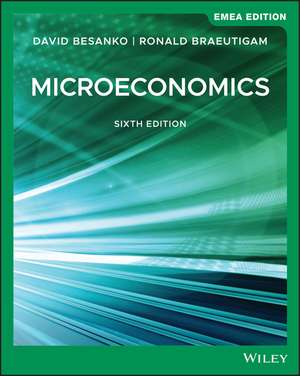
Microeconomics, EMEA Edition
Autor David Besanko, Ronald Braeutigamen Limba Engleză Paperback – 16 iul 2020
Putem afirma că stăpânirea microeconomiei nu se realizează prin memorarea definițiilor, ci prin aplicarea lor riguroasă în scenarii reale. Un fapt surprinzător pentru un manual academic este densitatea practicii: Microeconomics, EMEA Edition integrează între 3 și 10 exerciții de tip „Learning-By-Doing” în corpul fiecărui capitol, forțând cititorul să treacă de la teorie la calcul numeric imediat ce un concept este introdus. Remarcăm că David Besanko și Ronald Braeutigam au structurat volumul astfel încât relațiile algebrice și graficele să nu rămână abstracte, ci să devină instrumente de prognoză a pieței. Această a șasea ediție pune un accent deosebit pe analiza statică comparativă, oferind studenților și profesioniștilor un cadru analitic pentru a interpreta fenomene economice complexe. Pe linia practică a volumului Microeconomics de William A. McEachern, dar cu un focus mult mai pronunțat pe rigoarea matematică și pe exerciții analitice dificile, lucrarea de față se distinge prin volumul impresionant de probleme (până la 35 pe capitol). Dacă în Economics of Strategy, David Besanko explora aplicabilitatea conceptelor în mediul corporativ, aici se concentrează pe fundamentele microeconomice care fac acele strategii posibile. Merită menționat că, spre deosebire de manualele pur teoretice, acest titlu include soluții detaliate pentru exerciții selectate, facilitând studiul individual. Stilul este unul autoritar, bazat pe dovezi, transformând microeconomia dintr-o disciplină aridă într-un set de competențe interpretative esențiale pentru orice economist care dorește să înțeleagă mecanismele cererii, ofertei și echilibrului în economiile contemporane.
Preț: 440.86 lei
Preț vechi: 544.27 lei
-19%
Carte disponibilă
Livrare economică 07-21 septembrie
Livrare express 22-28 august pentru 88.45 lei
Specificații
ISBN-10: 1119666139
Pagini: 864
Dimensiuni: 151 x 229 x 27 mm
Greutate: 1.86 kg
Ediția:6. Auflage
Editura: John Wiley & Sons, Inc.
Locul publicării:Hoboken, United States
V-ar putea interesa
-
 Microeconomic TheoryAndreu Mas-Colell-27%Preț: 890.01 lei1219.19 lei
 -
 Microeconomics: Principles and AnalysisFrank Cowell-23%Preț: 655.31 lei851.05 lei
 -
 EconomicsStephen Ison-15%Preț: 652.71 lei767.90 lei
 -
 Econ MicroWilliam A. McEachern-26%Preț: 373.10 lei501.40 lei
 -
 Workouts in Intermediate MicroeconomicsHal R VarianPreț: 344.83 lei
 -
 Baumol, W: MicroeconomicsWilliam J. Baumol-19%Preț: 466.30 lei575.68 lei
 -
 Essentials of MicroeconomicsBonnie Nguyen-8%Preț: 516.09 lei560.97 lei
 -
 -22%Preț: 83.13 lei107.19 lei
 -
 Microeconomics: An Open IntroductionRichard Friberg-8%Preț: 525.05 lei570.71 lei
 -
 Essential Mathematics for Economics and BusinessTeresa Bradley-19%Preț: 456.53 lei563.61 lei
 -
 Preț: 132.81 lei
 -
 Microeconomics for Dummies, U.S. EditionLynne PepallPreț: 139.75 lei
 -
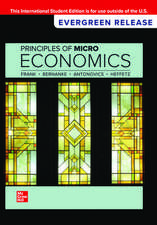 Principles of Microeconomics: 2024 Release ISERobert Frank-28%Preț: 407.31 lei564.31 lei
 -
 -15%Preț: 661.59 lei778.34 lei
 -
 Principles of Microeconomics, Global EditionSharon Oster-13%Preț: 439.80 lei505.53 lei
 -
 -33%Preț: 469.41 lei697.48 lei
 -
 -11%Preț: 502.24 lei564.31 lei
 -
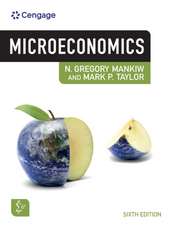 MicroeconomicsMankiw/Taylor-11%Preț: 426.12 lei478.79 lei
 -
 The Economics of European Integration 6eRichard Baldwin-4%Preț: 393.10 lei409.48 lei
 -
 Microeconomics and Behaviour, 4eRobert Frank-27%Preț: 421.31 lei576.48 lei
De ce să citești această carte
Recomandăm această carte studenților și economiștilor care caută o metodă de învățare activă. Veți câștiga o capacitate superioară de analiză a piețelor prin exersarea celor peste 20 de probleme practice din fiecare capitol. Este instrumentul ideal pentru a trece de la înțelegerea intuitivă la cea matematică a fenomenelor economice, beneficiind de expertiza unui autor consacrat în strategia de business.