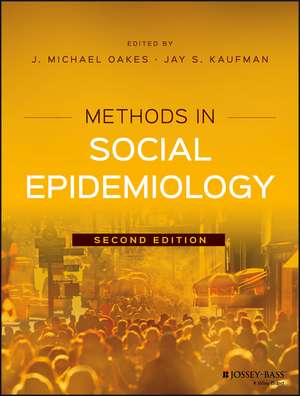
Methods in Social Epidemiology 2e: Public Health/Epidemiology and Biostatistics
Editat de J. Michael Oakes, Jay S. Kaufmanen Limba Engleză Paperback – 7 apr 2017
Bazându-ne pe cele mai recente protocoale de cercetare și modele de inferență cauzală, descoperim în Methods in Social Epidemiology un instrument clinic și metodologic esențial pentru înțelegerea distribuției inegale a sănătății în cadrul populațiilor. Această a doua ediție, publicată de John Wiley & Sons, Inc., survine într-un moment de expansiune tehnologică a domeniului, unde datele din știința datelor și genomică se intersectează cu sociologia medicală. Subliniem rigoarea cu care editorii J. Michael Oakes și Jay S. Kaufman abordează transformarea factorilor socioeconomici — precum sărăcia și segregarea — în riscuri biologice concrete. Observăm o organizare logică și progresivă a materialului, structurată în două părți fundamentale: „Măsuri și Măsurare” și „Design și Analiză”. Prima parte oferă cadre conceptuale precise pentru cuantificarea discriminării rasiale și a statusului socioeconomic, în timp ce a doua parte se concentrează pe execuția cercetării, de la analiza rețelelor sociale la metode participative comunitare. Față de ediția anterioară, volumul aduce clarificări metodologice cruciale privind biasul de selecție și confuzia structurală, elemente care pot compromite validitatea studiilor observaționale. În contextul literaturii de specialitate, această lucrare completează volumul Social Epidemiology de Lisa F. Berkman prin adăugarea unei dimensiuni tehnice și practice mai accentuate, oferind manualul necesar pentru colectarea și analiza efectivă a datelor. În timp ce alte titluri se concentrează pe impactul politicilor, Methods in Social Epidemiology rămâne ancorat în rigoarea statistică necesară pentru a demonstra empiric cum „corpul își amintește” inegalitățile sociale prin patologii specifice.

Preț: 745.59 lei
Preț vechi: 784.83 lei
-5%
Carte disponibilă
Livrare economică 15-29 septembrie
Livrare express 29 august-04 septembrie pentru 60.46 lei
Specificații
ISBN-10: 111850559X
Pagini: 608
Dimensiuni: 176 x 235 x 31 mm
Greutate: 0.97 kg
Ediția:2. Auflage
Editura: John Wiley & Sons, Inc.
Colecția Public Health/Epidemiology and Biostatistics
Seria Public Health/Epidemiology and Biostatistics
Locul publicării:Hoboken, United States
V-ar putea interesa
-
 Forward-Time Population GeneticsBo Peng-9%Preț: 692.77 lei761.29 lei
 -
 Practical Guide to Cluster RanEldridge-5%Preț: 602.42 lei634.12 lei
 -
 -5%Preț: 829.63 lei873.29 lei
 -
 Medical Statistics at a Glance WorkbookAviva Petrie-5%Preț: 180.29 lei189.78 lei
 -
 Textbook of Psychiatric EpidemiologyMing T. Tsuang-5%Preț: 2358.94 lei2483.09 lei
 -
 Introduction to Statistical Methods for BiosurveillanceRonald D. Fricker-5%Preț: 446.13 lei469.61 lei
 -
 The Who World Mental Health SurveysRonald C. Kessler-5%Preț: 546.76 lei575.55 lei
 -
 SARS from East to WestEva-Karin Olsson-30%Preț: 329.00 lei468.92 lei
 -
 Epidemiology for Advanced Nursing PracticeKiran Macha-5%Preț: 783.33 lei824.55 lei
 -
 A Practical Guide to Designing Phase II Trials in OncologySarah R. Brown-5%Preț: 436.35 lei459.32 lei
 -
 -5%Preț: 292.75 lei308.16 lei
 -
 The Epidemiologist's Apprentice: Your Study Guide on Measures of Disease OccurrenceMph D. Faulkner Ph. D.-5%Preț: 108.04 lei113.72 lei
 -
 Epidemiology of Spinal Cord InjuriesVafa Vafa Rahimi-Movaghar-23%Preț: 1274.44 lei1658.54 lei
 -
 Anthrax DetectionCorin M. Arnaud-23%Preț: 1100.02 lei1434.87 lei
 -
 -23%Preț: 812.74 lei1056.94 lei
 -
 Candidiasis: Epidemiology, Symptoms & Treatment OptionsFelipe Contreras-23%Preț: 1272.89 lei1657.56 lei
 -
 -5%Preț: 381.71 lei401.80 lei
 -
 PräventionWilhelm Kirch-5%Preț: 858.95 lei904.16 lei
 -
 Epidemiology and Management of Root DiseasesC. Lee Campbell-5%Preț: 691.82 lei728.23 lei
 -
 -5%Preț: 1050.57 lei1105.86 lei
Public țintă
Students, researchers, and faculty in public health. Departments where book is assigned include community health, health behavior, epidemioloy, environmental health, health systems, and sociology.De ce să citești această carte
Această resursă este indispensabilă cercetătorilor și studenților din sănătate publică ce doresc să treacă de la observații generale la analize statistice riguroase. Cititorul câștigă expertiză în tehnici moderne de modelare și colectare a datelor calitative, esențiale pentru a identifica mecanismele prin care mediul social influențează epidemiologia bolilor. Este un ghid practic pentru transformarea indicatorilor sociali în date clinice acționabile.
Despre autor
J. Michael Oakes și Jay S. Kaufman sunt figuri proeminente în epidemiologia socială contemporană, recunoscuți pentru contribuțiile lor în rafinarea metodelor de cercetare cantitativă. J. Michael Oakes este profesor de epidemiologie, concentrându-se pe intersecția dintre designul studiilor și etica sănătății publice. Jay S. Kaufman este un expert reputat în aplicarea metodelor statistice pentru înțelegerea disparităților de sănătate rasiale și sociale. Împreună, aceștia au editat această lucrare de referință pentru a oferi o bază metodologică solidă noii generații de specialiști în sănătate publică.