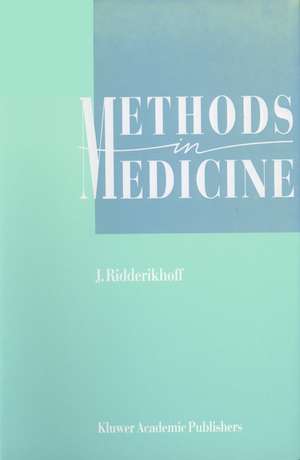
Methods in Medicine
Autor J. Ridderikhoffen Limba Engleză Paperback – 26 sep 2011
Preț: 355.21 lei
Preț vechi: 373.90 lei
-5%
Puncte Express: 533
Carte tipărită la comandă
Livrare economică 27 noiembrie-11 decembrie
Livrare prin curier în România Termenul estimat este afișat lângă disponibilitate.
Transport gratuit de la 400.00 lei Plată online sau ramburs, în funcție de opțiunile comenzii.
Retur gratuit în 14 zile Comandă securizată și suport în română.
Specificații
ISBN-13: 9789401069847
ISBN-10: 9401069840
Pagini: 256
Ilustrații: 240 p.
Dimensiuni: 155 x 235 x 15 mm
Greutate: 0.39 kg
Ediția:Softcover reprint of the original 1st ed. 1989
Editura: Springer
Locul publicării:Dordrecht, Netherlands
ISBN-10: 9401069840
Pagini: 256
Ilustrații: 240 p.
Dimensiuni: 155 x 235 x 15 mm
Greutate: 0.39 kg
Ediția:Softcover reprint of the original 1st ed. 1989
Editura: Springer
Locul publicării:Dordrecht, Netherlands
V-ar putea interesa
-
 Managing Pain: Essentials of Diagnosis and TreatmentChad M. Brummett-26%Preț: 618.92 lei834.81 lei
 -
 Oxford American Handbook of Clinical MedicineJohn A. Flynn-17%Preț: 574.07 lei689.11 lei
 -
 -5%Preț: 1106.10 lei1164.32 lei
 -
 Pediatric Genetics and Inborn Errors of MetabolismChristine M. Houser-5%Preț: 327.73 lei344.98 lei
 -
 Cholestatic Liver DiseaseElizabeth J. Carey-5%Preț: 746.90 lei786.20 lei
 -
 Management of Functional Gastrointestinal Disorders in ChildrenDavid R. Fleisher-5%Preț: 627.22 lei660.23 lei
 -
 Pediatric EndocrinologySally Radovick-5%Preț: 1655.54 lei1742.68 lei
 -
 -23%Preț: 557.33 lei726.71 lei
 -
 Hepatic EncephalopathyKevin D. Mullen-5%Preț: 746.50 lei785.79 lei
 -
 Psychology of Wounds and Wound Care in Clinical PracticeDominic Upton-5%Preț: 352.71 lei371.27 lei
 -
 Common Musculoskeletal ProblemsJames M. Daniels-5%Preț: 878.48 lei924.71 lei
 -
 Injectable Fillers in Aesthetic MedicineMauricio De Maio-5%Preț: 750.07 lei789.55 lei
 -
 Degenerative Erkrankungen der HalswirbelsäuleStefan Alexander König-5%Preț: 479.64 lei504.88 lei
Public țintă
ResearchCuprins
I: Medical knowledge.- A historical view.- The concept of disease.- Taxonomy of diseases.- Medical data.- Reliability of data.- Data recording.- Diagnosis.- Prediction.- Treatment.- Summary.- II: Ways of reasoning.- Science and belief.- Methods in science.- Deductive reasoning.- Hypothetico-deductive reasoning.- Inductive reasoning.- Probabilistic reasoning.- Conditions for the valid application of the probability theory.- Logical implications of probability theory.- Summary.- III: Human thinking and problem-solving and their relationship to medicine.- Human cognition and the development of thought.- Problem-solving.- Thought processes.- The process of memory storage and recall.- The process of forgetting.- Problem-solving in complex tasks.- I. Restructure of the problem.- II. Limiting the information.- Studies of physicians’ thought processes.- The validity of inference.- What is a problem?.- What is a medical problem?.- Problem space and task environment.- Problem-solving processes.- The approach to problem-solving.- Studies of physicians’ problem-solving.- The validity of clinical judgements.- Summary.- IV: Clinical decision-making.- Historical background.- Towards a decision theory.- Some thoughts on utility theory.- Decision theory.- Bayes’ theorem.- Constraints on the rational decision maker.- Meeting the rational decision maker.- Artificial intelligence.- Alternative decision-making models.- Satisficing theory.- Incrementalism.- Garbage can model.- Conflict model.- Summary.- V: Models and methods.- Models in medical reasoning.- Styles of problem-solving and decision-making.- The models.- Deductive model.- Inductive model.- Hypotheses.- Subtypes of inductive reasoning.- Landmarks in the models.- Instruments.- The paper patient.- Case histories for theinvestigation.- Hypotheses and symptoms.- Hypotheses levels.- Observational methods.- Simulation procedure.- Summary.- VI: Results of the study.- The criteria for the strategies.- Deductive reasoning.- Inductive reasoning.- Pattern recognition.- Inductive-heuristic reasoning.- Inductive-algorithmic reasoning.- Relevancy and redundancy in information processing.- On hypotheses.- On symptoms and diagnoses.- Symptom clustering.- Decomposition procedure.- On questions, answers, and time.- Ratio effectiveness.- Content effectiveness.- Retrieval rate.- On probabilities and (un)certainties.- On patient management and therapy.- On diagnostic gradation.- On experience and consequences.- Summary.- VII: Reflections, conclusions, consequences.- The inductive method in medicine.- On the circular process.- On hypotheses.- On diagnoses.- On prognosis and treatment.- On learning and experience.- On medical research.- Closing remarks.- References.- Author index.