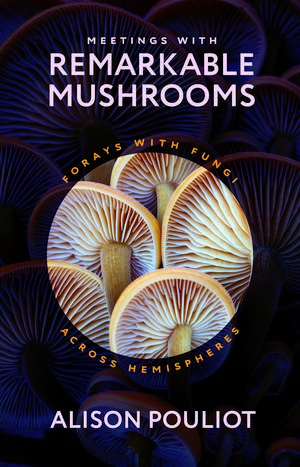
Meetings with Remarkable Mushrooms: Forays with Fungi across Hemispheres
Autor Alison Poulioten Limba Engleză Hardback – 5 sep 2023
Apreciem în Meetings with Remarkable Mushrooms o abordare profund interdisciplinară, unde ecologia și biologia se întâlnesc cu antropologia culturală și fotografia de natură pentru a redefini percepția noastră asupra regnului fungic. Dincolo de simpla clasificare botanică, Alison Pouliot propune o analiză a modului în care fungii dictează reziliența ecosistemelor globale, de la deșerturile Australiei până la ghețarii Islandei. Ne-a atras atenția rigoarea cu care autoarea documentează strategii de supraviețuire fascinante, precum relația simbiotică dintre trufle și incendii sau mecanismele de bioluminescență ale ciupercii-fantomă.
Cititorii familiarizați cu Fungipedia de Lawrence Millman vor aprecia în acest volum trecerea de la formatul de enciclopedie alfabetică la o narațiune fluidă, de tip jurnal de expediție, care oferă o profunzime științifică sporită. Meetings with Remarkable Mushrooms se poziționează ca o lucrare centrală în opera autoarei, rafinând temele explorate în Wild Mushrooming. Dacă lucrarea anterioară se concentra pe aspectele practice ale culesului, noul titlu ridică miza spre conservare și etică ecologică. Structura cărții este organizată progresiv, pornind de la biologia subpământeană în primele capitole, trecând prin explorări geografice specifice și culminând cu secțiuni dedicate rolului femeilor în păstrarea cunoștințelor micologice și necesității restaurării habitatelor. Volumul include un glosar terminologic și un registru al speciilor, elemente care subliniază rigoarea academică a editurii University of Chicago Press.
Preț: 145.60 lei
Carte disponibilă
Livrare economică 30 octombrie-13 noiembrie
Livrare express 16-22 octombrie pentru 61.70 lei
Specificații
ISBN-10: 0226829634
Pagini: 320
Ilustrații: 16 color plates
Dimensiuni: 140 x 216 x 25 mm
Greutate: 0.48 kg
Ediția:First Edition
Editura: University of Chicago Press
Colecția University of Chicago Press
V-ar putea interesa
-
 Close Encounters of the Fungal KindRichard ForteyPreț: 79.24 lei
 -
 Mushroom Day: A Story of 24 Hours and 24 Fungal LivesAlison PouliotPreț: 104.17 lei
 -
 Funga Obscura: Photo Journeys Among FungiAlison PouliotPreț: 166.61 lei
 -
 -9%Preț: 158.19 lei173.42 leiRecomandat
 -
 -14%Preț: 253.75 lei295.13 lei
 -
 Preț: 80.92 leiRecomandat
 -
 Preț: 93.46 lei
 -
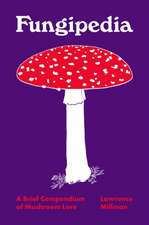 FungipediaLawrence MillmanPreț: 104.54 lei
 -
 The Lives of FungiBritt A BunyardPreț: 201.69 lei
 -
 An Illustrated Catalog of American MushroomsUS Department of Agriculture Maurice B. Walters Collection-30%Preț: 294.19 lei420.80 lei
 -
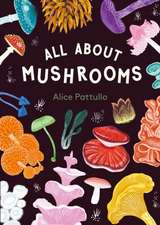 All About MushroomsAlice Pattullo-26%Preț: 52.30 lei70.94 lei
 -
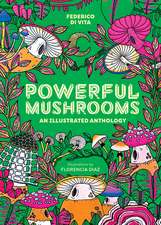 Powerful Mushrooms: An Illustrated AnthologyFederico Di Vita-15%Preț: 82.30 lei96.99 lei
 -
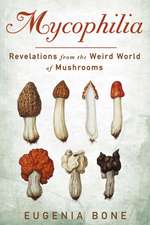 MycophiliaEugenia BonePreț: 102.29 lei
 -
 The Secret Life of FungiAliyah WhiteleyPreț: 92.23 lei
 -
 The Secret Life of FungiAliya WhiteleyPreț: 77.87 lei
 -
 Entangled LifeMerlin Sheldrake-18%Preț: 77.90 lei94.63 lei
 -
 The Secrets of MushroomsGinevra Picoco-25%Preț: 101.55 lei136.24 lei
 -
 Can Mushrooms Save the World?Eliza JeffreyPreț: 72.61 lei
 -
 Entangled Life (The Illustrated Edition)Merlin Sheldrake-17%Preț: 195.86 lei235.40 lei
 -
 Dr. Fun Guy's Passport to Kingdom FungiGordon WalkerPreț: 169.34 lei
De ce să citești această carte
Subliniem valoarea acestei cărți pentru cei care doresc să înțeleagă biologia dincolo de manuale. Cititorul câștigă o perspectivă globală asupra micologiei, ghidat de un ecolog care studiază fungii pe ambele emisfere. Este o recomandare excelentă pentru pasionații de științele naturii care caută o combinație între date factuale, fotografie de înaltă calitate și o reflecție asupra conservării mediului, totul într-un format hardback elegant.
Despre autor
Alison Pouliot este un ecolog, fotograf și autor recunoscut internațional pentru munca sa dedicată regnului fungic. Cu o carieră construită la intersecția dintre știință și artă, ea conduce sute de incursiuni micologice în pădurile din America, Australia și Europa. Expertiza sa se concentrează pe interacțiunile ecologice complexe și pe importanța fungilor în menținerea sănătății solului. Prin scrierile sale, Pouliot promovează conceptul de „slow mushrooming”, punând accent pe identificarea corectă și respectul față de biodiversitate, fiind o voce autoritară în literatura de specialitate contemporană.
Descriere scurtă
What can we learn from the lives of fungi? Splitting time between the northern and southern hemispheres, ecologist Alison Pouliot ensures that she experiences two autumns per year in the pursuit of fungi—from Australia’s deserts to Iceland’s glaciers to America’s Cascade Mountains. In Meetings with Remarkable Mushrooms, we journey alongside Pouliot, magnifiers in hand, as she travels the world.
With Pouliot as our guide, we smell fire-loving truffles that transform their scent after burning to lure mammals who eat them and, ultimately, spread their spores. We spot the eerie glow of the ghost fungus, a deceptive entity that looks like an edible oyster mushroom but will soon heave back out—along with everything else in your stomach—if you take a bite. And we crawl alongside vegetable caterpillars, which are neither vegetable nor caterpillar but a fungus that devours insects from the inside out.
Featuring stunning color photographs of these mycological miracles, Meetings with Remarkable Mushrooms shows that understanding fungi is fundamental for harmonizing with the natural world.
Notă biografică
Extras
A vehicle appeared, slowed almost to a standstill then sped off, spraying me with water. The road returned to darkness. Gulls mewed in the distance as another vehicle approached, blinding me with its headlights, but it slowed and stopped. I ran toward it. It was only when the tailgate flipped down and the back window flipped up that I saw it was a hearse.
“Well get in then!” barked a voice in a North Yorkshire accent. I probably should have hesitated, but I didn’t. I leapt in and cracked my knee on something hard. It was a coffin. A coffin in a hearse shouldn’t seem odd. But the three goths sitting bolt upright inside it drinking champagne did. They eyed me suspiciously as one passed me a glass. He filled it to the brim and champagne overflowed down my sleeve. “So where’d you be goin’ this fine evenin’?” he asked. My knee throbbed and I could feel my hair stuck to the sides of my face as I shook out my sleeve. “To a congress dinner on the quay,” I replied, then added, “a congress on fungi!” He squinted and pursed his blackened lips. No one spoke. The windscreen wipers flapped louder.
You’d have thought that with our common interest in the subterrain, I’d landed with kin, but the other two goths glanced sideways, and one raised an eyebrow. It seemed the fungus congress and the Whitby Goth Weekend had been programmed simultaneously and we each thought the other the more strange. But after a prolonged silence, the questions about fungi came thick and fast until the driver cranked up the stereo and The Sisters of Mercy saved me from further interrogation.
As we turned onto the quay, I caught sight of the ruined Whitby Abbey perched high on the headland overlooking the North Sea. Pedestrians dashed across the wet road. “Here! Stop here, please!” I yelled to the driver and he pulled into the curb. I handed back my glass and wished the goths well. They nodded in unison as I climbed out of the hearse. Back in the rain, I paused for a moment to gather myself, then headed toward the lights of the restaurant, certain that my foray into fungal realms would be every bit as thrilling as the ride.
The International Society for Fungal Conservation Congress drew a motley band of conservationists, fungus enthusiasts, and mycologists—scientists who study fungi— from the forest and the laboratory to David Minter’s hometown of Whitby. David is a mycologist and the mastermind of the society. A natural-born showman, he’s good at holding court, convincing anyone who might not yet be convinced that fungi should be at the heart of biodiversity conservation, not the periphery.
David has been fighting for fungi and their recognition for a long time. Fungi seldom feature in conservation because they seldom feature in our ideas about what that thing out the window—nature, biodiversity, the environment, whatever you want to call it—actually is. But by only considering above- ground ecologies of plants and animals, what if we were failing to protect the diversity of fungi below ground? What if this oversight meant a slow, unseen unraveling of the very foundation that enables all aboveground life to flourish? Even the scientists who study organisms other than fungi and the conservationists who rally for them are usually largely unaware of the need to conserve fungi. However, given most of those organisms are intertwined with fungi in some way, including fungi in conservation makes good sense.
Cuprins
1 Stirrings in the Subterrain
2 Life in the Mycosphere
3 Into the Australian Bush
4 No Such Thing as a Bad Fungus
5 Fungi, Fire, and Ice
6 Fungal Renegades
7 The Mycophagists
8 Conserving the Bizarre and the Beautiful
9 Women as Keepers of Fungal Lore
10 Restoring Fungi
Epilogue
Acknowledgments
Images
Species Register
Glossary
Selected Sources
Index