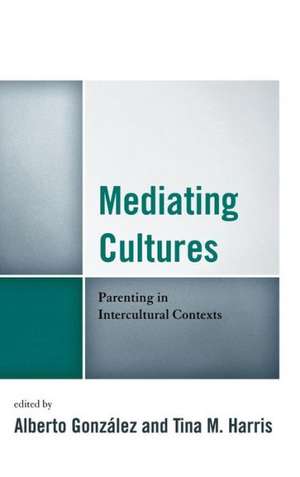
Mediating Cultures: Parenting in Intercultural Contexts
Editat de Alberto González, Tina M. Harris Contribuţii de Carlos Aleman, Melissa Aleman, Nicole Blau, Chin-Chung Chao, Ali E. Erol, May H. Gao, Joris Gjata, Souhad Kahil, Tara Shenoy Kulkarni, Kimberly Moffitt, Natalia Rybas, Suchitra Shenoy-Packer, Dexin Tian, Candice Thomas-Maddox, Jennifer Willis-Rivera, Deanna Womacken Limba Engleză Paperback – 16 iul 2014
Preț: 332.69 lei
Preț vechi: 430.36 lei
-23%
Puncte Express: 499
Preț estimativ în valută:
58.89€ • 68.65$ • 51.01£
58.89€ • 68.65$ • 51.01£
Carte tipărită la comandă
Livrare economică 27 februarie-13 martie
Preluare comenzi: 021 569.72.76
Specificații
ISBN-13: 9780739197707
ISBN-10: 0739197703
Pagini: 166
Dimensiuni: 154 x 227 x 12 mm
Greutate: 0.26 kg
Editura: Bloomsbury Publishing
Colecția Lexington Books
Locul publicării:New York, United States
ISBN-10: 0739197703
Pagini: 166
Dimensiuni: 154 x 227 x 12 mm
Greutate: 0.26 kg
Editura: Bloomsbury Publishing
Colecția Lexington Books
Locul publicării:New York, United States
V-ar putea interesa
-
 The Political Integration of Ethnic Minorities in BritainAnthony F. Heath-34%Preț: 735.97 lei1112.05 lei
 -
 Criminal Law and Cultural DiversityWill Kymlicka-27%Preț: 644.67 lei887.20 lei
 -
 Preț: 208.89 lei
 -
 Strangers at Our DoorZ BaumanPreț: 84.02 lei
 -
 Preț: 114.52 lei
 -
 Another Darkness, Another DawnBecky Taylor-9%Preț: 199.73 lei219.01 lei
 -
 Separate and Dominate: Feminism and Racism After the War on TerrorChristine DelphyPreț: 120.02 lei
 -
 Anders Breivik and the Rise of IslamophobiaSindre BangstadPreț: 151.94 lei
 -
 Preț: 158.69 lei
 -
 -46%Preț: 91.28 lei170.45 lei
 -
 Gypsy EmpireEAMON DILLONPreț: 75.15 lei
 -
 The Future Of Multi-Ethnic BritainThe Parekh Report-33%Preț: 86.34 lei128.30 lei
Cuprins
Introduction: Parenting in Intercultural Contexts, Alberto González and Tina M. Harris
Section I: Interpersonal Settings and Intercultural Parenting
Chapter One: Digging (in) the Playground: (In)visibility of Difference in Multicultural Parenting, Natalia Rybas
Chapter Two: Cultural Ambiguity, Ethnic Identity, and the Bicultural Experience:
South Asian Indian Parents and their American-born Kids, Suchitra Shenoy and Tara A. Kulkarni
Chapter Three: The Trouble With Family Stories, Melissa Aleman and Carlos Aleman
Chapter Four: How Caucasian Parents Communicate Identity to Chinese Adopted Daughters, May H. Gao and Deanna Womack
Chapter Five: Black Parenting in The White House: The Emergence of an Intercultural Model, Kimberly Moffet
Section II: Media, Social Networks and Intercultural Parenting
Chapter Six: Islam in the Midwest: Parental Values in The Learning Channel's All American Muslim, Souhad Kahil
Chapter Seven: Googling "Latin@": Using Technology to Construct Cultural Identity in a Bicultural Family, Jennifer Willis-Rivera
Chapter Eight: Like Tiger Mother, Like Tiger Daughter: A Content Analysis of Eastern and Western Parenting Styles, Chin-Chung (Joy) Chao and Dexin Tian
Chapter Nine: We're Not Like the Cleavers Any More!: Diversity and Parenting Communication in ABC's Modern Family, Candice Thomas-Maddox and Nicole Blau
Epilogue: The Future and Multicultural Parenting
Chapter Ten: "Dogmamis çocuga don biçmek": Visions of a Multicultural Family, Ali E. Erol and Joris Gjata
Section I: Interpersonal Settings and Intercultural Parenting
Chapter One: Digging (in) the Playground: (In)visibility of Difference in Multicultural Parenting, Natalia Rybas
Chapter Two: Cultural Ambiguity, Ethnic Identity, and the Bicultural Experience:
South Asian Indian Parents and their American-born Kids, Suchitra Shenoy and Tara A. Kulkarni
Chapter Three: The Trouble With Family Stories, Melissa Aleman and Carlos Aleman
Chapter Four: How Caucasian Parents Communicate Identity to Chinese Adopted Daughters, May H. Gao and Deanna Womack
Chapter Five: Black Parenting in The White House: The Emergence of an Intercultural Model, Kimberly Moffet
Section II: Media, Social Networks and Intercultural Parenting
Chapter Six: Islam in the Midwest: Parental Values in The Learning Channel's All American Muslim, Souhad Kahil
Chapter Seven: Googling "Latin@": Using Technology to Construct Cultural Identity in a Bicultural Family, Jennifer Willis-Rivera
Chapter Eight: Like Tiger Mother, Like Tiger Daughter: A Content Analysis of Eastern and Western Parenting Styles, Chin-Chung (Joy) Chao and Dexin Tian
Chapter Nine: We're Not Like the Cleavers Any More!: Diversity and Parenting Communication in ABC's Modern Family, Candice Thomas-Maddox and Nicole Blau
Epilogue: The Future and Multicultural Parenting
Chapter Ten: "Dogmamis çocuga don biçmek": Visions of a Multicultural Family, Ali E. Erol and Joris Gjata
Recenzii
With a few notable exceptions, cultural diversity has been overlooked and neglected in family communication literature. I am delighted to see the publication of Mediating Cultures, which focuses so clearly on filling this void. The chapters are all situated at the nexus of intercultural communication and family communication, and this is a welcome addition to the field.
Communication scholars González (Bowling Green State Univ.) and Harris (Univ. of Georgia) make a long overdue contribution to their discipline with this collection. Covering topics from parenting in the White House to parenting in ABC's Modern Family, this thought-provoking volume examines significant contemporary intercultural and family communication issues. The ten essays coalesce to form a coherent narrative that goes from micro- (section 1) to macro-level (section 2) communication to address parenting in intercultural contexts. The collection's key contribution is to extend the discussion from a black/white racial/cultural binary to bi- and multicultural persons. Representing a wide breadth of cultural and intellectual perspectives, the contributors include both veteran scholars (e.g., Jennifer Willis-Rivera and both the editors) and emerging scholars (e.g., Natalia Rybas, Suchitra Shenoy). Of particular significance is Kimberly Moffitt's essay about the Obamas; as the first multicultural family to inhabit the White House, the Obamas are hyper-scrutinized and their actions carry weight that shapes the US's collective psyche. Such influence includes their parenting practices as a multicultural family. Missing is discussion of parenting in the Native American population, a group social sciences continues to neglect. A good resource for those interested in family and interpersonal communication, media studies, and critical cultural studies. Summing Up: Recommended.
Communication scholars González (Bowling Green State Univ.) and Harris (Univ. of Georgia) make a long overdue contribution to their discipline with this collection. Covering topics from parenting in the White House to parenting in ABC's Modern Family, this thought-provoking volume examines significant contemporary intercultural and family communication issues. The ten essays coalesce to form a coherent narrative that goes from micro- (section 1) to macro-level (section 2) communication to address parenting in intercultural contexts. The collection's key contribution is to extend the discussion from a black/white racial/cultural binary to bi- and multicultural persons. Representing a wide breadth of cultural and intellectual perspectives, the contributors include both veteran scholars (e.g., Jennifer Willis-Rivera and both the editors) and emerging scholars (e.g., Natalia Rybas, Suchitra Shenoy). Of particular significance is Kimberly Moffitt's essay about the Obamas; as the first multicultural family to inhabit the White House, the Obamas are hyper-scrutinized and their actions carry weight that shapes the US's collective psyche. Such influence includes their parenting practices as a multicultural family. Missing is discussion of parenting in the Native American population, a group social sciences continues to neglect. A good resource for those interested in family and interpersonal communication, media studies, and critical cultural studies. Summing Up: Recommended.